
Why Is My Ice Maker Overflowing and Freezing the Ice Bin?
By General Appliance Service
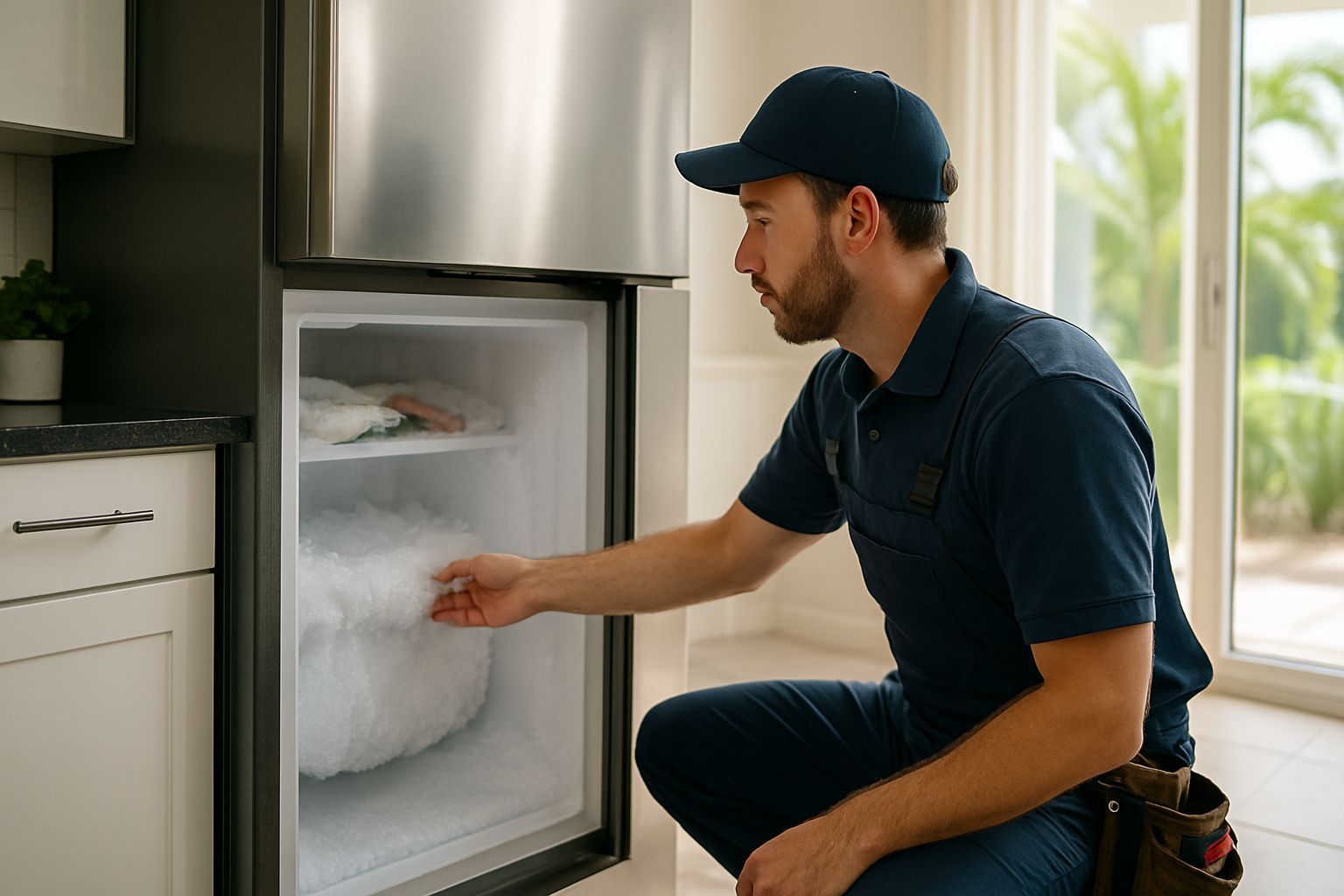
An overflowing ice maker can freeze cubes into a solid mass, create water beneath the refrigerator, and send ice across freezer surfaces. The visible ice does not always identify the failed part. Water that spills during filling, drips after filling, or enters the mold too long can produce similar results. The timing and location of the water help determine whether the concern involves the fill tube, inlet valve, ice maker, wiring, or refrigerator control.
What a Technician Checks When an Ice Maker Is Overflowing
A technician first determines whether water spills during the fill cycle or continues after the cycle ends. A frozen, shifted, or blocked fill tube can direct the stream outside the fill cup or mold. Ice around the rear of the assembly may also deflect water into the bin.
When water appears after filling should have stopped, the inlet valve becomes a stronger possibility. The valve must close tightly after supplying water. A valve that seeps can add a slow drip between cycles, creating oversized cubes, fused ice, or a slab at the bottom of the bin.
Extended fill time can cause the same symptoms. Depending on the model, the ice maker, sensor, wiring, or electronic control may be allowing too much water into the mold.
Look at Where the Water Freezes
Ice inside the mold usually suggests excessive water volume or a fill cycle that runs too long. Ice beneath the fill area, behind the ice maker, or along the back freezer wall may indicate that water is splashing outside the intended path.
A thick slab in the bottom of the bin often comes from repeated small spills or drips. The refrigerator may not be making extra batches of ice; instead, extra water is freezing around cubes already in the bin.
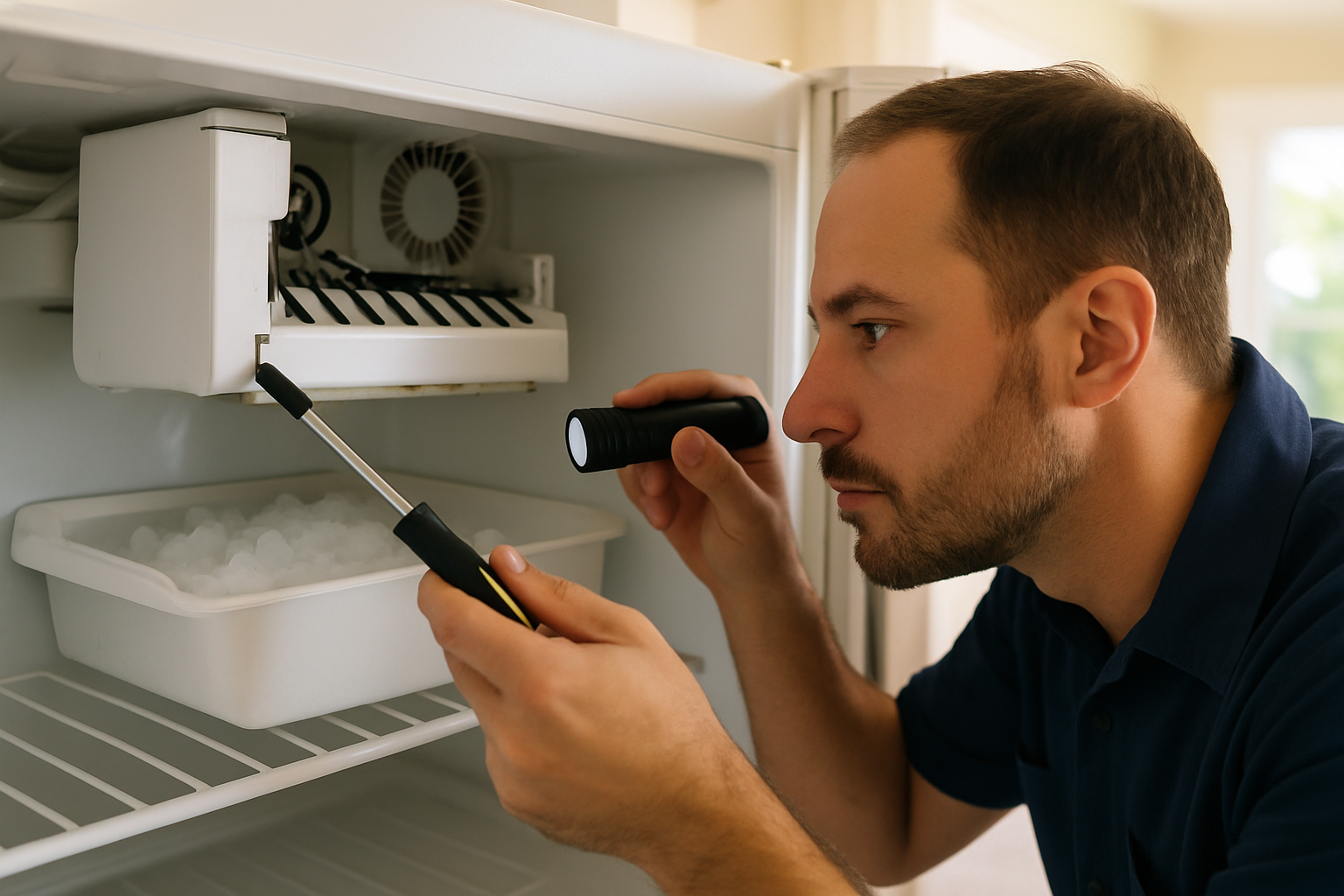
Ice buildup can make the next fill worse by redirecting the water stream again. Avoid breaking ice away with a knife, screwdriver, or other sharp tool. Freezer liners, plastic tubing, and the ice maker mold can be damaged easily. Ice near a fan or airflow channel can also cause noise or unstable freezer temperatures.
Safe Steps to Take Before Refrigerator Ice Maker Repair
If water is actively entering the bin, pooling in the freezer, or reaching the floor, turn off the refrigerator water supply if the shutoff is safely accessible. Place towels around the leak area and do not continue running the ice maker simply to see whether it stops.
Empty the bin and take photos before removing loose ice. Note whether water first appears inside the mold, under the fill area, behind the assembly, or outside the cabinet. Also consider whether the problem happens only during an ice-making fill, after using the water dispenser, or while the refrigerator is idle.
Confirm that the freezer door closes fully, record the model number, and note any display messages or recent water-filter changes. For recurring overfills, Palm Coast ice maker repair can identify the actual source safely.
Why Prompt Diagnosis Matters
A leaking inlet valve is a valid concern when water keeps dripping after the ice maker stops calling for water. However, a properly sealed valve can still overfill the mold if it receives an incorrect or overly long command. Replacing parts without checking the water path and fill timing can leave the original issue unresolved.
Diagnosis may include checking freezer temperature, inspecting the fill tube and cup, observing the fill sequence, and examining valve operation and wiring. Some refrigerator designs share water-dispenser and ice-maker components, so mention if overflowing happens after dispensing water. Owners of that brand can request Frigidaire appliance repair in Palm Coast for model-specific diagnosis.
Turn off the water and arrange service promptly if water reaches the floor, ice spreads behind the assembly, or the leak remains active. Slow leaks can damage flooring and interfere with freezer airflow.
Frequently Asked Questions About an Ice Maker Overflowing
Why does my ice maker overflow into the bin?
Water may miss the fill cup, run too long, or seep through the inlet valve after filling. Ice location and timing help identify the cause.
Can a leaking inlet valve freeze ice cubes together?
Yes. A slowly leaking valve can add water between normal cycles. That water freezes around existing cubes, making them oversized, fused, or trapped in a slab.
Why is water freezing behind my ice maker?
Water may splash outside the mold during filling, or an after-fill drip may freeze where it lands. Existing ice can redirect later fills and worsen overflow.
Should I turn off the water supply?
Turn it off when water is actively pooling, spilling, or reaching the floor and the shutoff is safely accessible. Use towels and avoid operating with an active leak.
Can I use the refrigerator while the ice maker overflows?
The cooling section may still operate, but shut off the ice maker water supply until diagnosis. Continued overflow can restrict airflow and increase floor-leak risks.
For recurring refrigerator water or ice concerns, Flagler Beach appliance repair can help homeowners address the underlying failure before it causes more freezer damage or leaks.
Recent Posts