
Why Is My Electric Oven Taking Too Long to Preheat Even Though It Eventually Reaches Temperature?
By General Appliance Service
An electric oven that preheats slowly does not always have a major failure. Cavity size, selected temperature, convection settings, extra racks, and heavy cookware can affect heating time. However, a sudden change matters. If preheating is much slower than before, baking takes longer, or food cooks unevenly, the oven may have a heating or temperature-control issue.
Look for a repeatable performance change rather than judging the appliance by one preheat cycle or one inexpensive oven thermometer.
What a Technician Checks
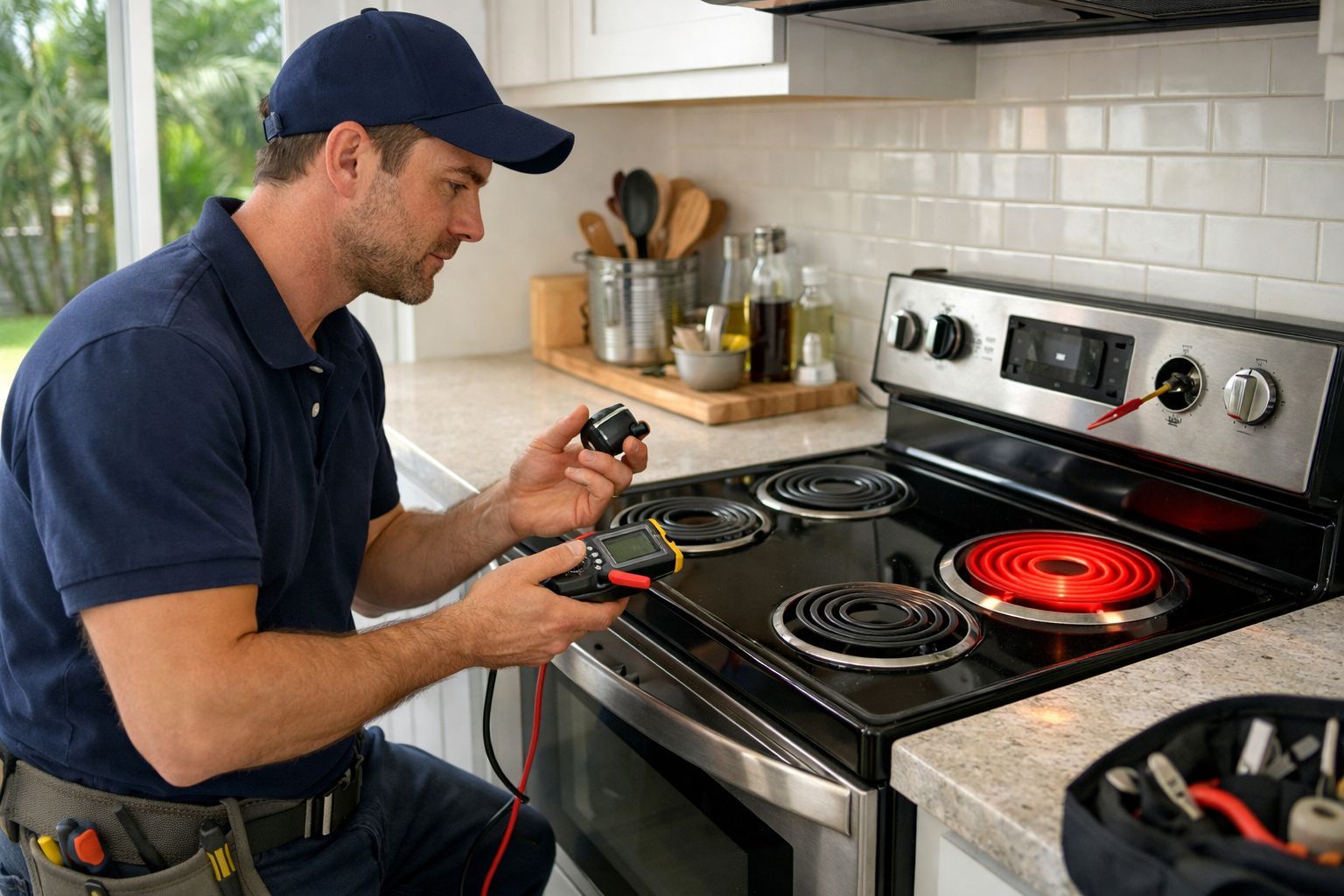
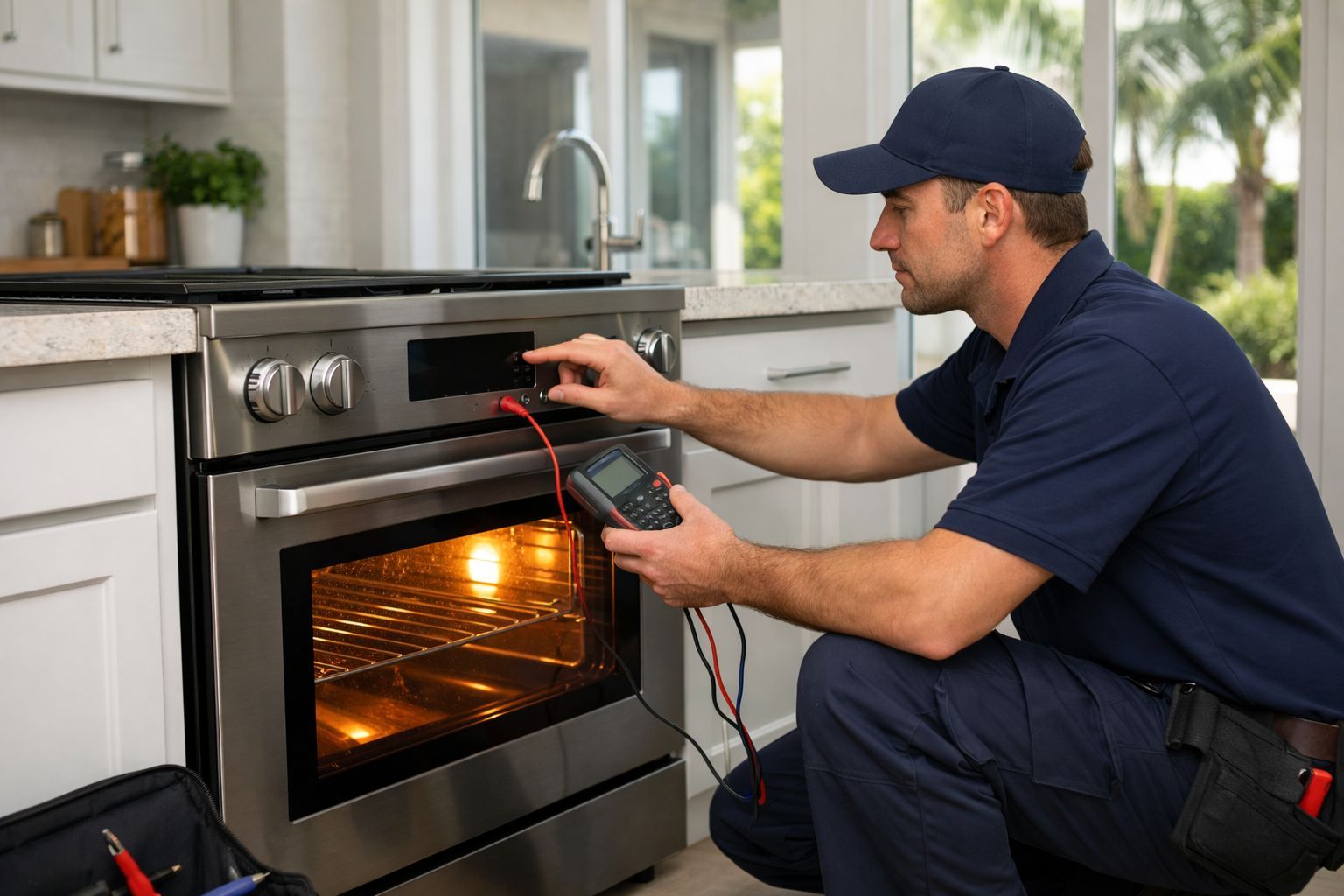
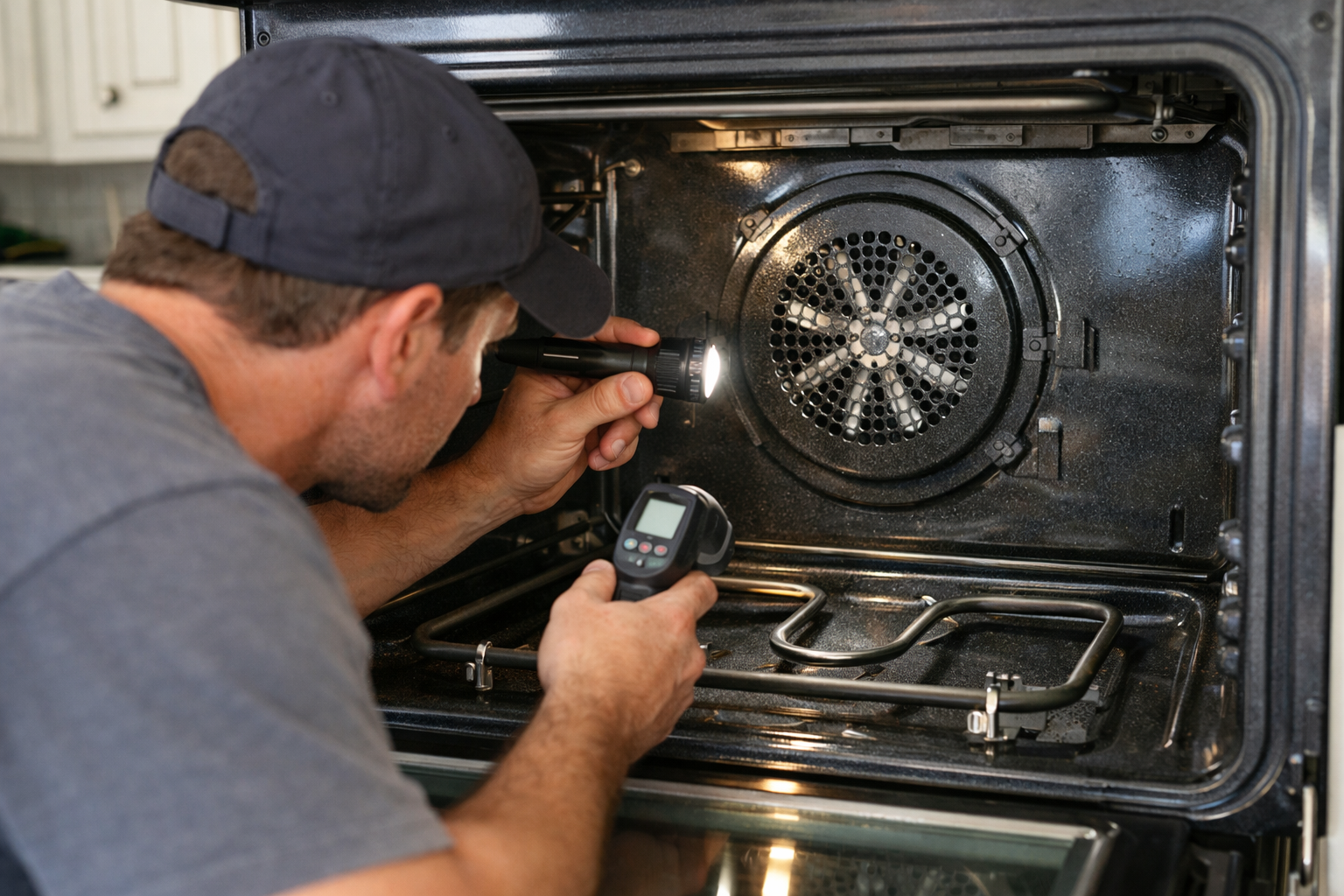
A technician confirms the complaint using normal operating conditions. Bake, convection bake, and other modes may use heating elements differently depending on the model. The diagnosis considers the selected temperature, time to the preheat signal, and whether actual baking results have changed.
Slow preheating can involve more than the bake element. The broil element, temperature sensor, wiring, incoming electrical supply, or electronic control may affect heating performance. Replacing the most obvious part without testing can waste money and leave the original problem unresolved.
For a changed heating pattern, Palm Coast oven and range repair can determine whether the problem involves the elements, power supply, or controls that manage the heating cycle.
Why the Preheat Signal May Be Misleading
A preheat tone or display message does not always mean the entire cavity has stabilized at the exact set temperature. Oven air heats quickly, while racks, walls, and cookware need more time to absorb heat. A thermometer on a rack can also lag behind the air temperature during the early heating cycle.
The display is not automatically wrong, either. More useful evidence is a consistent change in cooking results. If a recipe that once baked in 25 minutes now takes 40 minutes at the same setting, that is more meaningful than a thermometer briefly reading 15 degrees low.
Try several ordinary preheats at the same temperature, with the same rack arrangement and no stored pans inside. Record approximate times, error codes, and baking results. Those details help narrow the diagnosis.
When an Element Still Gets Hot but Performs Poorly
A heating element can be the problem even when it still produces heat. A bake element may have a crack, blister, burned spot, or damaged connection. Some damage is not easy to see from inside the oven.
An element may also show continuity during a basic test but fail to receive the voltage it needs while operating. Live-voltage testing at range terminals or behind rear panels is not a homeowner task because of shock and fire hazards.
The broil element may assist with preheating on some models, but it does not have to visibly glow every time Bake is selected. Manufacturers use different heating strategies. A technician compares the oven’s heating sequence with model-specific service information before identifying a failed element, relay, sensor, or control.
Safe Checks and Warning Signs
Confirm the correct cooking mode and temperature, remove unnecessary racks or cookware, and make sure the door closes completely. A poor door seal can allow heat to escape and make preheating seem sluggish.
With the oven cool and power turned off, inspect accessible bake and broil elements for obvious damage. Do not touch, remove, or test an element. Note the model number, whether broil works normally, any breaker trips, and approximate preheat time. Check the owner’s manual for approved calibration guidance, but do not use calibration to hide a sudden performance change.
Stop using the oven if you notice sparks, smoke, a burning electrical odor, breaker trips, visible element damage, or uncontrolled heat. These symptoms can indicate damaged wiring or an overheated connection. For nearby service, Flagler Beach appliance repair can evaluate the oven before a minor heating issue becomes a larger electrical repair.
Frequently Asked Questions About an Electric Oven Taking Too Long to Preheat
How long should an electric oven take to preheat?
There is no universal time. Cavity size, target temperature, convection, cookware, and design affect timing. A sudden increase from the oven’s normal pattern is more concerning.
Why does my oven say preheated but food cooks slowly?
The signal may occur before racks and cookware stabilize. Consistently longer baking times can also indicate an element, sensor, power, wiring, or control problem.
Can a bad bake element still get hot?
Yes. A failing element may eventually heat the oven but take longer than normal or cycle poorly during baking. Testing is needed before replacement.
Why does my oven thermometer disagree with the display?
Many thermometers react slowly and measure one location. The oven sensor follows a different cycling process, so repeatable baking results are more useful than one reading.
Should I keep using a suddenly slow oven?
Stop using it for odors, smoke, sparks, breaker trips, visible damage, or uncontrolled heat. Otherwise, arrange diagnosis if the slow preheat pattern continues.
A professional inspection can identify whether your oven needs an element, sensor, wiring, power-supply, or control repair. Palm Coast homeowners can call (386) 359-3215 for help with a repeatable slow-preheat problem.