


Why Is There Fluffy Frost on Food and Walls Near My Freezer Door?
By General Appliance Service
Fluffy, snow-like frost on food packages or walls near a freezer door is different from a thin ice layer deep inside the cabinet. When frost forms near the front, the key question is where moisture is entering. A frost-free freezer can stay cold enough to preserve food while humid air creates repeated rime frost around the door area.
What a Technician Checks When a Freezer Has Frost Near the Door
A technician begins with the freezer’s temperature and operating pattern. Is food fully frozen? Is the unit running longer than usual? Does the door close without being pushed? Those details help distinguish a small sealing concern from a cooling or defrost problem.
The frost pattern is especially useful. Frost coating packages, baskets, and walls nearest the door often means humid room air is entering the cabinet. That moisture freezes quickly and produces the fluffy white frost homeowners notice first.
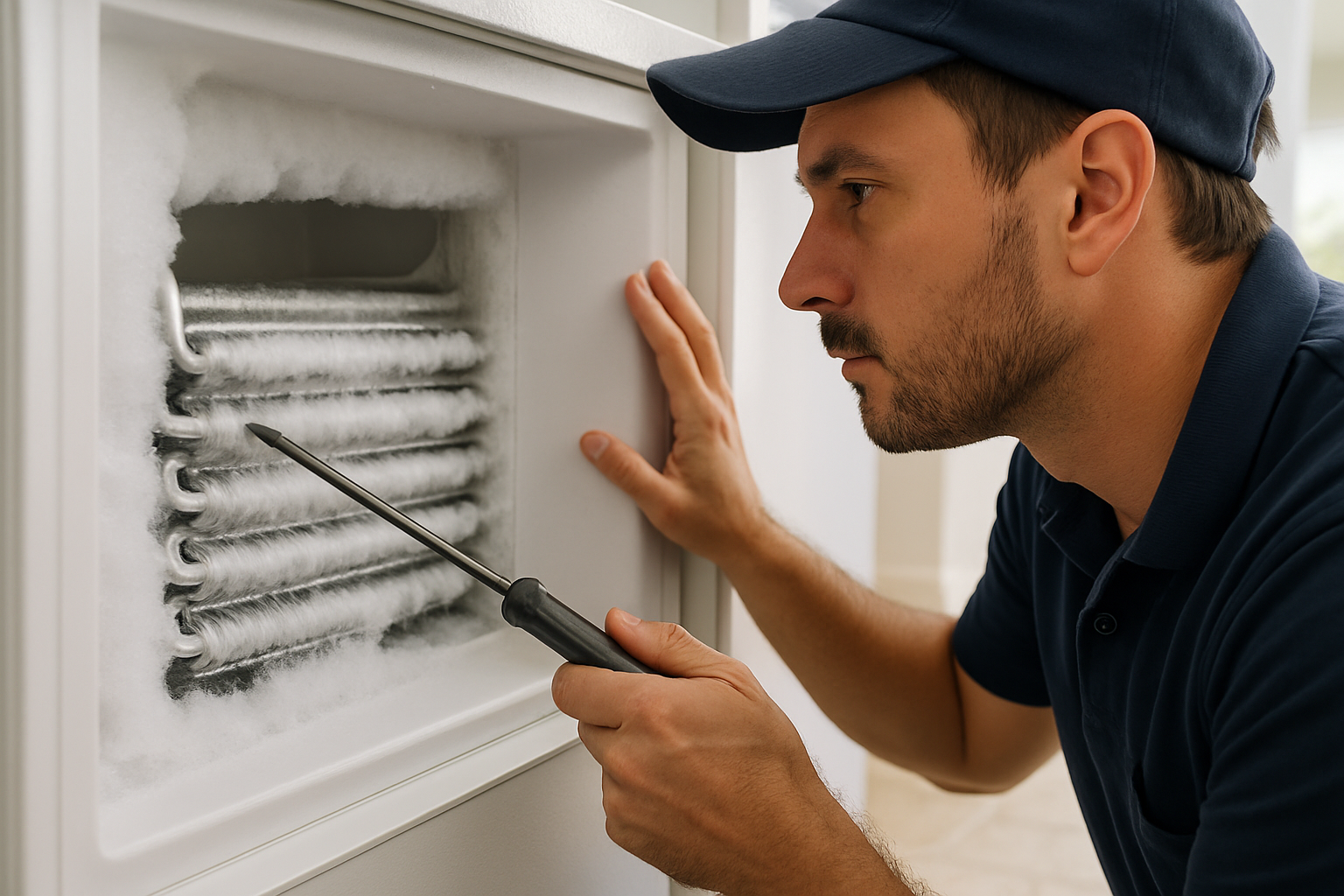
Heavy frost behind the rear interior panel can suggest a different issue involving the evaporator, air circulation, drainage, or defrost system. Depending on the model, diagnosis may include the fan, heater, sensor, wiring, controls, and drain path. Visible frost does not automatically identify one failed part, and more than one condition can be present.
Why Humid Air Gets Into a Freezer
The door gasket is a common source, but it is not the only one. A dirty, torn, hardened, warped, or flattened gasket may leave a small gap. Even a minor gap can admit enough humid Florida air to create recurring frost.
Door alignment also matters. Loose hinges, worn closing hardware, cabinet damage, or a bent door can prevent even gasket contact. On an upright freezer, a shelf, basket, package, liner, or ice ridge may keep the door slightly open. A chest-freezer lid can have the same problem if something prevents it from sitting flat.
Overpacking can contribute by blocking the door or restricting interior vents. Poor airflow does not always create the same pattern as an air leak, but it can make temperatures uneven. For recurring frost, freezer repair in Palm Coast can determine whether the problem involves gasket contact, alignment, airflow, or defrost operation.
Safe Checks Before You Call for Freezer Repair
First, remove packages extending past shelves or baskets and confirm that nothing blocks the door or lid. Do not force it shut, since that can damage hinges or the gasket.
Inspect the gasket for crumbs, spills, tears, flattened sections, and visible gaps. Clean it only as directed in the owner’s manual, then dry it before closing the door. A clean gasket is easier to inspect and more likely to seal properly.
Before scraping frost or defrosting the freezer, take photos of where buildup is worst. Frost distribution can provide useful diagnostic evidence. Check that visible air vents are not tightly packed with food.
Do not remove interior panels, force a defrost cycle, adjust hinges, or attempt refrigerant repairs. If food is softening, temperatures are rising, or the freezer runs nearly nonstop, move food to reliable cold storage and arrange prompt service.
When Frost May Be More Than a Door-Seal Problem
A poor seal and a defrost fault can both leave a freezer looking frosty. Defrost problems may involve a heater, sensor, wiring, control, or restricted drain. Replacing a gasket without confirming the frost pattern may not correct the underlying issue.
Technicians consider cabinet temperature, door contact, vent clearance, fan operation, drain condition, and the evaporator frost pattern. Frost concentrated at the evaporator with poor cooling or continuous running may require a more involved cooling-system diagnosis.
General Appliance Service assists homeowners throughout Flagler, St. Johns, and Volusia counties. For cooling or frost concerns at a home, rental, or second property, appliance repair in St. Augustine is available for professional diagnosis.
Frequently Asked Questions About Freezer Frosting Near Door
Why is my freezer cold but covered with fluffy frost?
Cooling may still be working while humid air enters through a small door or lid gap. The moisture freezes on food and nearby walls.
Does frost near the door always mean the gasket is bad?
No. Food blocking the door, poor alignment, hinge problems, or cabinet damage can create a similar air leak and frost pattern.
Can an overpacked freezer cause frost buildup?
Yes. Packages can hold the door open or block vents. Restore door clearance and leave visible air vents free for better circulation.
Is frost on food different from ice on the back wall?
Often. Frost near food and the door suggests moisture entry. Rear-panel frost can indicate an airflow or defrost issue requiring diagnosis.
When should I stop using a freezer that keeps frosting over?
Move food if temperatures rise, food softens, the door will not stay shut, or the freezer runs continuously. These conditions can affect food preservation.
Avoid chipping frost with knives or sharp tools, which can damage the liner or hidden tubing. Palm Coast appliance repair services can inspect recurring freezer frost without relying on guesswork.