
Why Does My Gas Dryer Heat at First, Then Blow Cool Air While the Drum Keeps Turning?

General Appliance Service • November 18, 2026

Share this article

By General Appliance Service

A gas dryer that starts hot but leaves clothes damp later can be confusing because the drum may continue turning normally. Often, the burner lights at the beginning of the cycle, shuts off as designed, and then fails to relight after the dryer has been running for a while.

Burner cycling is normal. The concern is a repeated pattern of initial heat followed by cool air and poor drying results. This problem can involve ignition components, airflow, safety controls, wiring, or gas-supply conditions.

Why a Gas Dryer Heats Then Blows Cold Air After Starting Normally

A gas burner does not remain on for the entire cycle. When the dryer reaches operating temperature, the burner shuts off. As temperatures fall, the ignition sequence should begin again and the flame should return.

The important distinction is whether the burner relights. If clothes are warm during the first few minutes but remain damp after a full timed cycle, the dryer may not be cycling heat correctly.

Gas-valve coils are one possible cause. These coils help open the gas valve after the igniter completes its sequence. Coils that become unreliable when warm may allow one or two normal ignition cycles, then prevent the burner from lighting again.

However, that pattern does not automatically confirm failed coils. A flame-sensing issue, restricted exhaust, thermostat or safety-device problem, loose connection, control issue, or gas-supply concern can create similar symptoms.

What a Technician Checks When the Flame Will Not Return

A technician first confirms the timing of the problem. A normal flame-off period should not be mistaken for a failure; the key is whether the burner resumes operation after temperatures drop.

The ignition sequence offers useful clues. If the igniter never glows, the diagnosis differs from an igniter that glows, shuts off, and is not followed by flame. In the latter situation, the dryer is progressing through part of the ignition process but not completing burner operation.

Testing may include the lint path, blower, exhaust airflow, igniter, flame-sensing circuit, gas-valve operation, thermostatic and safety circuits, wiring, motor switch, and control outputs. Components should be tested according to the model’s service information rather than replaced based on appearance alone.

For this intermittent problem, gas dryer repair in Palm Coast can determine whether delayed heat loss involves ignition, airflow, or controls.

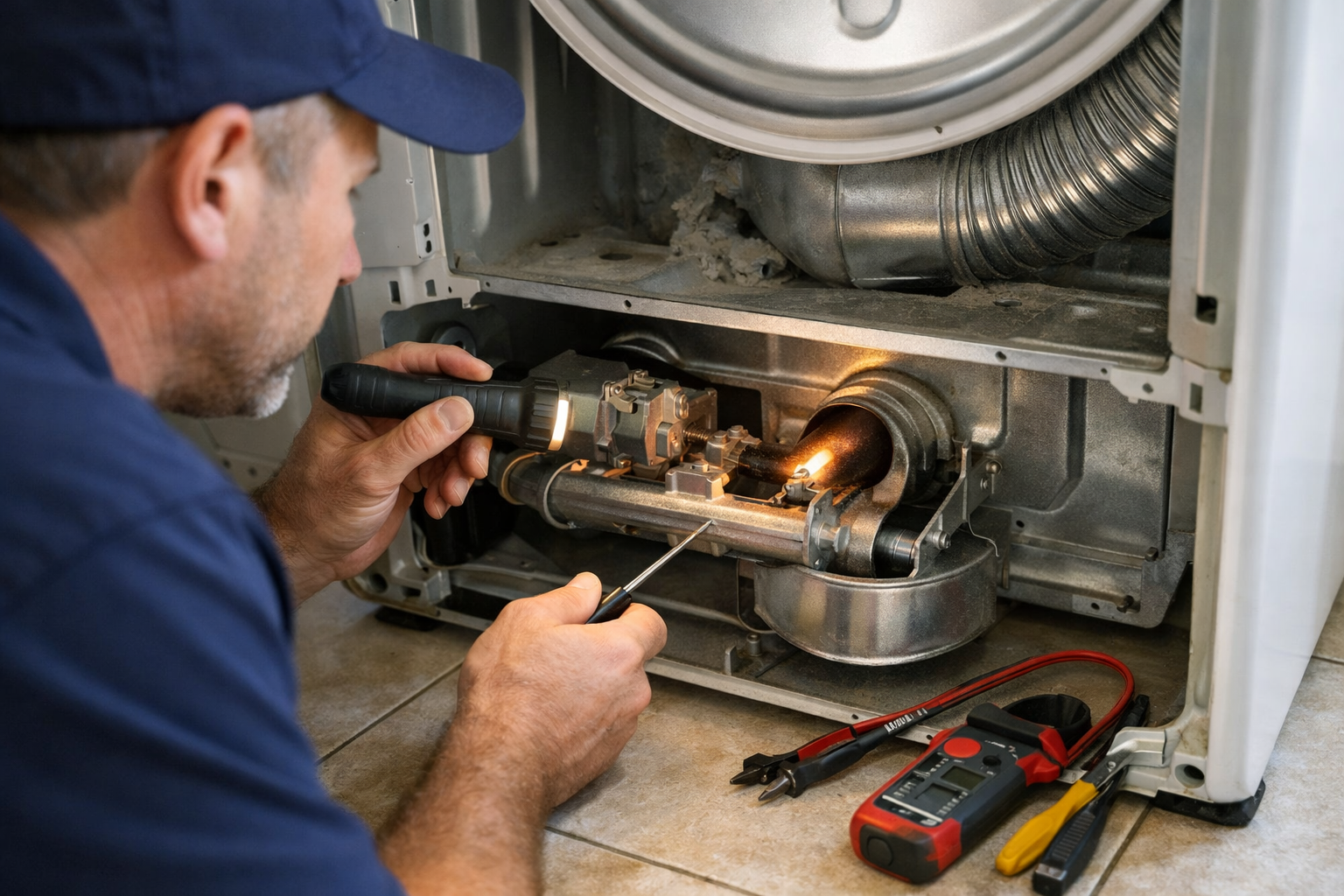
Illustrative appliance diagnostic inspection
AI-generated illustration of an appliance inspection.

Check Airflow Before Blaming the Burner

Restricted airflow can cause long drying times and excessive cabinet heat. While a blocked vent may not always directly prevent the burner from relighting, overheating can cause safety devices to interrupt heat operation.

Clean the lint screen thoroughly, especially if fabric-softener residue has left a film over the mesh. With the dryer running, check the outside vent hood. It should produce warm, steady airflow, and the flap should open freely.

A weak air stream, a barely moving flap, or lint around the exterior hood needs attention. Stop using the dryer if airflow is poor and arrange for vent or appliance service. Continuing to operate a dryer with restricted exhaust can worsen performance and create an unsafe condition.

Do not remove panels, access gas components, bypass switches, or try to manually relight the burner. Those tasks require proper equipment and model-specific procedures.

Details That Help Diagnose an Intermittent Heat Problem

Run one timed cycle while staying nearby and note what happens. Record whether heat appears at the start, approximately when it stops, whether the drum keeps turning, and whether an error code appears. Note whether the issue occurs on every heat setting.

The model number, brand, fuel type, and approximate age are also helpful. These details let a technician use the correct diagnostic information instead of treating every gas dryer the same.

For coastal-area homeowners, dryer repair in Flagler Beach is available for dryers that heat briefly, need multiple cycles, or lose heat consistently.

If you smell gas, stop using the dryer, leave the area, and contact the gas utility or emergency services as appropriate. Repeated heat loss without a gas odor still deserves prompt professional diagnosis.

Frequently Asked Questions About a Gas Dryer That Heats Then Blows Cold Air

Is it normal for a gas dryer flame to turn off?

Yes. The burner normally shuts off at operating temperature and relights as temperatures fall. It is not normal when it fails to return and clothes remain damp.

Why does my dryer start hot but leave clothes damp?

The dryer may lose heat after its first burner cycle. Airflow, gas-valve coils, flame sensing, safety circuits, wiring, or controls may be involved.

Does a glowing igniter prove the gas-valve coils are bad?

No. Warmed-up coils are possible, but a technician must also verify gas supply, flame sensing, safety devices, wiring, and control signals.

Can a clogged vent make a gas dryer lose heat?

Yes. Restricted airflow can cause overheating, long cycles, and safety-related heat interruption. Clean the screen and have persistent vent restrictions professionally addressed.

When should I stop using a gas dryer with heat problems?

Stop immediately if you smell gas, see overheating signs, or have weak exterior airflow. Avoid repeated cycles until persistent heat loss is diagnosed.

A dryer that tumbles but loses heat still needs attention. Observing the burner pattern and maintaining clear airflow helps a technician identify the correct repair without unnecessary parts replacement.

Recent Posts

By General Appliance Service • November 17, 2026
Is your electric oven taking too long to preheat? Learn what can cause slow heating, why the display may be misleading, and when professional diagnosis is needed.
Washer fills with water when turned off
November 16, 2026
Why does your washer fill with water when turned off? Learn how inlet-valve seepage differs from drain backflow, what to shut off safely, and when to call a technician.
By General Appliance Service • November 15, 2026
Learn why a front load washer smells musty after cleaning, what homeowners can safely check, and when drainage or residue problems need professional diagnosis.

By General Appliance Service • November 14, 2026
An electric stove burner that stays on high is a temperature-control problem. Learn what may cause it, what to check safely, and when to stop using the range.
By General Appliance Service • November 13, 2026
A refrigerator fan noise that stops when the door opens may involve normal fan timing, frost contact, or a failing motor. Learn what to check safely.
By General Appliance Service • November 12, 2026
A dishwasher knocking noise during the wash cycle may be caused by spray-arm contact or a wash-system problem. Learn what to check safely and when repair is needed.
By General Appliance Service • November 11, 2026
Gas dryer rattles only when heating? Learn what a heat-only buzz or chatter can indicate, what to check safely, and when to call for dryer repair.
By General Appliance Service • November 10, 2026
Learn why an oven display resets when heating, what homeowners can safely check, and when a heat-related power loss needs professional diagnosis.
By General Appliance Service • November 7, 2026
Washer leaving grease spots on clothes? Learn how detergent buildup, laundry contaminants, and internal washer problems can create dark marks.
By General Appliance Service • November 6, 2026
Ice maker overfilling and making icicles can point to a seeping valve, frozen fill tube, mold damage, or another issue. Learn what to check safely.
Show More