Why Does My Oven Display Reset When Heating?

General Appliance Service • November 10, 2026

Share this article

By General Appliance Service

An oven that loses its clock, goes blank, or restarts after Bake or Broil begins is showing a power-loss pattern. The display may return in seconds or stay dead until the appliance cools. An oven display resets when heating issue is not automatically a failed control board. Heat can expose weak wiring, supply problems, cooling failures, or an internal electronic fault.

What a Technician Checks

The first step is separating a heating failure from a complete power interruption. If the display stays lit but the oven stops heating, the bake or broil circuit, relay output, temperature sensor, or heating element may be involved. If the clock resets and the display, oven light, and controls all go dark, the power supply and control circuit are more likely suspects.

A technician checks voltage at the range connection, terminal block, harnesses, and control power supply. Electric ranges draw substantial current during heating. A connection that appears normal while the clock is running can fail once a bake or broil element is energized.

The control board should not be replaced based on the symptom alone. It must first be confirmed that the board is receiving stable power and is not shutting down because of excessive heat or another component.

Why Heat Can Trigger a Reset

The oven cavity is intended to become hot, but the control compartment above the door should not overheat. Many ranges use a cooling blower to move air through that area while the oven runs. If the fan fails, airflow is blocked, or insulation and venting are damaged, heat can build around the display and electronics.

Some models use a thermal limiter or high-limit device to interrupt operation when the control area gets too hot. Depending on the design, it may reset after cooling or remain open. This can make the range seem normal at first, then fail during preheat or at higher temperatures.

Heat also affects loose wiring. Metal expands as it warms, so a marginal terminal, connector, or splice can lose contact under load and reconnect after cooling. For repeated shutdowns, oven and range repair in Palm Coast can identify the failed area without guessing at expensive electronic parts.

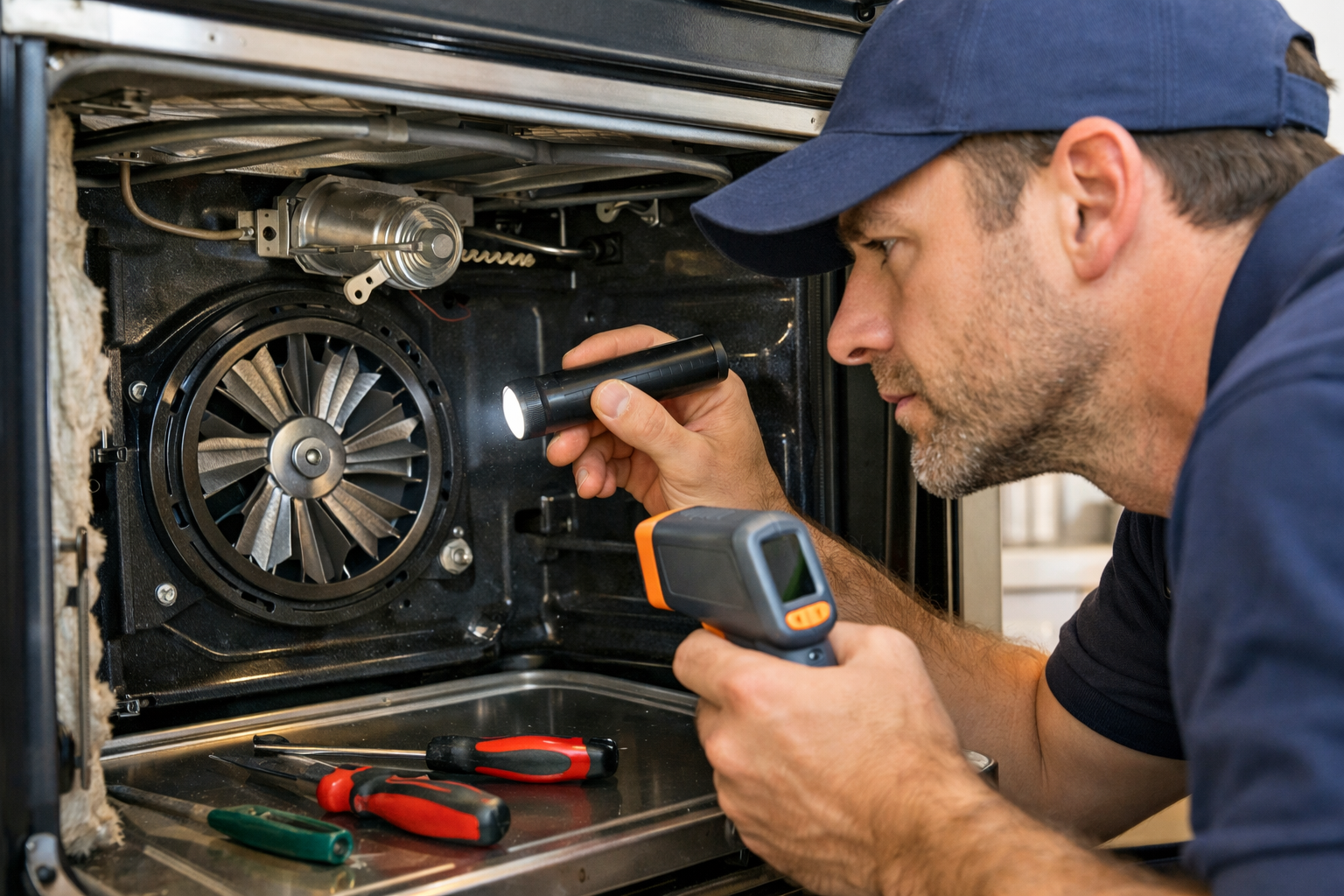
Illustrative appliance diagnostic inspection
AI-generated illustration of an appliance inspection.

Details That Help Narrow the Cause

Notice exactly what happens during the failure. Does the clock return to 12:00? Does the display go completely dark? Does the oven light turn off? Do surface burners continue working? These details help distinguish an oven-circuit problem from a broader power loss.

On an electric range, the cooktop and oven may use separate circuits or portions of the incoming supply. A working cooktop does not prove the oven has proper power. It may mean only part of the appliance supply or internal wiring remains active.

Also record the selected mode, temperature, and elapsed time. A reset only during convection can involve a circuit used in that mode, such as the convection fan, element, or relay. A failure at a similar temperature each time can point toward cooling airflow or thermal protection. For model-specific control and connection checks, consider GE and GE Profile oven repair.

Safe Checks and When to Stop Using the Oven

Cancel the cycle and let the range cool completely. Do not remove panels or tighten electrical connections yourself. Range wiring carries hazardous voltage, and components can remain hot after the oven is switched off.

You can check the electrical panel for an obviously tripped breaker. Reset it once only after the oven cools. If it trips again, leave the oven off. A recurring trip is a warning that should not be bypassed with repeated resets.

Photograph error codes, flashing displays, or visible discoloration without dismantling the appliance. Stop using the oven immediately if you smell burning insulation, see sparking, notice melted plastic, or find the control area unusually hot. If repeated heat-load resets occur, St. Augustine appliance repair can help determine whether the issue is inside the appliance or at its supply connection.

Frequently Asked Questions About an Oven Display Resetting When Heating

Why does my oven clock reset when I turn on Bake?

A clock reset usually means the controls briefly lost power. Possible causes include loose wiring, heat damage, unstable supply voltage, overheating, or a failing control power circuit.

Is an oven that shuts off while preheating dangerous?

It can be. Stop using it for burning smells, sparking, breaker trips, melted plastic, or repeated total power loss. Recurring shutdowns still require diagnosis.

Why does my cooktop work when the oven display is blank?

The cooktop and oven can use different circuits or connections. One portion may retain power while the oven control circuit loses its electrical supply.

Will resetting the breaker fix the display?

It may temporarily reboot the control, but it will not repair loose wiring, overheating, a failing relay, or a supply problem. Repeated resets need service.

Can controls overheat while cavity temperature seems normal?

Yes. Failed cooling airflow, blocked vents, damaged insulation, or venting problems can overheat the control area even when the oven cavity regulates temperature normally.

A resetting display is a useful warning sign, not a routine inconvenience. Avoid repeated testing under heat load, document the pattern, and arrange diagnosis before a minor connection or cooling problem becomes more serious.

Recent Posts

By General Appliance Service • November 18, 2026
Learn why a gas dryer heats then blows cold air later in the cycle, what burner cycling is normal, and when delayed heat loss needs diagnosis.
By General Appliance Service • November 17, 2026
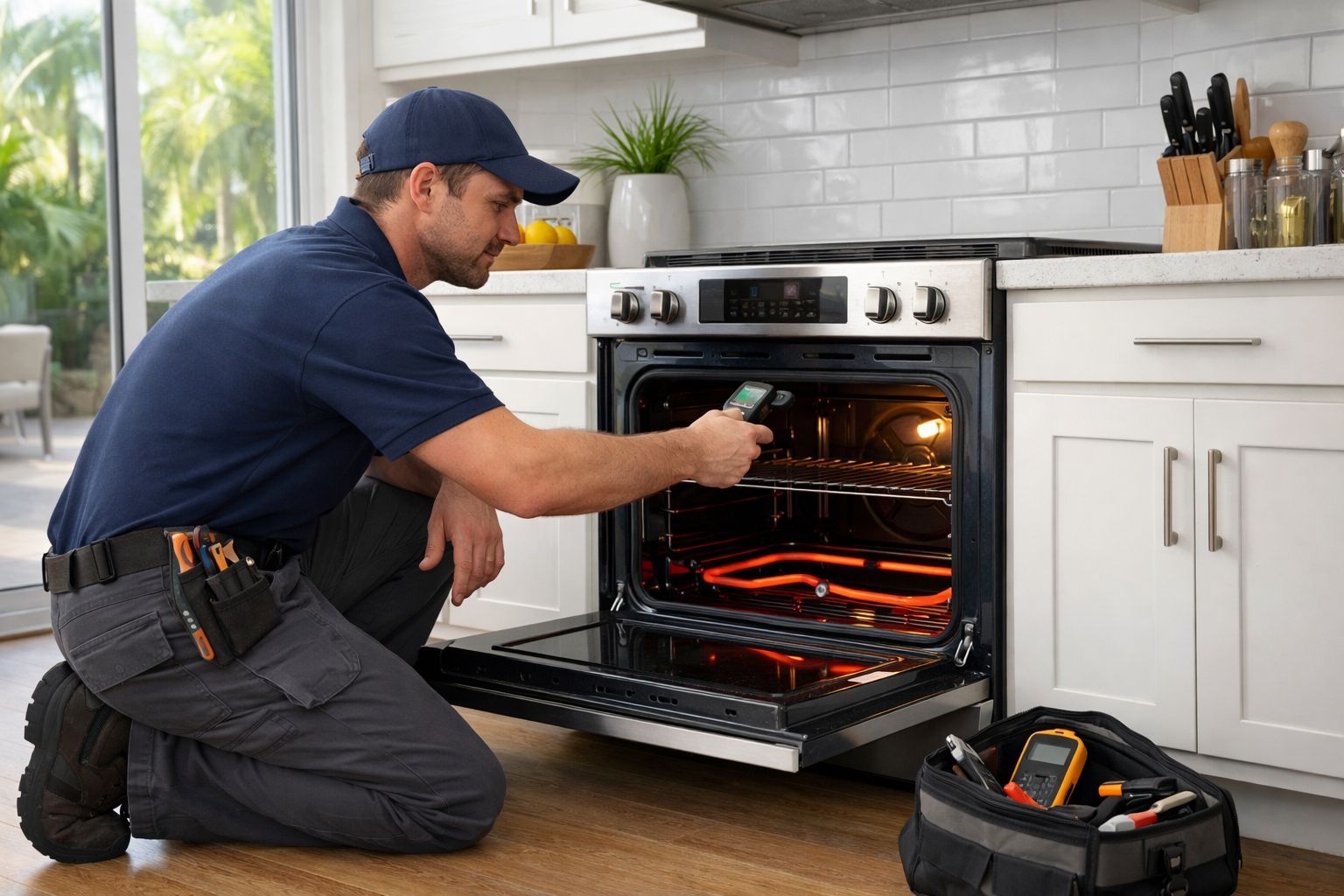
Is your electric oven taking too long to preheat? Learn what can cause slow heating, why the display may be misleading, and when professional diagnosis is needed.
Washer fills with water when turned off
November 16, 2026
Why does your washer fill with water when turned off? Learn how inlet-valve seepage differs from drain backflow, what to shut off safely, and when to call a technician.
By General Appliance Service • November 15, 2026
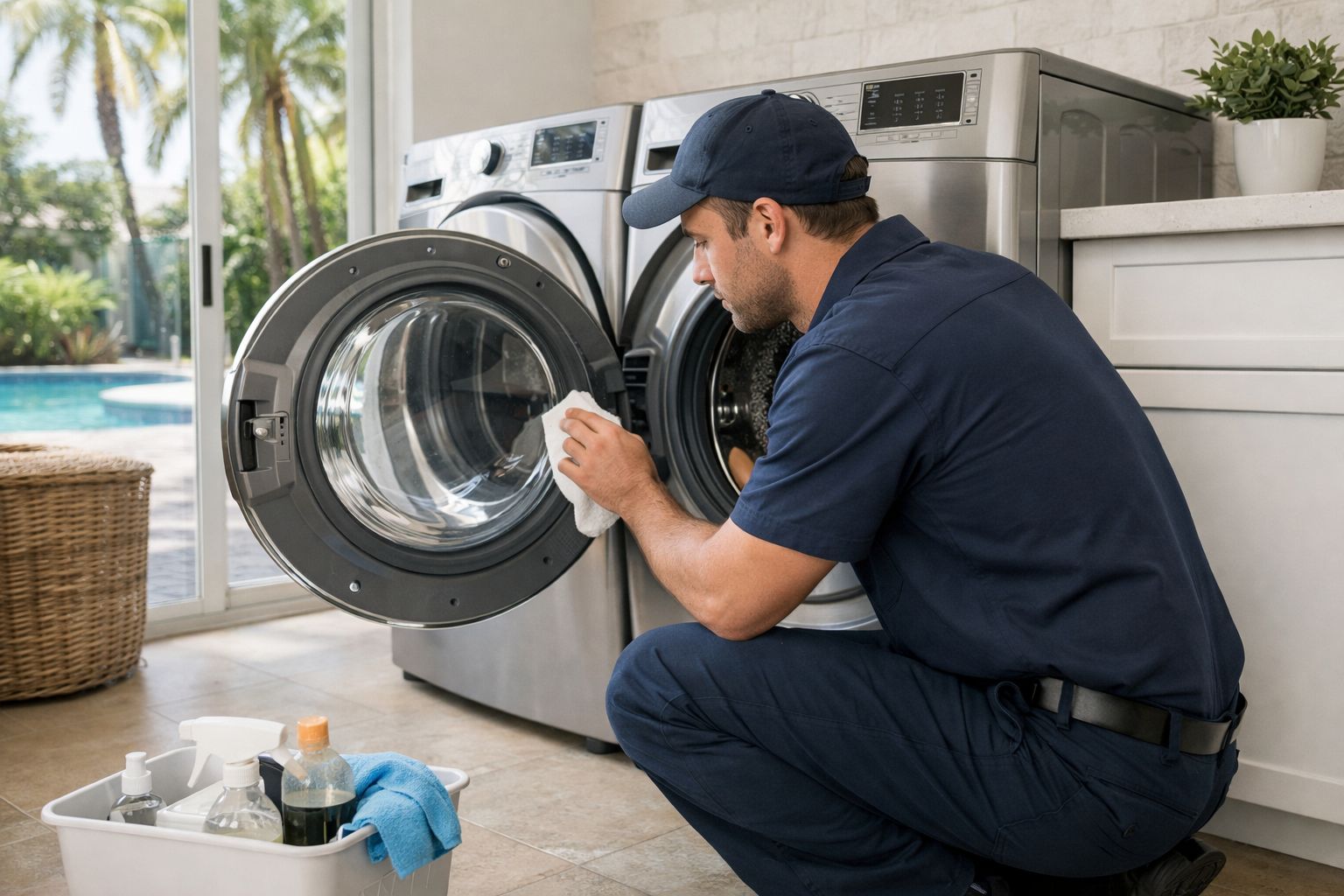
Learn why a front load washer smells musty after cleaning, what homeowners can safely check, and when drainage or residue problems need professional diagnosis.
By General Appliance Service • November 14, 2026
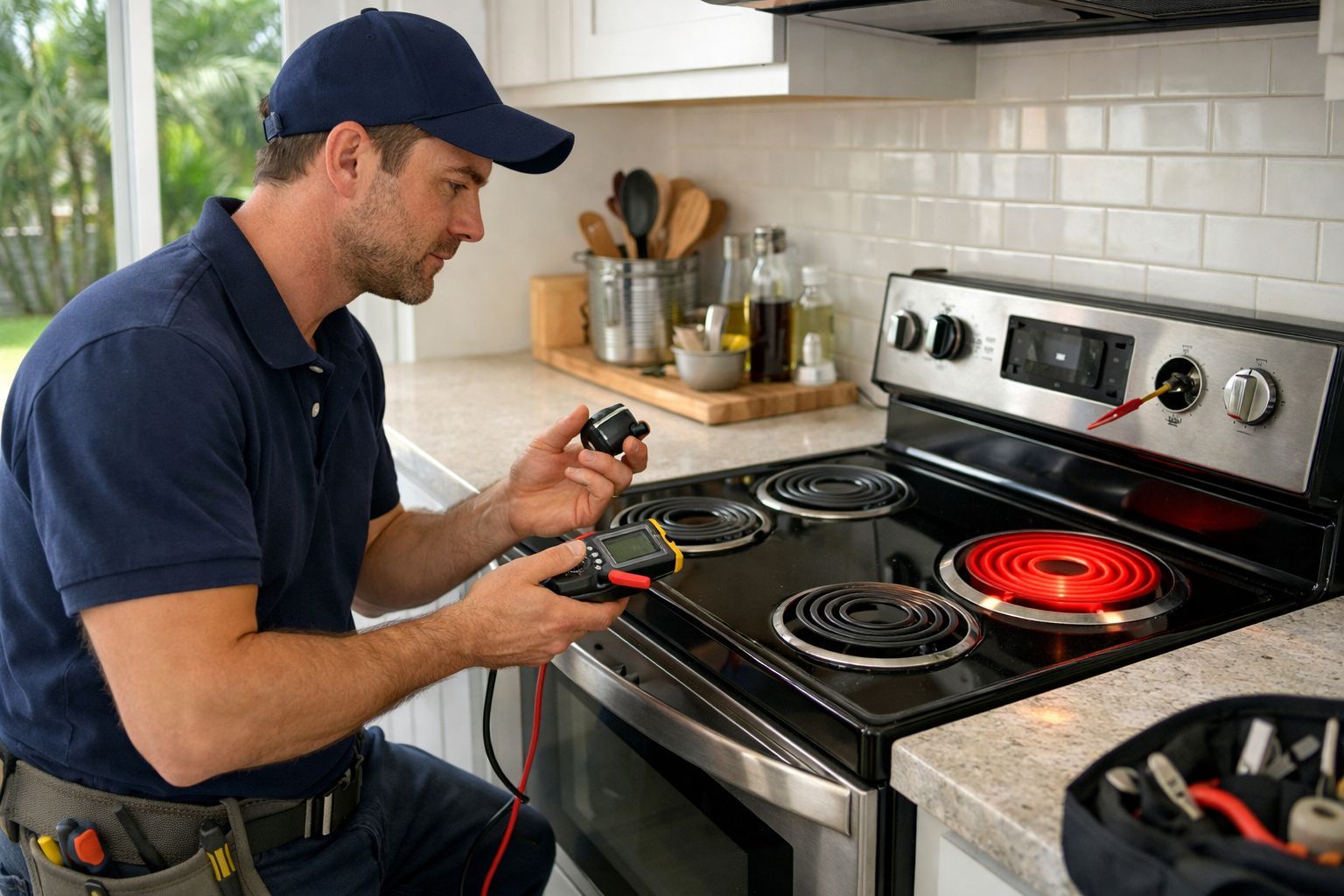
An electric stove burner that stays on high is a temperature-control problem. Learn what may cause it, what to check safely, and when to stop using the range.
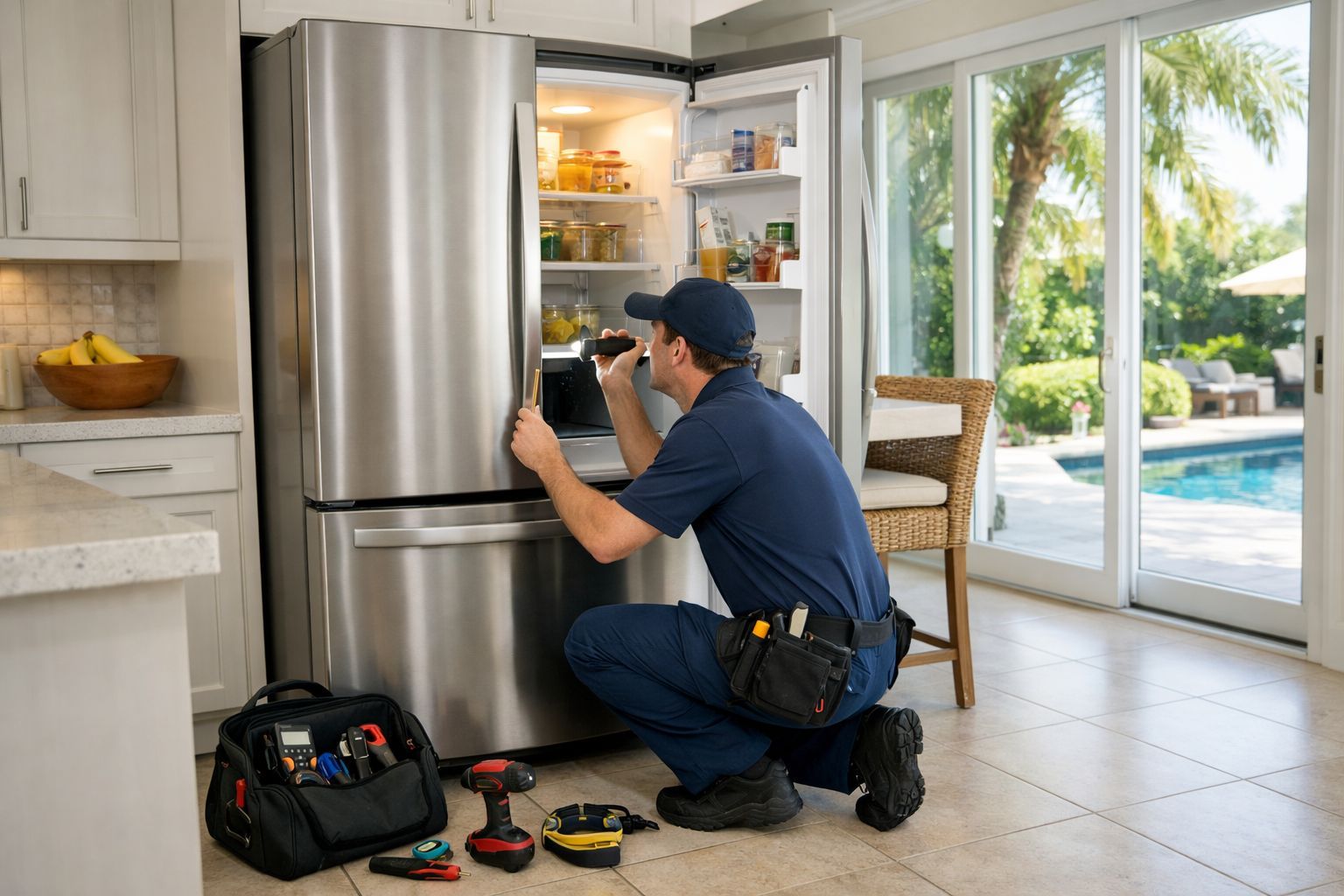
By General Appliance Service • November 13, 2026
A refrigerator fan noise that stops when the door opens may involve normal fan timing, frost contact, or a failing motor. Learn what to check safely.
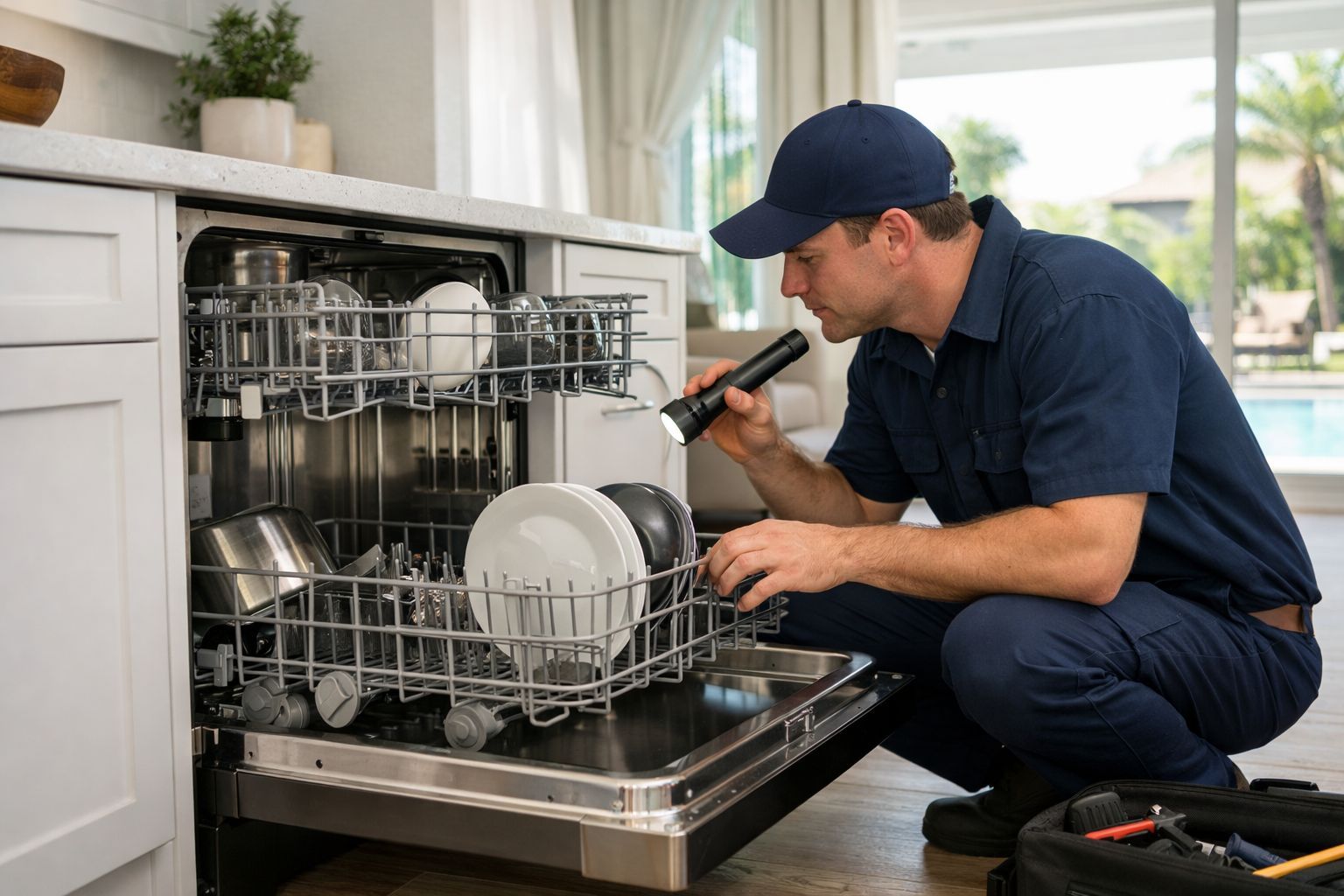
By General Appliance Service • November 12, 2026
A dishwasher knocking noise during the wash cycle may be caused by spray-arm contact or a wash-system problem. Learn what to check safely and when repair is needed.
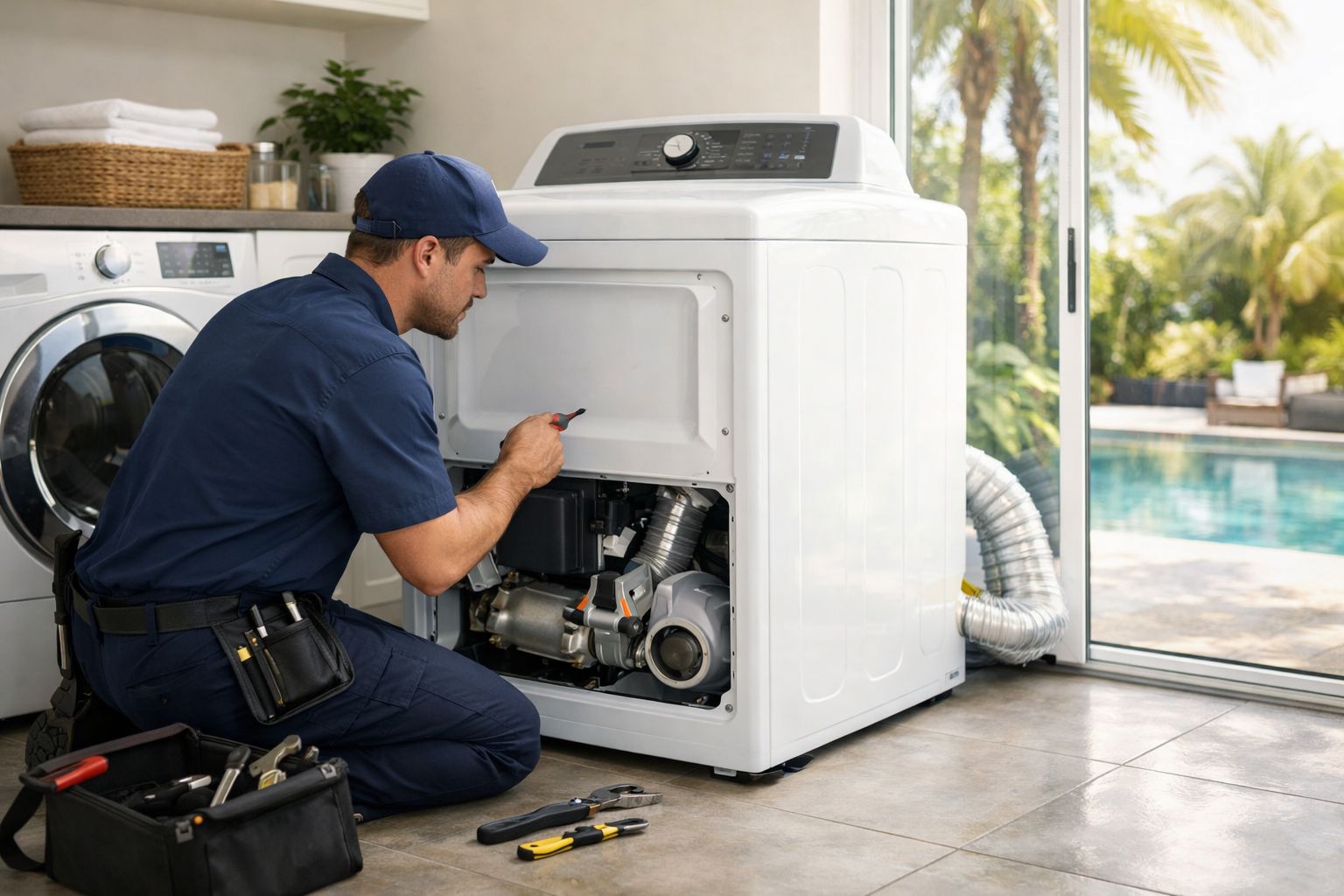
By General Appliance Service • November 11, 2026
Gas dryer rattles only when heating? Learn what a heat-only buzz or chatter can indicate, what to check safely, and when to call for dryer repair.
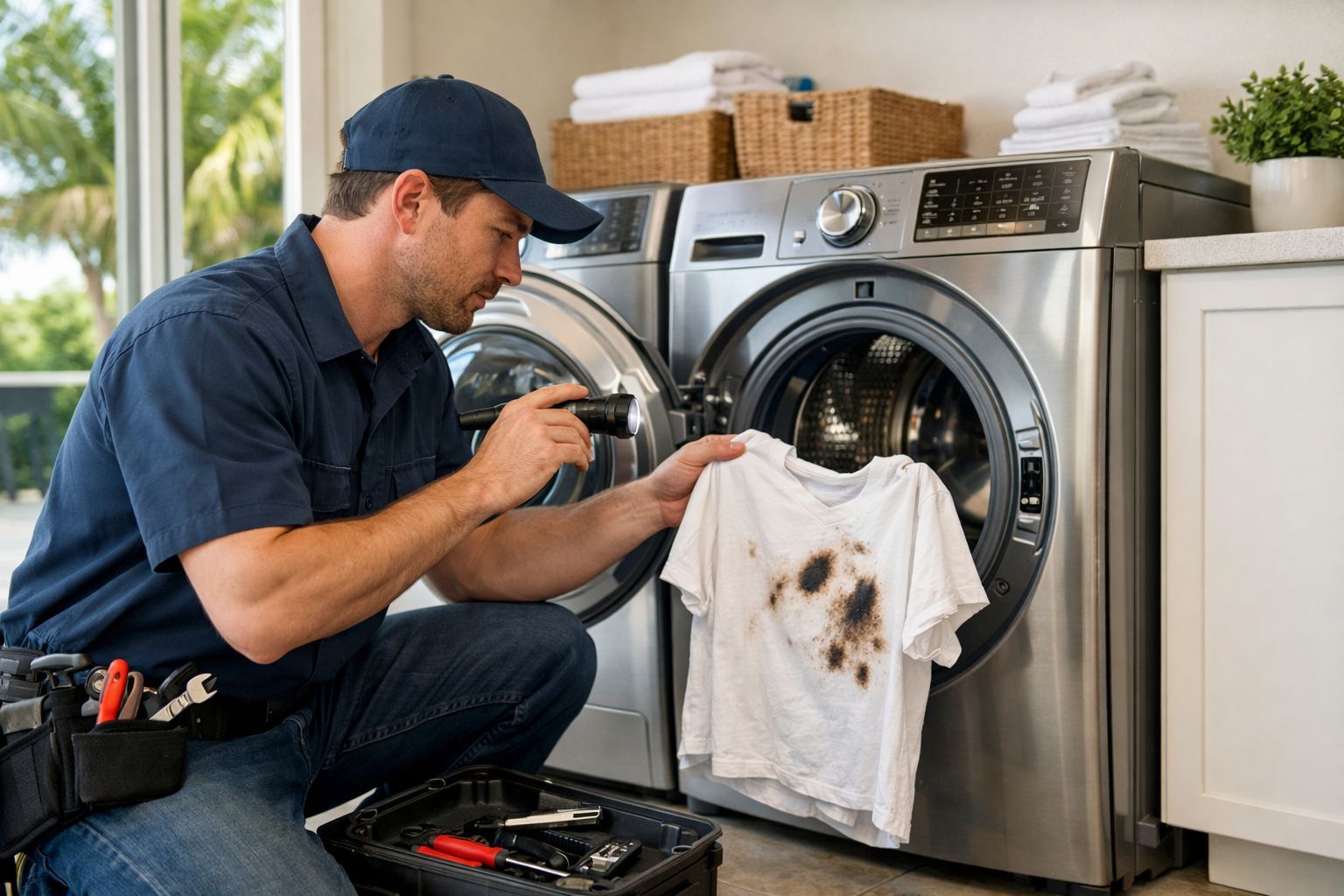
By General Appliance Service • November 7, 2026
Washer leaving grease spots on clothes? Learn how detergent buildup, laundry contaminants, and internal washer problems can create dark marks.
By General Appliance Service • November 6, 2026
Ice maker overfilling and making icicles can point to a seeping valve, frozen fill tube, mold damage, or another issue. Learn what to check safely.
Show More