Why Does One Electric Stove Burner Stay on High No Matter Where You Set the Knob?

General Appliance Service • November 14, 2026

Share this article

By General Appliance Service

An electric stove burner that stays on high is not regulating power correctly. This differs from normal retained heat after cooking or a burner that will not heat at all. If low, medium, and high settings produce nearly the same intense heat, treat that burner as a safety concern until the cause is identified. The pan is rarely responsible; the problem is usually within the burner’s control circuit.

What a Technician Checks When an Electric Burner Stays on High

Conventional coil and radiant burners use controls that cycle power on and off. Lower settings provide shorter heating intervals, while higher settings keep the element energized longer. When the burner runs near full output at every setting, a failed surface control switch—often called an infinite switch—is a common possibility.

However, a switch should not be replaced based on the symptom alone. A technician checks whether the problem affects one burner, whether the element shuts off at Off, and whether the range uses coil elements, a radiant glass top, or electronic touch controls. Wiring, terminals, and the element itself can create similar symptoms.

For a proper control and heating diagnosis, electric range and cooktop repair in Palm Coast can identify whether the control, wiring, terminal, or surface element is responsible.

Start With the Knob and Safe Observations

Let the surface cool completely before checking the knob. Confirm that it is the correct knob for that shaft, fully seated, and not cracked or slipping. A damaged or incorrectly installed knob can turn without moving the control shaft to the setting indicated.

Do not remove the control panel or access electrical connections. Ranges use 240-volt circuits, and live connections may remain behind the panel. Avoid pulling a coil element or examining its receptacle if you see melted material, discoloration, or sparking.

Instead, note whether the issue follows one burner, occurs at every setting, or continues after the knob is turned Off. Also watch for smoke, popping, hot-insulation odors, or breaker trips. A photo or short video from a safe distance may help document the problem. Do not repeatedly test an overheating burner or pour water onto a hot element.

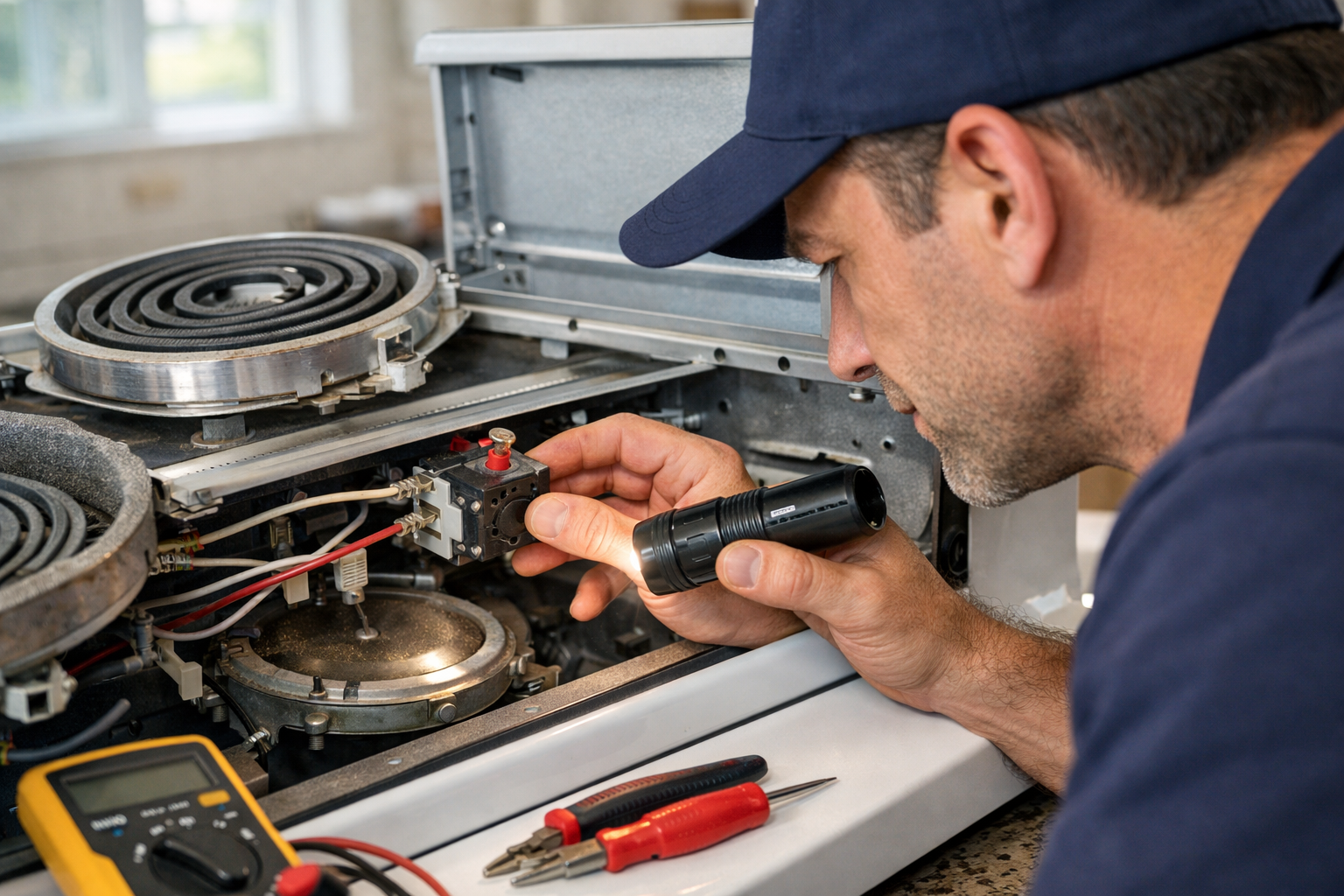
Illustrative appliance diagnostic inspection
AI-generated illustration of an appliance inspection.

Why One Burner Can Be Too Hot While Others Work Normally

Most surface burners have separate controls and connections. One burner can run too hot while the others operate normally because its individual switch, terminal, wiring, or element circuit has failed.

On a coil-top range, a worn receptacle or heat-damaged connector can affect power delivery. On a radiant glass-top model, a glowing red pattern does not prove the radiant element is defective. The control path, terminal connections, and element need evaluation together.

A technician may inspect knob engagement, the switch or electronic control path, wiring harness, element receptacle, and terminals. They can verify incoming voltage and compare the selected setting with the power delivered to the burner.

Correct part matching is especially important on GE and GE Profile ranges, since similar-looking controls may not fit the burner configuration electrically. GE range and cooktop repair in Palm Coast can help avoid an incorrect replacement.

When to Stop Using the Burner Immediately

Do not keep cooking on a burner that cannot be controlled. Full output can quickly scorch food, overheat cookware, and ignite nearby combustible materials.

Turn the knob Off, remove cookware, and keep towels, paper, plastic utensils, and other items away from the cooktop. Stop using the range if the element remains energized at Off, glows continuously, smokes, sparks, trips the breaker, or shows visible damage near the cooktop or controls.

If the burner will not shut off, turn off the range breaker only if you can do so safely. Do not touch damaged controls or attempt electrical measurements. Heat-damaged terminals and softened wiring insulation need prompt professional attention.

Homeowners nearby can review appliance repair in Crescent Beach for range and oven service information.

Frequently Asked Questions About an Electric Stove Burner That Stays on High

Why does my electric stove burner stay on high when I turn it down?

A failed surface control may keep sending excessive power. Damaged wiring, terminals, an element issue, or a slipping knob can also cause confusing symptoms.

Is a burner that will not regulate heat dangerous to use?

Yes. Uncontrolled high heat can overheat cookware and ignite nearby materials. Stop using it, especially if it smokes, sparks, smells hot, or stays on at Off.

Why does only one stove burner get too hot?

Each burner usually has its own control and connections. One failed switch, terminal, knob, or element-related problem can affect only one cooking zone.

Can a bad knob make a burner seem stuck on high?

Yes. A cracked, loose, or incorrectly installed knob may not move the control shaft correctly. Check its fit only after the surface is completely cool.

Should I turn off the breaker if the burner will not turn off?

If the burner remains energized at Off, remove cookware and clear the area. Turn off the range breaker if safe, then arrange service promptly.

A burner that stays on high needs diagnosis rather than repeated testing or guesswork. For Palm Coast service, contact a qualified appliance professional at (386) 359-3215.

Recent Posts

By General Appliance Service • November 18, 2026
Learn why a gas dryer heats then blows cold air later in the cycle, what burner cycling is normal, and when delayed heat loss needs diagnosis.
By General Appliance Service • November 17, 2026
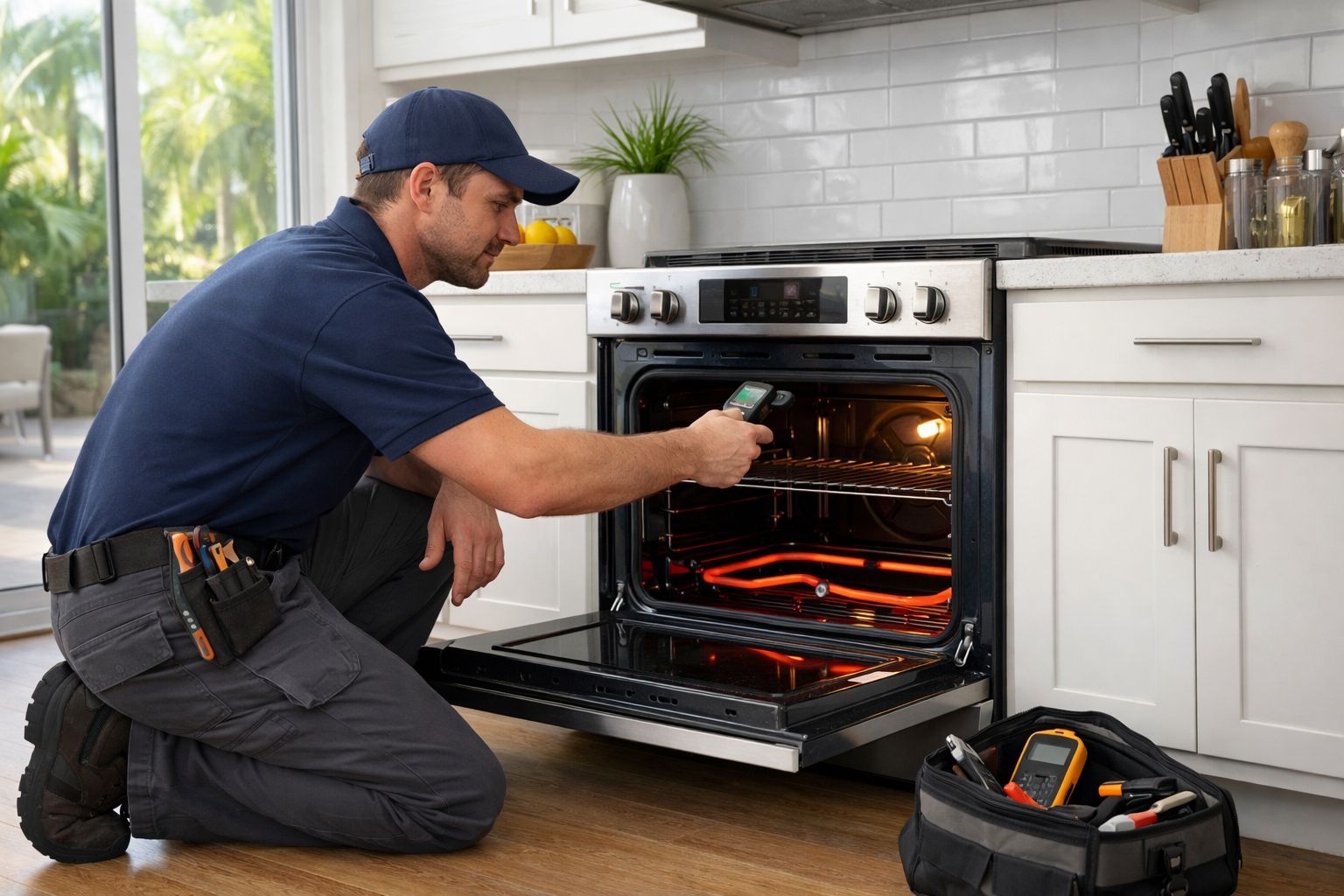
Is your electric oven taking too long to preheat? Learn what can cause slow heating, why the display may be misleading, and when professional diagnosis is needed.
Washer fills with water when turned off
November 16, 2026
Why does your washer fill with water when turned off? Learn how inlet-valve seepage differs from drain backflow, what to shut off safely, and when to call a technician.
By General Appliance Service • November 15, 2026
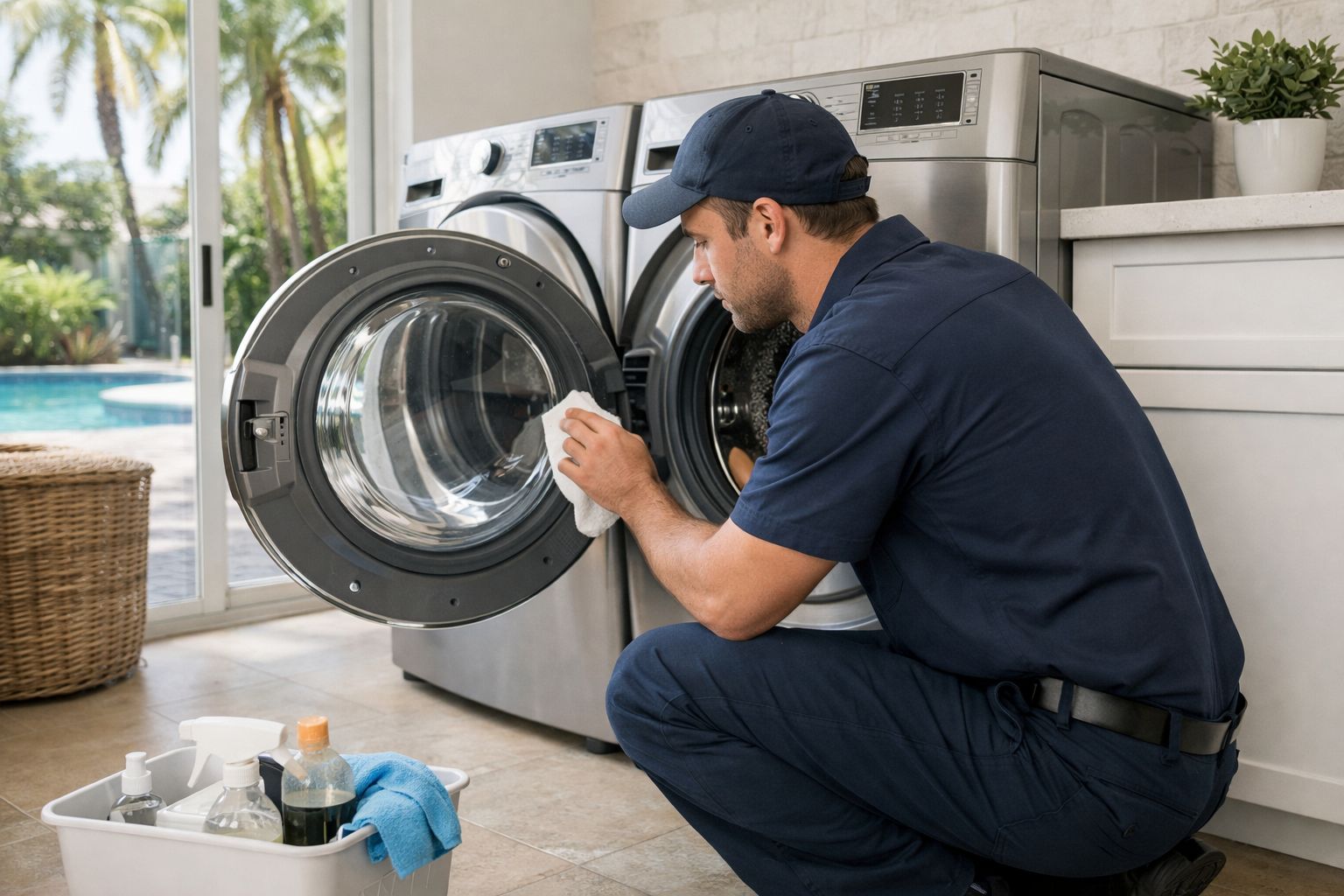
Learn why a front load washer smells musty after cleaning, what homeowners can safely check, and when drainage or residue problems need professional diagnosis.
By General Appliance Service • November 13, 2026
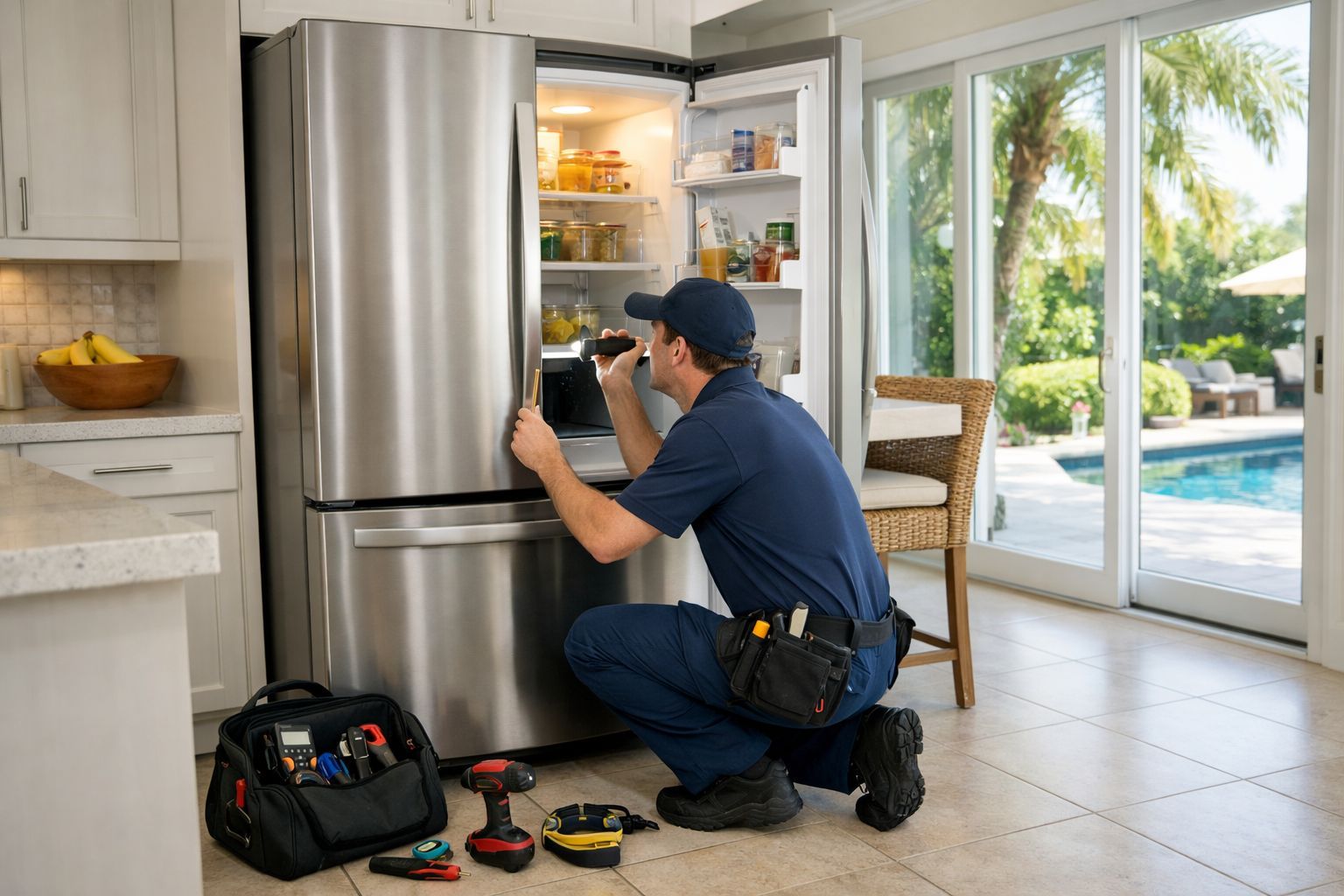
A refrigerator fan noise that stops when the door opens may involve normal fan timing, frost contact, or a failing motor. Learn what to check safely.
By General Appliance Service • November 12, 2026
A dishwasher knocking noise during the wash cycle may be caused by spray-arm contact or a wash-system problem. Learn what to check safely and when repair is needed.
By General Appliance Service • November 11, 2026
Gas dryer rattles only when heating? Learn what a heat-only buzz or chatter can indicate, what to check safely, and when to call for dryer repair.
By General Appliance Service • November 10, 2026
Learn why an oven display resets when heating, what homeowners can safely check, and when a heat-related power loss needs professional diagnosis.
By General Appliance Service • November 7, 2026
Washer leaving grease spots on clothes? Learn how detergent buildup, laundry contaminants, and internal washer problems can create dark marks.
By General Appliance Service • November 6, 2026
Ice maker overfilling and making icicles can point to a seeping valve, frozen fill tube, mold damage, or another issue. Learn what to check safely.
Show More