
Why Is My Wine Cooler Icing Up and Running Constantly?
By General Appliance Service
A wine cooler that is icing up and running constantly does not necessarily have a bad thermostat. Ice indicates that moisture is freezing inside the cabinet, while long run times can result from a door gap, restricted ventilation, a control problem, or a cooling-system fault. Frost location, actual cabinet temperature, and the cooler’s design all help identify the likely cause.
Protect valuable bottles if temperatures are unstable. Before defrosting or replacing anything, note the temperature setting, measure the actual temperature, and photograph the frost pattern.
What a Technician Checks When a Wine Cooler Ices Up
A technician first confirms the cabinet temperature instead of relying only on the display. A cooler set to 55 degrees may be running too cold, too warm, or fluctuating. An independent thermometer inside the cabinet can reveal whether the control setting matches actual conditions.
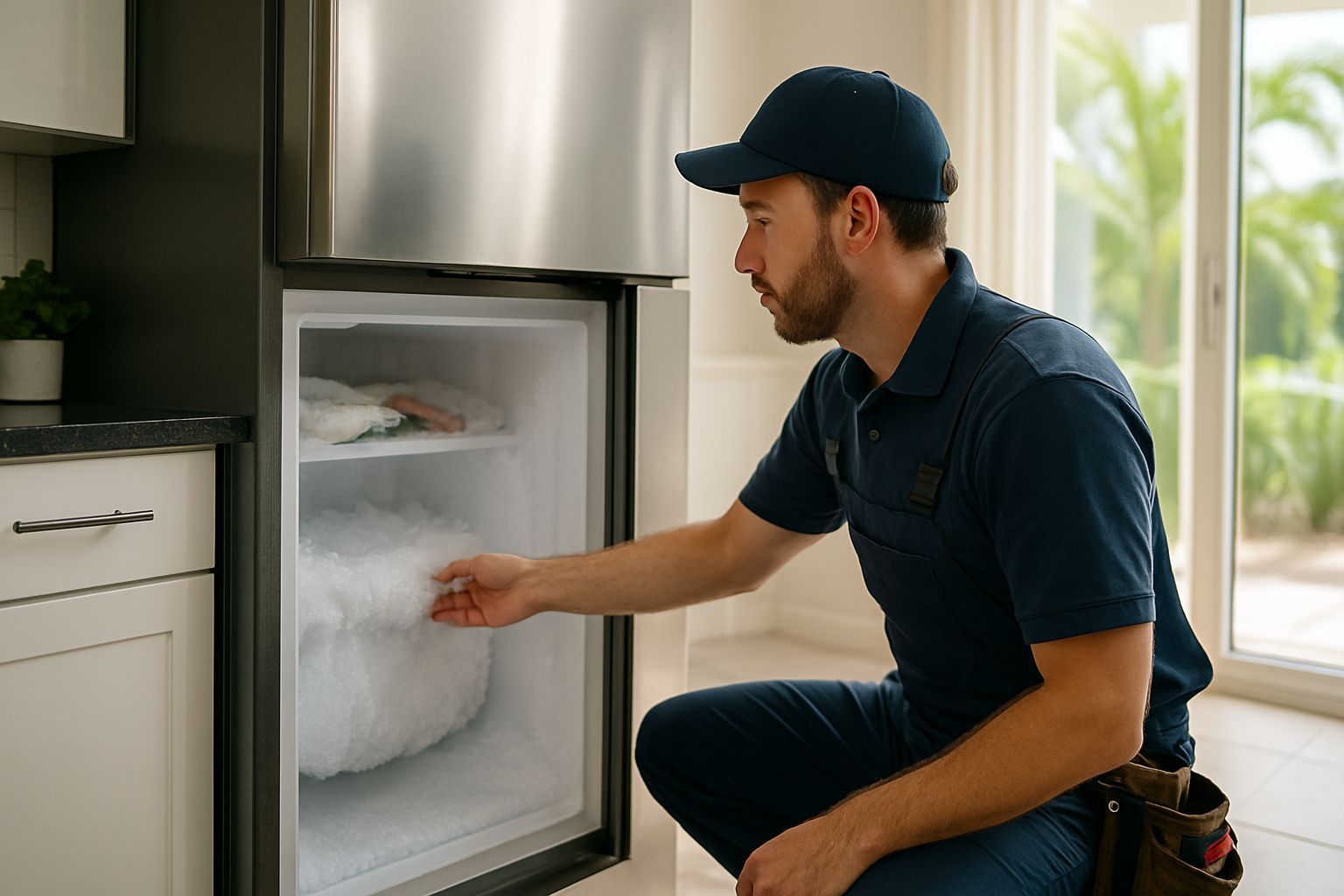
The frost pattern is also important. Light frost after frequent door openings differs from thick ice near the evaporator area. Widespread ice can restrict airflow, while a concentrated patch may point to a defrost, airflow, or cooling issue, depending on the model.
The technician also determines whether the cooler uses compressor refrigeration or thermoelectric cooling. With a dual-zone unit, it matters whether one zone or both are affected. For wine cooler repair in Palm Coast, provide the model number, set temperature, measured temperature, and frost photos before defrosting.
Door Seals and Humid Air Can Create Interior Frost
Warm, humid room air condenses and freezes when it enters a cold wine cooler. Coastal humidity can make this more noticeable, particularly when the door is opened often. Humidity alone, however, usually does not explain a compressor that runs nearly nonstop.
Check that bottles, shelves, or racks are not preventing the door from closing completely. Inspect the gasket for tears, hardening, warping, dirt, or sections pulling away from the door. Door alignment also matters; a door can appear closed while leaving a small gap along one edge.
A leaking seal continuously adds heat and moisture to the cabinet, increasing frost and cooling demand. Still, a gasket that looks normal does not rule out a fan, sensor, control, or refrigeration problem.
Do not chip ice with sharp tools. You could damage an interior surface or concealed cooling line. Move wine to a stable, cool location if temperature control is failing.
Why Ventilation Can Make a Wine Cooler Run Too Long
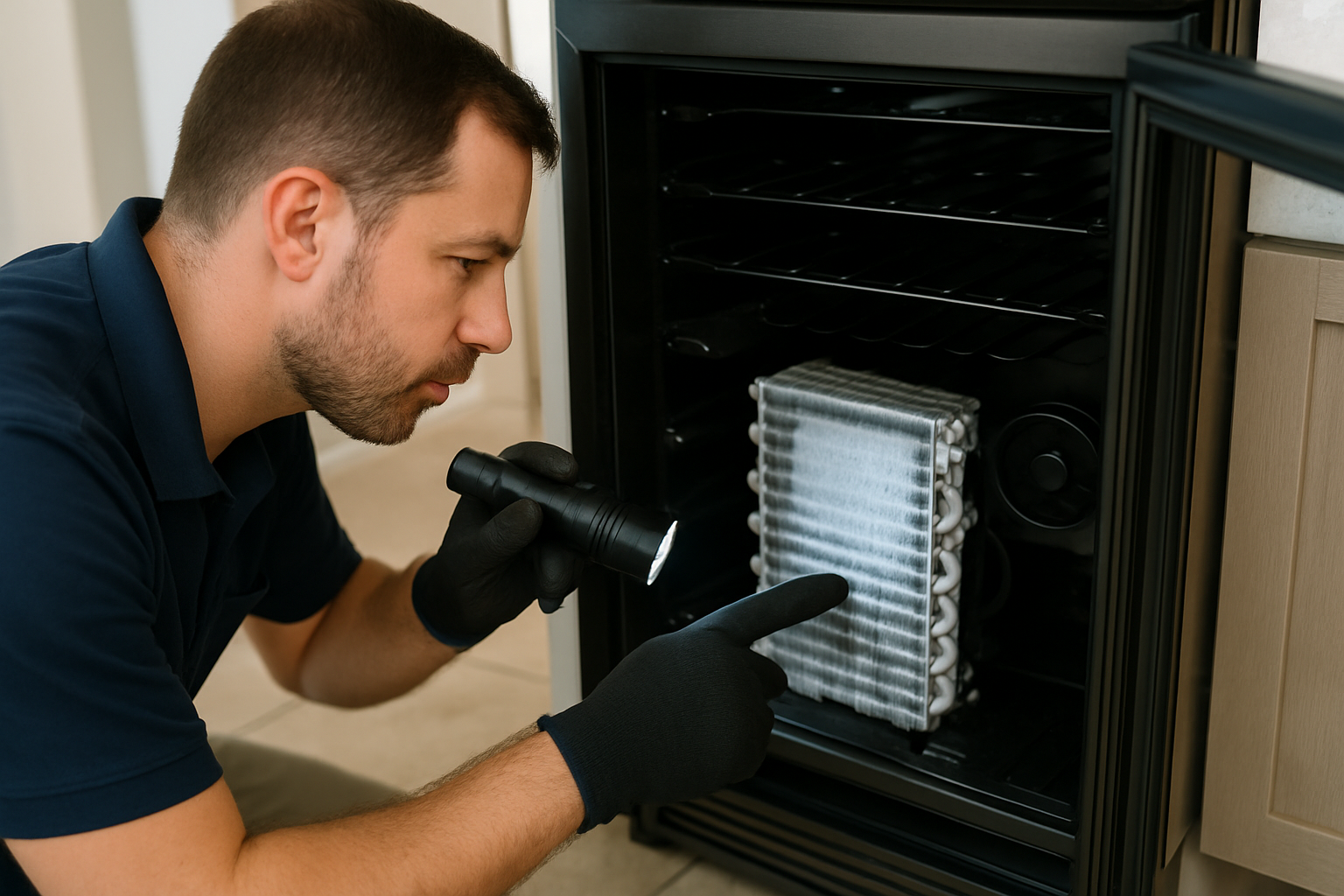
Wine coolers must release heat outside the cabinet. Built-in models commonly vent through a front grille, while freestanding models need clearance around specified sides or rear areas. Blocking those paths can trap heat and force the compressor to run longer while the cabinet struggles to maintain its setting.
Check exterior grilles for dust, rugs, cabinetry, or stored items that restrict airflow. A freestanding unit placed tightly inside cabinetry may overheat because it is not designed to vent like a built-in model.
Follow the owner’s manual for permitted exterior cleaning. Avoid removing cabinet panels or reaching into electrical and refrigeration components. A failed fan, dirty condenser area, poor heat rejection, and improper installation can create similar symptoms.
For help evaluating airflow and installation concerns, appliance repair in Ormond-by-the-Sea can help distinguish a ventilation issue from a component failure.
Controls, Sensors, and Cooling Faults Need Model-Specific Diagnosis
A failed temperature sensor, thermostat, or control board can make a wine cooler run past its intended temperature. The control may continue operating because it receives inaccurate information or fails to respond properly to correct readings.
Avoid installing a similar-looking replacement thermostat or sensor without confirming compatibility. Wine cooler controls are model-specific, and an incorrect part can create new temperature-control problems.
Technicians inspect gasket contact, fans, ventilation, wiring, controls, and frost patterns before considering sealed-system performance. If the compressor runs continuously but cooling is weak or inconsistent, the refrigeration system may require professional testing. Sealed-system work is not a DIY repair.
General Appliance Service serves St. Johns, Flagler, and Volusia counties. The available Palm Coast appliance repair services also address temperature, airflow, and control problems in other household appliances.
Frequently Asked Questions About Wine Cooler Icing Up and Running Constantly
Why is my wine cooler icing up even though it is still running?
Ice means moisture is freezing inside the cabinet. The cooler may have a door leak, excessive humidity exposure, restricted airflow, or cooling that is too concentrated in one area.
Can a bad door seal make a wine refrigerator run all the time?
Yes. A poor seal allows warm, moist air inside, increasing the cooling load and frost. If the gasket seems sound, another fault may still be involved.
Should I turn off a wine cooler that has ice inside?
Move bottles if temperatures are unstable. A controlled defrost may help after checking the manual, but photograph frost first and never use sharp tools or uncontrolled heat.
Why does a built-in wine cooler need ventilation around its grille?
The cooler must release heat removed from the cabinet. A blocked grille traps heat, raises operating temperatures, and can make the compressor run excessively.
Is an iced-up wine cooler worth repairing?
It depends on the diagnosed fault, age, parts availability, installation, and condition. Gaskets, fans, sensors, and controls may be practical repairs; sealed-system faults require comparison.
Prompt diagnosis can prevent worsening frost, unstable storage temperatures, and unnecessary compressor wear. Call General Appliance Service at (386) 359-3215 for model-specific evaluation when basic checks do not resolve the problem.
Recent Posts