
Why Is My Electric Oven Taking So Long to Preheat? What the Timing Can Tell You
By General Appliance Service
An electric oven that takes too long to preheat can derail dinner even when it eventually gets hot. The symptom is not a parts diagnosis by itself. Slow preheating means the oven is either adding heat too slowly or reading temperature incorrectly, and element, power, wiring, sensor, and control problems can create similar results. Note when preheat starts, when it beeps, and how food cooks.
What Slow Electric Oven Preheating Can Tell You
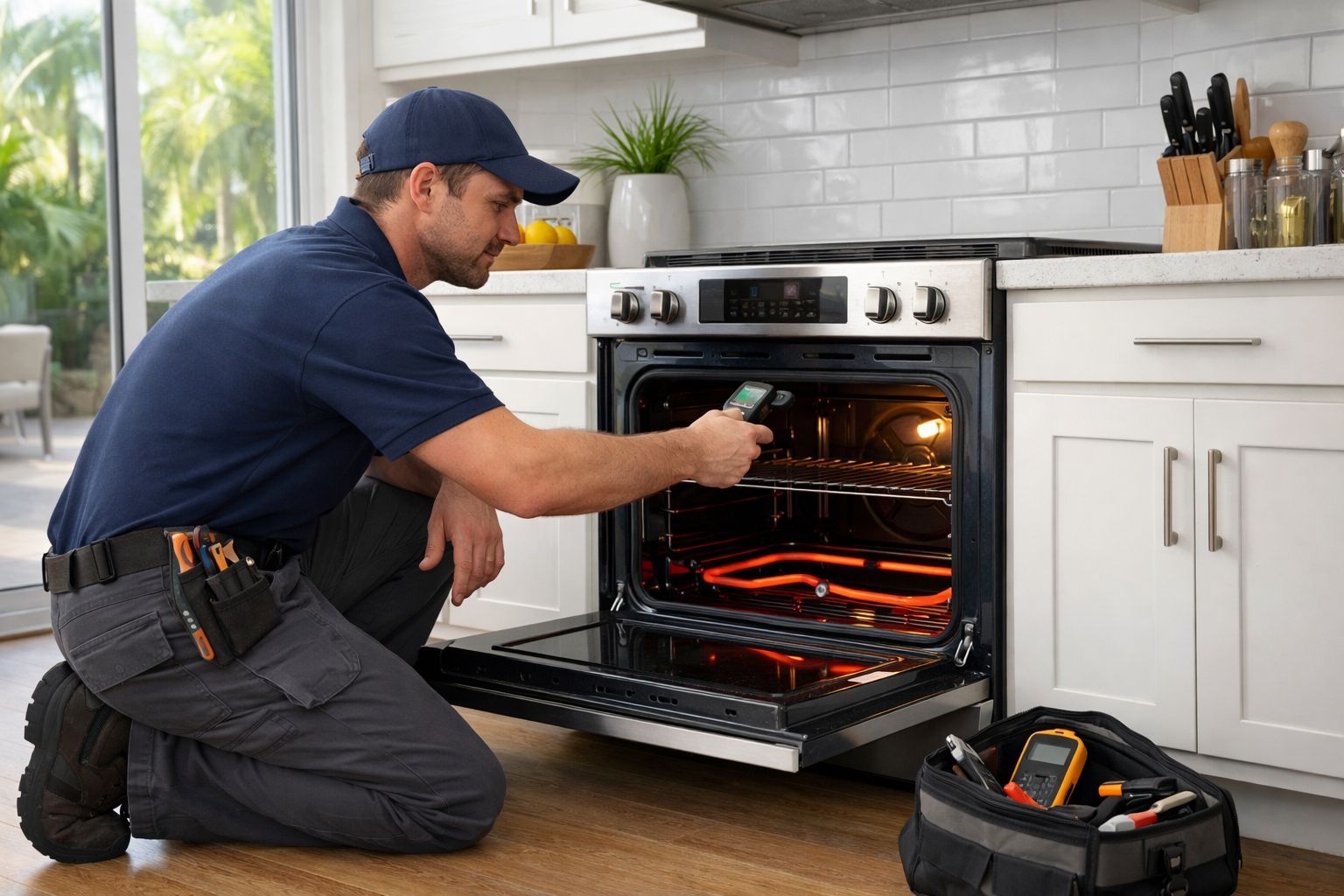
Preheat is not simply one element staying on until the display reaches the selected temperature. Many electric ovens cycle the bake and broil elements in a model-specific sequence. Seeing the upper broil element glow during preheat can be normal and does not automatically mean the lower bake element has failed.
The timing provides better clues. An oven that heats steadily but takes much longer than it once did may have reduced heat output. One that stalls well below the selected temperature may have an element, supply, or control problem. If it beeps that preheat is complete but food remains pale or needs extra cooking time, the displayed temperature may not match conditions throughout the cavity.
Safe Checks Before Calling for Oven Repair
Confirm the selected mode first. Bake, convection bake, and specialty settings can use different heating patterns. Record the selected temperature, approximate preheat time, and whether the oven eventually reaches the setting.
An oven thermometer can identify a general trend, although it is not laboratory equipment. Place it where it will not touch an element or block airflow. Note whether the oven reaches temperature, stalls below it, or swings widely above and below the setting.
With the oven cool and power turned off, inspect an exposed bake element for cracks, blistering, separation, or burned spots. Do not remove panels or touch wiring. A damaged element can sometimes still produce partial heat. If you own a GE range or wall oven, GE and GE Profile oven repair in Palm Coast can help identify the cause safely.
What a Technician Checks When an Oven Heats Slowly
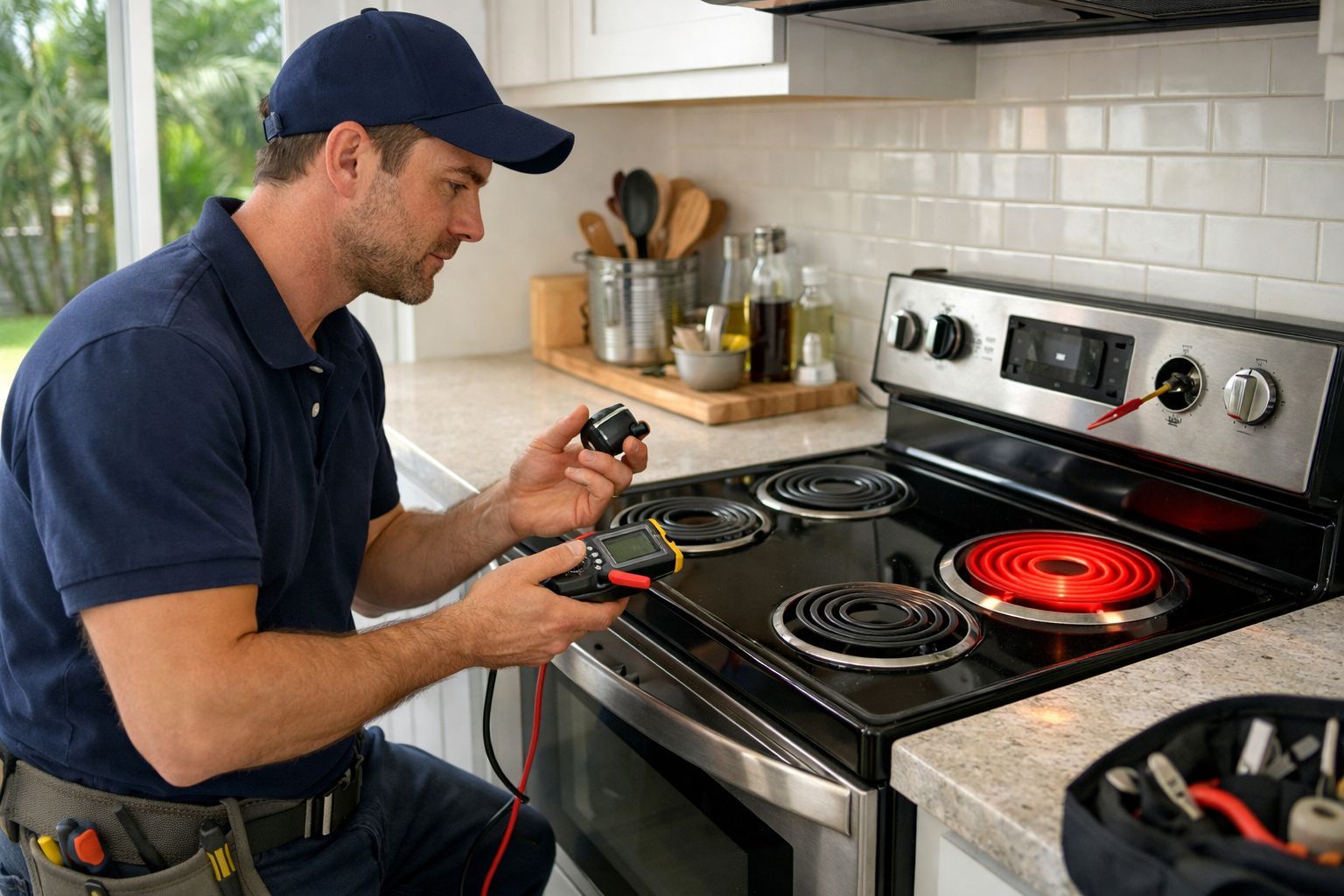
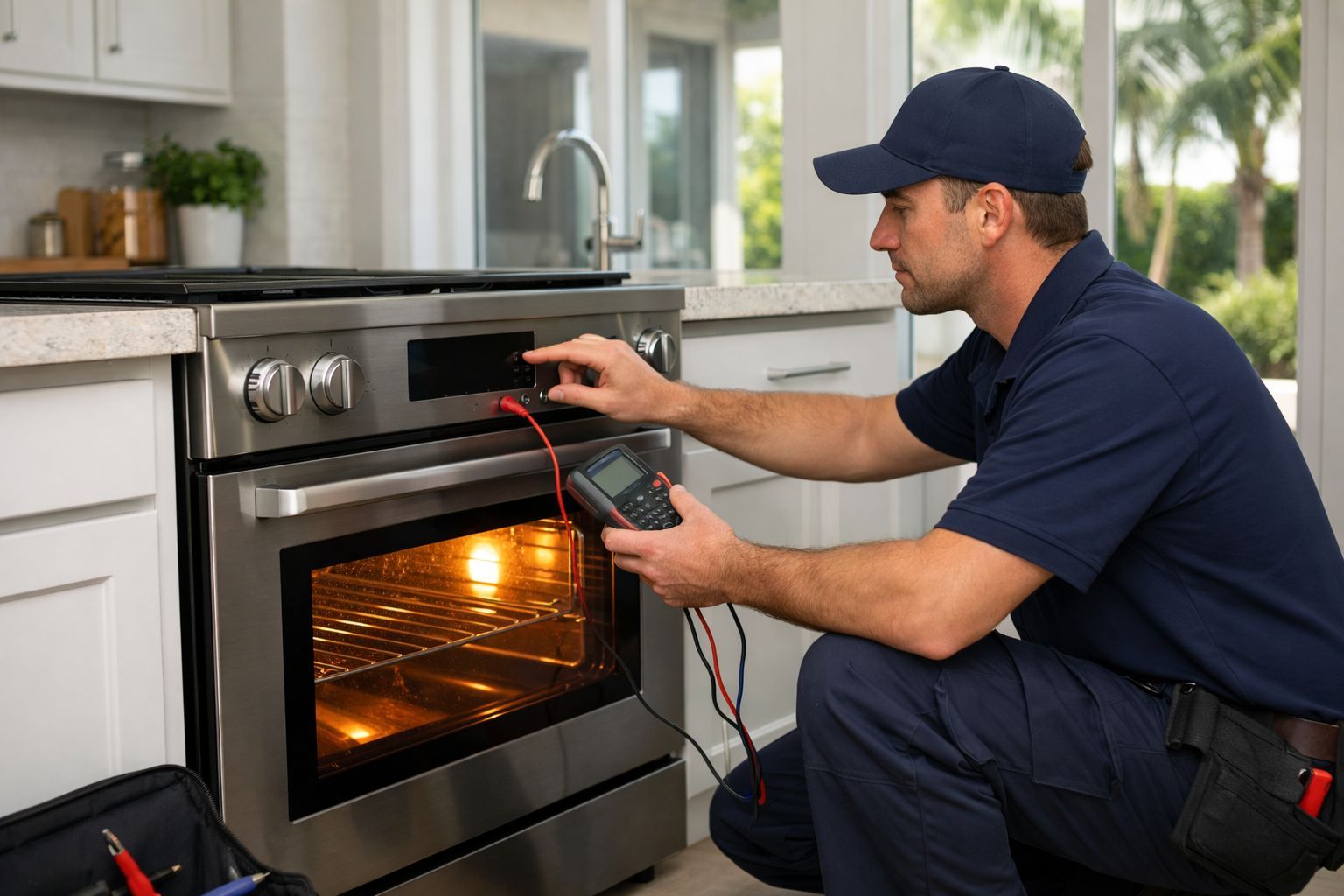
A technician checks whether the bake, broil, or convection elements are receiving and producing the correct heat. Visible damage is useful evidence, but appearance alone does not confirm an element failure. Terminals, wiring, and electrical continuity also matter.
Correct incoming power is another important diagnostic branch. A loose terminal, heat-damaged cord connection, or partial power issue can leave some range functions working while reducing oven performance. Testing these connections may require live electrical measurements and should not be a homeowner task.
The technician also evaluates the temperature sensor, harness, relays, and electronic control. A control may fail to send power during the proper preheat sequence, but replacing it without testing can waste money. For persistent heating concerns, electric oven and range repair in Palm Coast provides a more reliable path than guessing at parts.
When Slow Preheating Means Stop Using the Oven
Stop using the oven and arrange prompt service if you smell burning insulation, see sparks or smoke, experience repeated breaker trips, or notice a hot outlet, plug, or cord. These signs can indicate an overheating electrical connection rather than an ordinary temperature problem.
Without those warnings, slow preheating may not be an emergency, but it still affects cooking results and can worsen over time. Cooktop elements working normally do not prove the oven has proper power on every circuit. Homeowners dealing with this issue can arrange oven and range repair in Ormond Beach through General Appliance Service.
Frequently Asked Questions About an Electric Oven Taking Too Long to Preheat
Why does my oven eventually get hot after a long preheat?
It may have reduced element output, incomplete power, a poor connection, or a control problem that cycles an element incorrectly during preheat.
Is it normal for the broil element to glow during preheat?
Often, yes. Many electric ovens use upper and lower heat during preheat. The expected sequence varies by model and setting.
Can a bad bake element heat slowly instead of failing completely?
Yes. An element may develop damage or an internal fault that reduces heat output before it stops heating altogether.
Why does the oven beep but food still cooks slowly?
The control may receive inaccurate sensor information, or the oven may heat unevenly and fail to maintain the selected cavity temperature.
Should I use an oven that preheats slowly?
Avoid use if there is smoke, sparking, burning odor, breaker trips, or outlet heat. Otherwise, limit use until diagnosis is completed.
Accurate testing separates a weak element from a power, sensor, wiring, or control issue. That distinction helps restore dependable preheat times without replacing parts that were not responsible.