

Washer Fills but Will Not Agitate: Why Spin or Drain May Still Work

General Appliance Service • October 26, 2026

Share this article

By General Appliance Service

A washer that fills normally but then sits quietly, clicks, or hums can be frustrating. Although the machine has water and power, it may not be completing the wash portion of the cycle. A washer that fills but will not agitate does not point to one universal failed part. Drain and spin results, sounds, and timing help narrow the cause.

What a Technician Checks When a Washer Fills but Will Not Agitate

Diagnosis begins with the cycle sequence. A technician confirms whether the washer reaches its normal water level, locks the lid or door, advances on the timer or display, and makes a click, hum, or repeated start attempt.

After filling, the washer must recognize the proper water level and receive confirmation from its lid or door safety system. The timer or electronic control must then send the correct wash-direction command to the motor and drive components.

The failed wash phase is compared with drain and spin operation. Some washers use the motor, shifter, clutch, or drive system differently during agitation than during spin. A part can work in one mode but fail in another.

For Palm Coast washer repair, recording the cycle details before service can help avoid guessing at expensive parts.

Why Drain or Spin Can Work While Wash Action Does Not

Drain, spin, and agitation are related functions, but they are not identical. The drain pump may operate independently from the wash drive. Spin may use a different motor direction, shifting arrangement, clutching action, or control command than agitation.

Depending on the washer design, the cause may involve a timer contact, electronic control, motor circuit, start component, actuator, shifter, damaged wiring, or mechanical resistance. A binding component may be more noticeable in one direction than the other.

Working spin also does not prove every lid switch, door lock, or sensor is operating correctly. Safety inputs can be used differently at various cycle stages. Likewise, a water-level or pressure-sensing problem may allow filling but prevent the control from advancing into wash action.

This is why a washer that spins but will not agitate needs a different diagnostic path than one that fills and will neither wash nor spin.

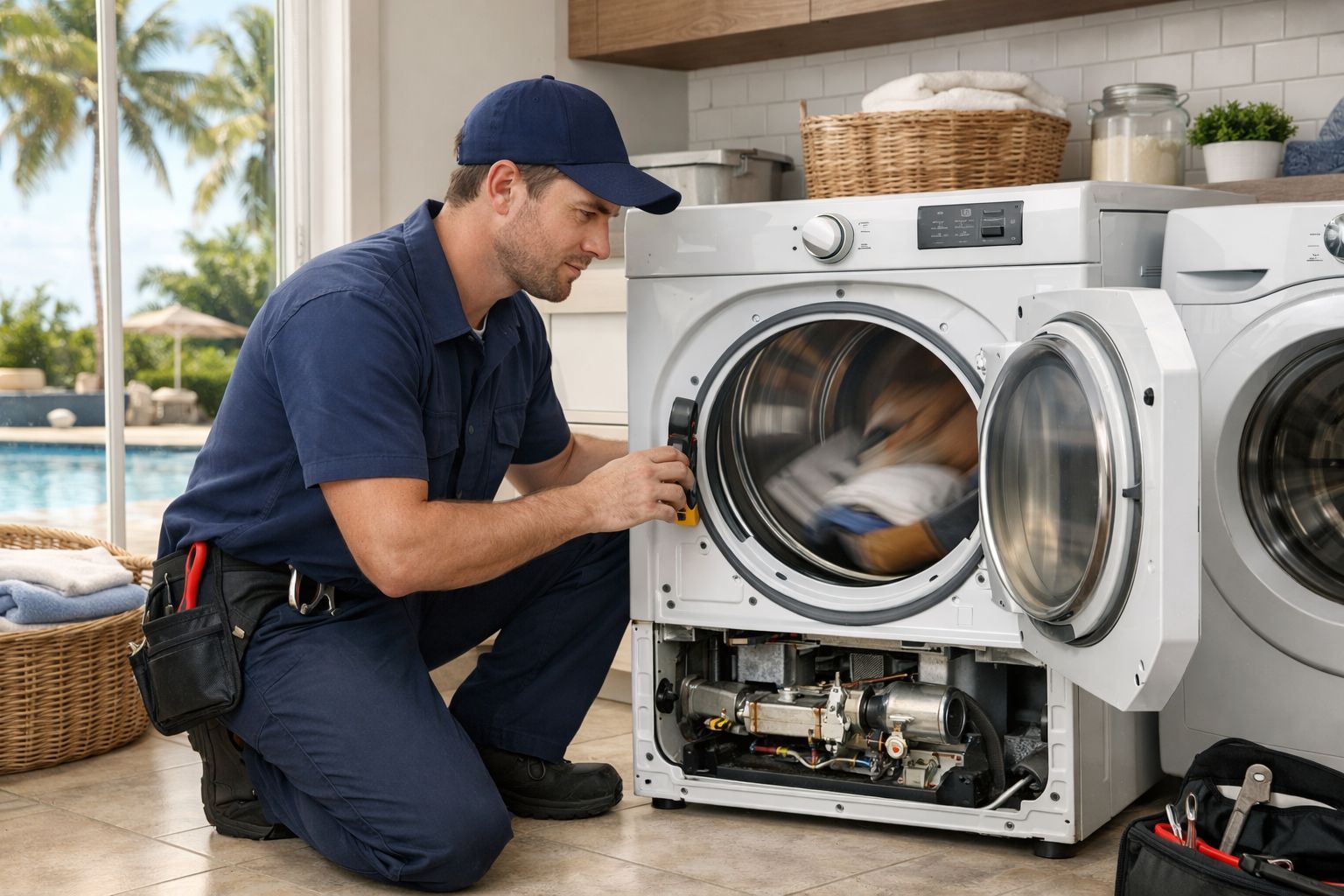
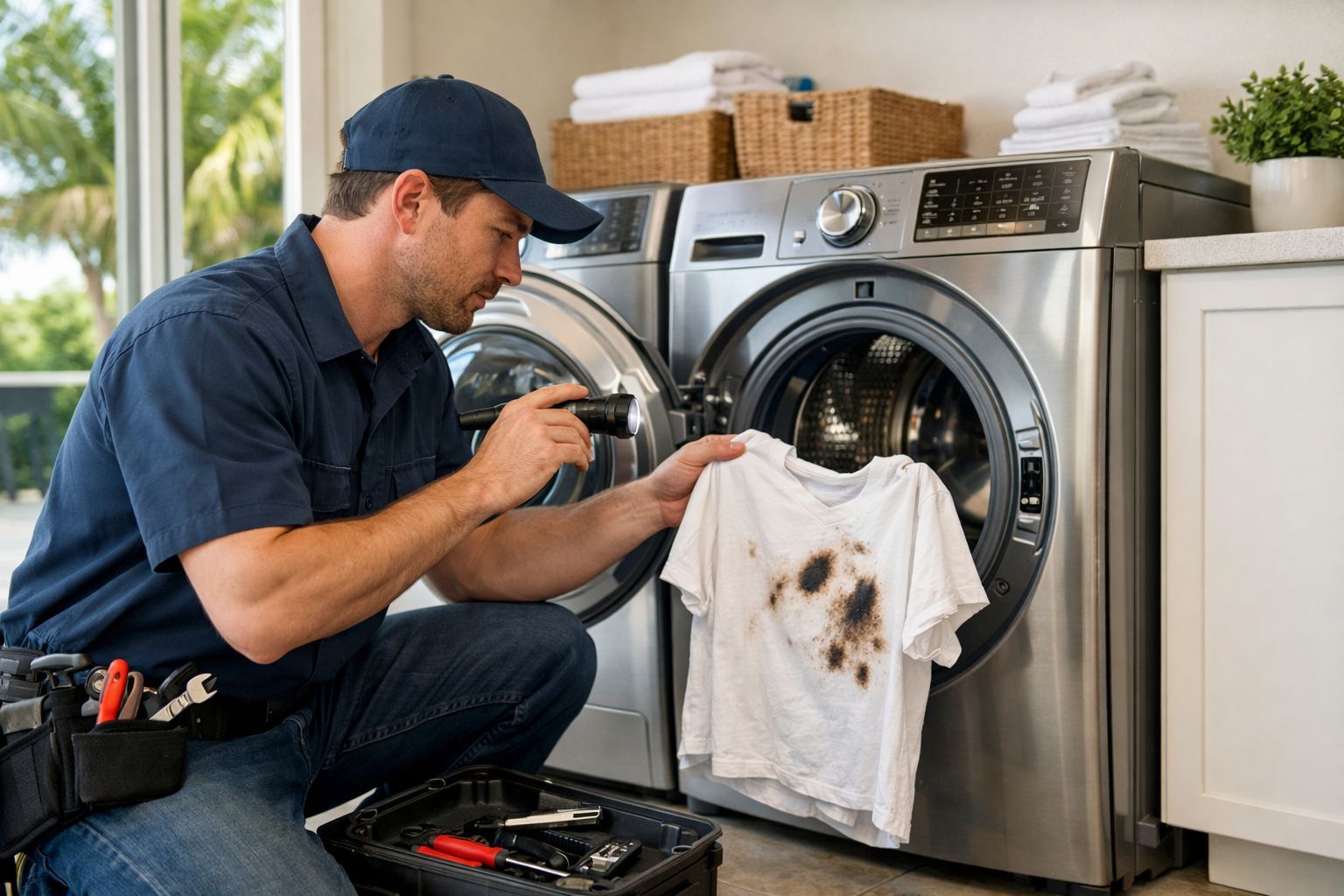
Illustrative appliance diagnostic inspection
AI-generated illustration of an appliance inspection.

A Hum After Filling Is a Reason to Stop the Cycle

A brief sound while a washer changes stages can be normal. A steady hum with no agitator, impeller, basket, or drum movement should not be ignored.

The hum may mean a motor circuit is energized but the motor cannot start or turn freely. It may also come from another component attempting to operate. Proper diagnosis confirms whether the component is receiving the correct power and whether a mechanical load is preventing movement.

Cancel or pause the cycle according to the owner’s manual if the washer fills and only hums. Do not leave a stalled, water-filled washer unattended. Stop using it if there is a burning smell, repeated clicking, leaking water, or a tripped breaker.

An overloaded or uneven load can also interfere with movement. With the appliance off and unlocked, redistribute tightly packed clothing or a heavy item wrapped around the wash area. Do not bypass a lid switch, open the cabinet, or force internal parts to move.

Details That Make Washer Diagnosis More Accurate

Before resetting power, photograph error codes or flashing lights. Note the selected cycle, approximate load type, whether normal water level was reached, and whether the timer or display continued advancing. A short video is useful when the washer hums, repeatedly clicks, or stops at the same point.

Include the brand and model number from the appliance tag. Model-specific testing matters because controls and drive arrangements vary widely. For example, Whirlpool washer repair in Palm Coast should begin with the service information for that design rather than a symptom-based parts swap.

Testing may include the door or lid interlock, pressure system, control output, motor circuit, capacitor, belt or coupling, actuator, wiring, and evidence of binding or overheating. Repeated resets are less helpful when the washer consistently fills and stalls because they can clear fault information and overheat a struggling motor.

Call General Appliance Service at (386) 359-3215 when the washer repeatedly hums, shows an error code, or has an electrical odor. Homeowners seeking washer repair in Daytona Beach can also provide the model number and cycle observations before scheduling.

Frequently Asked Questions About a Washer That Fills but Will Not Agitate

Why does my washer fill but not start washing?

Possible causes include water-level sensing, a lid or door interlock, the cycle control, motor circuit, shifting components, or a mechanical bind.

Why will my washer drain or spin but not agitate?

Drain and spin can use different commands, motor directions, and drive components. A direction-specific electrical, control, actuator, or mechanical problem may affect agitation alone.

What does a humming washer after filling mean?

A hum can indicate an energized component cannot start or move properly. Cancel the cycle and avoid repeated attempts, especially if you notice heat or burning odors.

Can an overloaded washer prevent agitation?

Yes. A severely uneven or tightly packed load can interfere with movement. Redistribute clothing only when the appliance is off and the lid or door is unlocked.

Should I keep restarting a washer that will not agitate?

No. One reset after checking the load may be reasonable, but repeated resets can overheat components and erase error information useful for diagnosis.

Accurate observations help identify whether the problem is related to controls, safety inputs, the motor circuit, or the mechanical drive. Stop using the washer if it hums continuously or shows signs of overheating.

Recent Posts

By General Appliance Service • November 18, 2026
Learn why a gas dryer heats then blows cold air later in the cycle, what burner cycling is normal, and when delayed heat loss needs diagnosis.
By General Appliance Service • November 17, 2026
Is your electric oven taking too long to preheat? Learn what can cause slow heating, why the display may be misleading, and when professional diagnosis is needed.
Washer fills with water when turned off
November 16, 2026
Why does your washer fill with water when turned off? Learn how inlet-valve seepage differs from drain backflow, what to shut off safely, and when to call a technician.
By General Appliance Service • November 15, 2026
Learn why a front load washer smells musty after cleaning, what homeowners can safely check, and when drainage or residue problems need professional diagnosis.

By General Appliance Service • November 14, 2026
An electric stove burner that stays on high is a temperature-control problem. Learn what may cause it, what to check safely, and when to stop using the range.
By General Appliance Service • November 13, 2026
A refrigerator fan noise that stops when the door opens may involve normal fan timing, frost contact, or a failing motor. Learn what to check safely.
By General Appliance Service • November 12, 2026
A dishwasher knocking noise during the wash cycle may be caused by spray-arm contact or a wash-system problem. Learn what to check safely and when repair is needed.
By General Appliance Service • November 11, 2026
Gas dryer rattles only when heating? Learn what a heat-only buzz or chatter can indicate, what to check safely, and when to call for dryer repair.
By General Appliance Service • November 10, 2026
Learn why an oven display resets when heating, what homeowners can safely check, and when a heat-related power loss needs professional diagnosis.
By General Appliance Service • November 7, 2026
Washer leaving grease spots on clothes? Learn how detergent buildup, laundry contaminants, and internal washer problems can create dark marks.
Show More