
Why Is My Dishwasher Detergent Pod Still in the Dispenser After the Cycle?
By General Appliance Service
Finding a dishwasher detergent pod still in the dispenser after a cycle is frustrating, especially when dishes look cloudy, greasy, or dirty. The pod is not always the problem. A dispenser door that stayed closed, an open cup holding an intact pod, and an empty cup with poorly cleaned dishes each point to different possible causes.
What a Technician Checks When a Dishwasher Pod Stays in the Dispenser
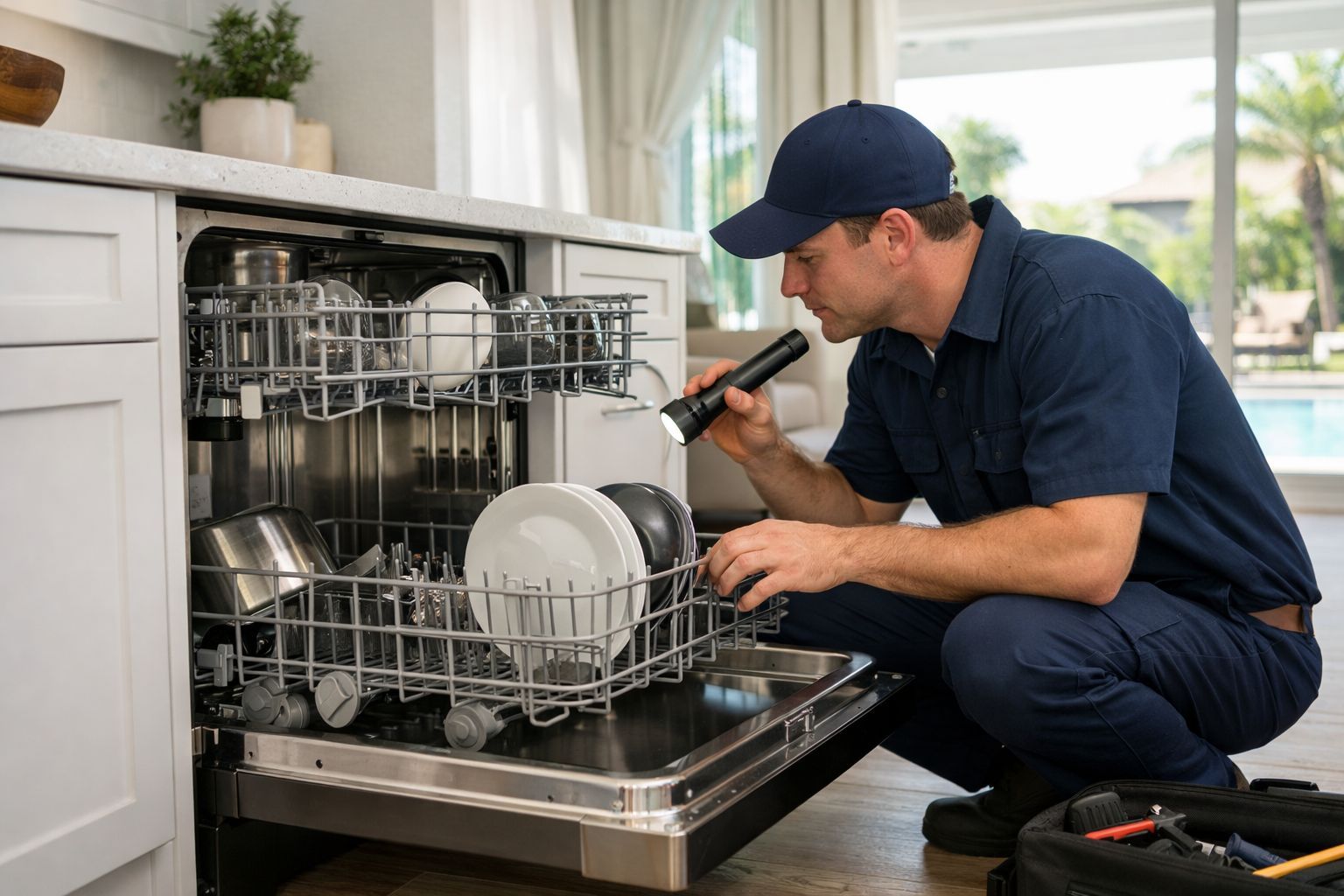
First, a technician checks whether the detergent cup remained latched shut. If it did, detergent never reached the wash water. A baking sheet, tall pan, cutting board, plate, or utensil handle may be directly in front of the cup door and physically prevent it from opening.
The cup, latch, hinge, and door edge are also inspected for detergent buildup. Adding detergent with wet hands or placing a pod into a damp cup can leave residue that interferes with movement. A worn latch, damaged hinge, warped cup, or model-specific actuator issue can cause the same symptom.
Some models use a mechanical release, while others use an electrically operated actuator. For repeated problems, Palm Coast dishwasher repair can determine whether the cause is loading, a mechanical defect, or an electrical failure.
An Open Cup and a Closed Cup Point to Different Problems
A closed detergent cup usually suggests an obstruction or release problem. After the dishwasher is off and cool, check whether cookware, a plate, or a utensil could have blocked the door. Confirm that the lower spray arm can turn freely as well.
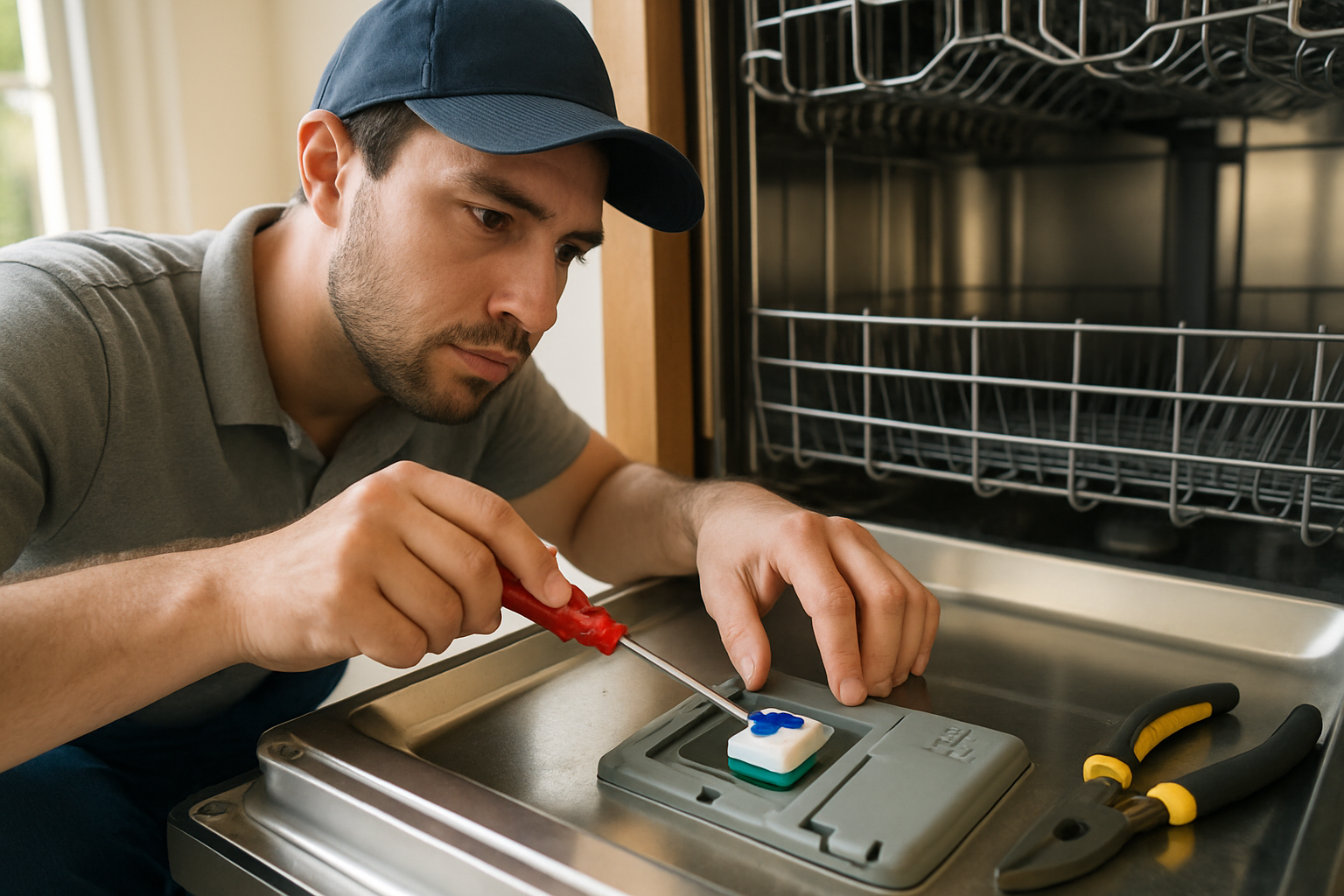
An open cup with an intact or partly intact pod is different. The pod likely released but did not dissolve completely. It may have stuck in a damp cup before the wash began, received poor water circulation, or been affected by moisture absorbed during storage. Low-temperature or short wash settings may also contribute.
An empty cup with dirty dishes is another distinct condition. Detergent may have dispensed normally, but cleaning performance was poor because of restricted spray-arm movement, water-temperature issues, or a circulation problem. Dirty dishes alone do not prove the dispenser failed.
Safe Checks Before Calling for Dishwasher Repair
After a completed cycle, turn the dishwasher off and note whether the cup is closed, open, or open with detergent remaining. A photo of the rack layout can help identify an intermittent blockage.
Wipe accessible detergent film from the cup, latch area, and door edge with a damp cloth. Do not force the latch, pry on the hinge, disassemble the door, or spray lubricant into the dispenser. Lubricant can attract residue, damage plastic components, and contaminate the wash area.
Make sure detergent is placed in the detergent cup rather than the rinse-aid reservoir. Also check that pods or powder are dry, properly stored, and not clumped or deteriorated. Record the model number, selected cycle, detergent type, and cup condition for a faster diagnosis.
Why Replacing the Dispenser Is Not Always the Answer
A dispenser is sometimes blamed when a pan simply blocked the door. In other cases, the door opens correctly but poor water circulation leaves detergent behind. Replacing the complete assembly before separating these conditions can waste money.
A technician can inspect the latch, hinge, cup shape, actuator, wiring, and related control operation for the specific model. When the cup opens but a pod remains, spray-arm clearance, water circulation, and rinse-aid-area contamination may also need attention.
Arrange service if the detergent door stays shut through multiple properly loaded cycles, appears damaged, or repeatedly sticks after cleaning. For model-specific dishwasher testing, St. Augustine appliance repair is available for nearby residents.
Frequently Asked Questions About Dishwasher Detergent Pods Left in the Dispenser
Why is my dishwasher pod still in the dispenser after the cycle?
The cup may have stayed closed because of blocked cookware, residue, or a failed release mechanism. If open, moisture or circulation may be responsible.
Can a large pan block the dishwasher soap door?
Yes. A large pan, cutting board, tall plate, or utensil handle can block the cup door. Leave clear space directly in front of it.
Why is the detergent cup open but the pod intact?
The door likely released, but the pod did not dissolve. A damp cup, weak water movement, blocked spray arm, or old detergent can contribute.
Can detergent residue stop the dispenser latch from opening?
Yes. Residue around the latch and door edge can make it stick. Wipe accessible buildup with a damp cloth without forcing or lubricating parts.
Should I call for repair if the detergent door stays closed?
Yes, after confirming cookware is not blocking it. Repeated failure may involve the latch, hinge, actuator, wiring, or dishwasher control operation.
For persistent dispenser problems, call General Appliance Service at (386) 359-3215. Prompt diagnosis can prevent repeated poor wash results and identify whether the issue involves loading, detergent condition, or a faulty component.