Why Does the Freezer Door Pop Open When I Close the Refrigerator Door?

General Appliance Service • October 22, 2026

Share this article

By General Appliance Service

A freezer door that moves when you shut the refrigerator door can be unsettling, particularly if you worry about thawing food or a failing seal. In many refrigerators, a brief movement is normal. The important distinction is whether the freezer door shifts and reseals by itself or remains visibly ajar. A door that stays open can allow humid air inside, causing frost, uneven temperatures, and longer compressor run times.

Why the Freezer Door Pops Open When the Refrigerator Door Closes

Closing the refrigerator door pushes air through the cabinet. In models with connected refrigerator and freezer compartments, that air movement can briefly increase pressure in the freezer and nudge its door outward. Slamming the refrigerator door makes the effect more noticeable.

If the freezer door moves slightly, then settles back into place with the gasket fully sealed, this is generally normal. Refrigerator doors use flexible gaskets and air passages rather than airtight mechanical latches.

The symptom becomes a concern when the door opens and does not pull itself shut. Even a small gap lets warm, moist air enter. That moisture can freeze on shelves, drawer rails, packages, and the evaporator cover. The freezer may still feel cold initially, but it must work harder to maintain temperature.

What a Technician Checks When the Freezer Door Will Not Reseal

A technician first observes the door during a normal close. Does it move briefly and reseal, stay open every time, or only open when the refrigerator door is shut hard? Those details help distinguish normal pressure movement from a mechanical closure problem.

The entire door path is then checked. On a bottom-freezer model, a drawer may be off its rails, a basket may be out of position, or ice may prevent full closure. On side-by-side and top-freezer refrigerators, the door may rub, sag, or stop short because of hinge wear, damaged cams, or alignment problems.

Cabinet leveling also matters. Many refrigerators are designed to sit with a slight front-to-back pitch that encourages doors to close. A technician can verify leveling, hinge condition, door stops, rollers, gasket contact, and cabinet alignment before recommending replacement parts.

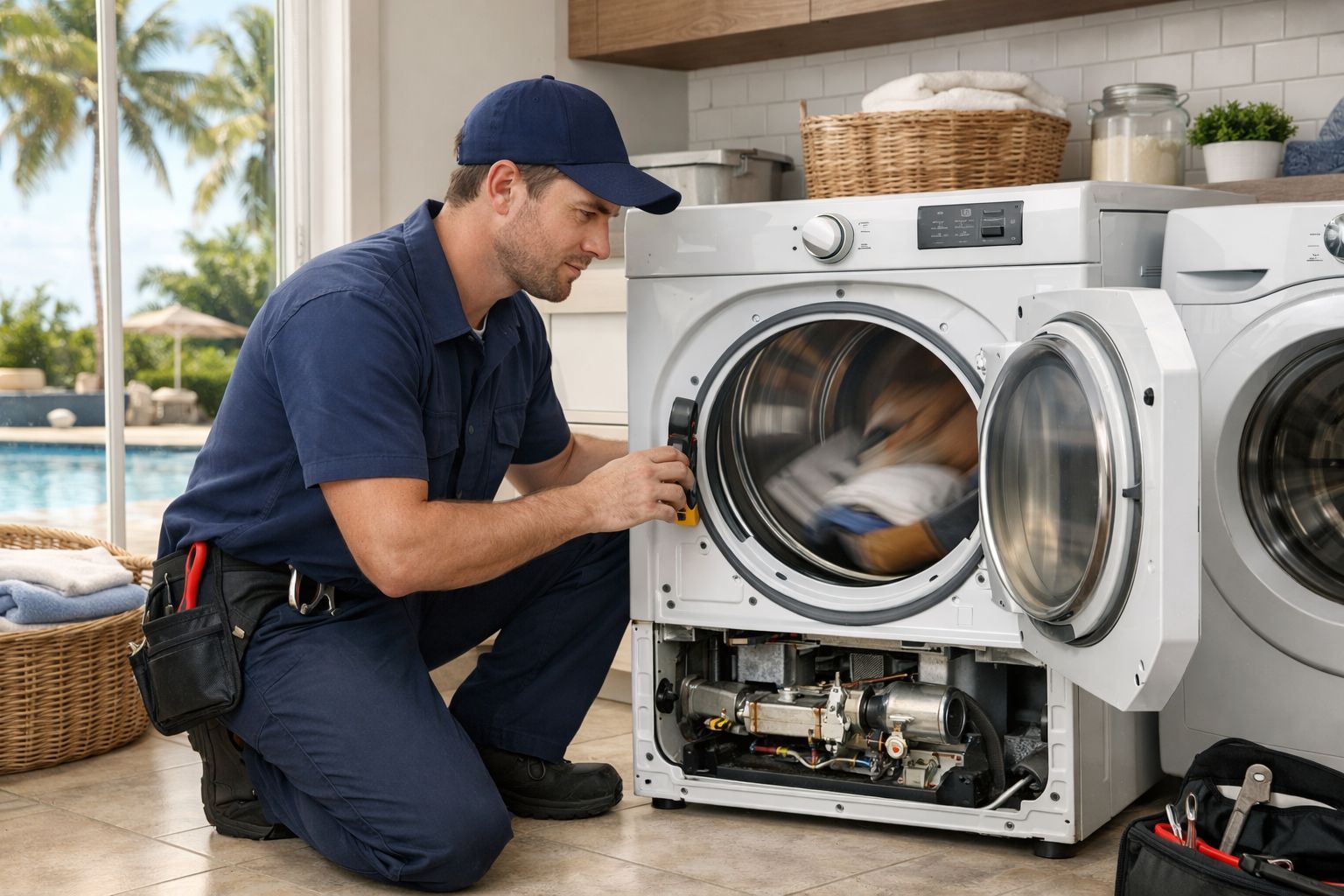
Illustrative appliance diagnostic inspection
AI-generated illustration of an appliance inspection.

Simple Checks You Can Safely Make at Home

Close the refrigerator door normally and watch the freezer door. Repeat the test with a firmer close. If the freezer door only shifts after a hard close and immediately reseals, avoid slamming the refrigerator door. The movement may simply be a pressure change.

Look for obstructions inside the freezer. Food packages, bins, baskets, or ice buildup near drawer rails can keep a door from reaching its fully closed position. Do not force a drawer against ice, since doing so can damage rails, liners, or stops.

Inspect the visible gasket for crumbs, sticky residue, tears, or sections pulled loose from the channel. Wipe the gasket and cabinet contact surface with a mild cleaner approved for your model. Cleaning can improve a dirty seal, but it will not correct a warped door, damaged gasket, or misaligned drawer. For persistent issues, schedule Palm Coast freezer repair before frost and temperature problems worsen.

When a Persistent Door Gap Needs Service

A freezer door that stays ajar is more than a nuisance. Humid Florida air enters through the gap and quickly becomes frost. You may notice snow-like frost around the opening, ice on food packages, a freezer alarm, or a drawer that becomes difficult to slide.

Temperature symptoms may follow. Ice cream may soften, frozen food may partially thaw, and the refrigerator may run longer than usual. What appears to be a cooling failure can begin with a door that is not sealing rather than a failed compressor or control board.

Arrange service promptly if frost returns after clearing, temperatures rise, or the door repeatedly remains open. Homeowners seeking Flagler Beach appliance repair can have the gasket, rails, hinges, leveling, and cooling effects professionally inspected. Burning smells, sparking, or electrical damage require immediate attention; do not use the appliance until it is assessed.

Frequently Asked Questions About a Freezer Door Popping Open

Is it normal for the freezer door to pop open?

Yes, if it moves briefly and reseals immediately. Closing one door can create a short pressure change that pushes the other door outward.

Why does it happen only when I close the refrigerator door hard?

A harder close moves air faster and creates stronger pressure. It may also reveal a marginal gasket, leveling, or alignment problem.

What if the freezer door pops open and stays ajar?

Check for food, ice, a misaligned drawer, worn hinge hardware, or gasket damage. Persistent gaps should be addressed quickly to prevent frost and temperature trouble.

Can a dirty gasket keep the freezer door from sealing?

Yes. Food residue can prevent even gasket contact. Cleaning may help if the gasket is intact, but tears, distortion, or loose sections need inspection.

Should I adjust the refrigerator leveling legs myself?

Follow only your model’s owner instructions. Incorrect leveling can worsen alignment, while ice, rail problems, and obstructions may be the actual cause.

For dependable diagnosis of refrigerator and freezer door concerns, explore appliance repair services or call (386) 359-3215. Addressing a persistent door gap early can help protect food, reduce frost, and prevent unnecessary strain on the appliance.

Recent Posts

By General Appliance Service • November 18, 2026
Learn why a gas dryer heats then blows cold air later in the cycle, what burner cycling is normal, and when delayed heat loss needs diagnosis.
By General Appliance Service • November 17, 2026
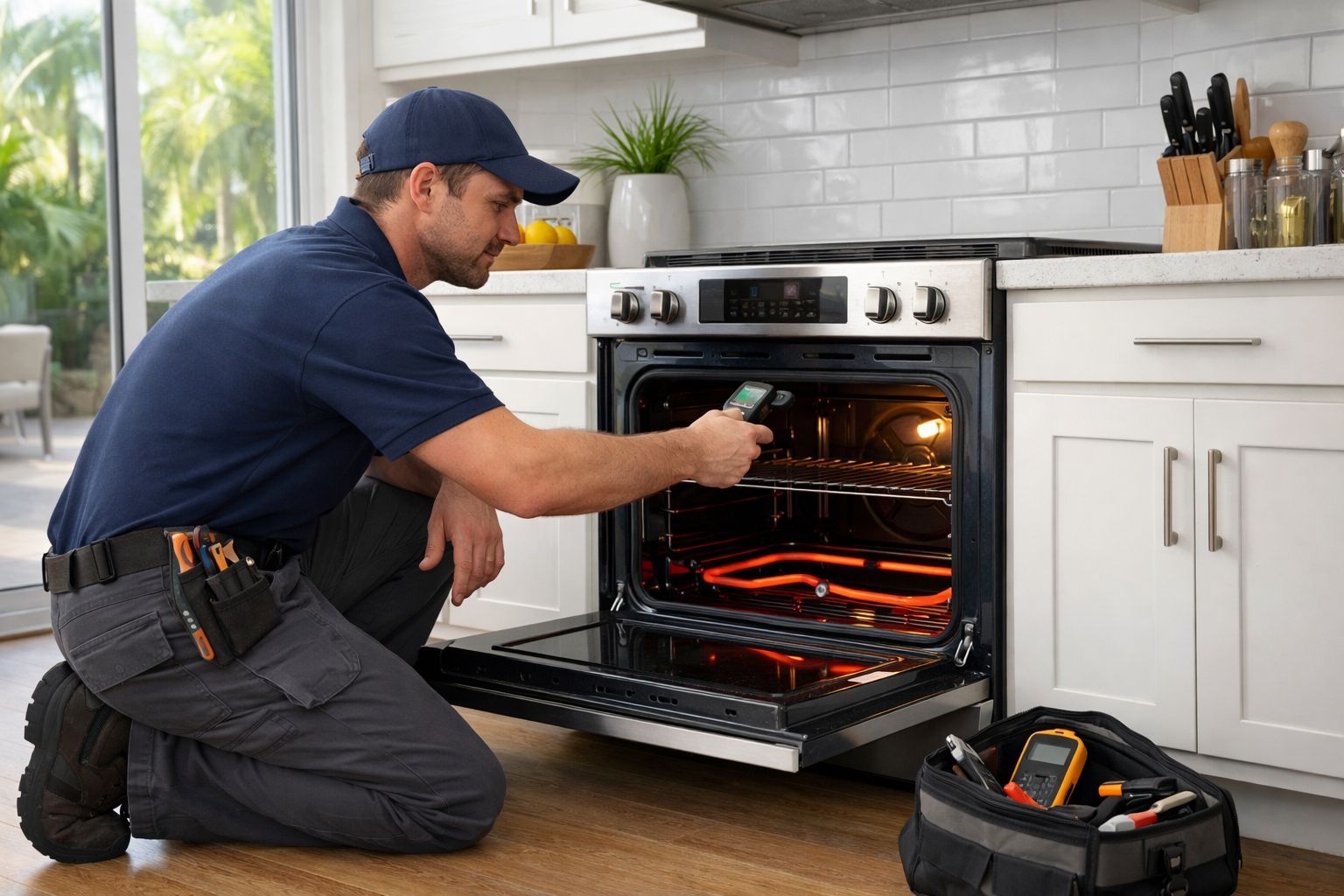
Is your electric oven taking too long to preheat? Learn what can cause slow heating, why the display may be misleading, and when professional diagnosis is needed.
Washer fills with water when turned off
November 16, 2026
Why does your washer fill with water when turned off? Learn how inlet-valve seepage differs from drain backflow, what to shut off safely, and when to call a technician.
By General Appliance Service • November 15, 2026
Learn why a front load washer smells musty after cleaning, what homeowners can safely check, and when drainage or residue problems need professional diagnosis.
By General Appliance Service • November 14, 2026
An electric stove burner that stays on high is a temperature-control problem. Learn what may cause it, what to check safely, and when to stop using the range.
By General Appliance Service • November 13, 2026
A refrigerator fan noise that stops when the door opens may involve normal fan timing, frost contact, or a failing motor. Learn what to check safely.
By General Appliance Service • November 12, 2026
A dishwasher knocking noise during the wash cycle may be caused by spray-arm contact or a wash-system problem. Learn what to check safely and when repair is needed.
By General Appliance Service • November 11, 2026
Gas dryer rattles only when heating? Learn what a heat-only buzz or chatter can indicate, what to check safely, and when to call for dryer repair.
By General Appliance Service • November 10, 2026
Learn why an oven display resets when heating, what homeowners can safely check, and when a heat-related power loss needs professional diagnosis.
By General Appliance Service • November 7, 2026
Washer leaving grease spots on clothes? Learn how detergent buildup, laundry contaminants, and internal washer problems can create dark marks.
Show More