

Freezer Cold but Ice Cream Soft? What Frost Patterns and Long Run Times Can Mean

General Appliance Service • October 20, 2026

Share this article

By General Appliance Service

A freezer can feel cold when opened yet still be too warm to keep ice cream firm. Soft ice cream, smaller ice cubes, and partially frozen foods can indicate unstable freezer temperatures. Treat these signs as a cooling-performance concern rather than judging the appliance by how cold the air feels. A freezer thermometer provides a more useful reading than the temperature setting alone.

What a Technician Checks When a Freezer Is Cold but Ice Cream Is Soft

A technician starts by confirming the actual freezer temperature. The control setting is only a target, and air near the door may feel colder than food stored in the center. Place an appliance thermometer where packages will not block it, close the door, and check it after several hours.

The symptom timeline also matters. Did ice cream gradually soften? Did heavy frost appear first? Is the ice maker slowing down? Does the compressor run for long periods? Those details help distinguish airflow and defrost concerns from temperature-sensing, heat-removal, or sealed-system problems.

Soft ice cream alone does not identify a failed sensor, relay, or control board. Replacing parts without testing can waste time and money.

Frost Can Restrict Freezer Airflow

Many refrigerator-freezer combinations use an evaporator coil and fan to circulate cold air. When frost covers the coil, air cannot move properly through the compartment. The freezer may feel cold near a vent but still fail to keep food consistently frozen.

A door left slightly open allows humid room air inside, where it freezes on interior surfaces and coils. Overpacked shelves can also block supply or return vents, while a misaligned bin may keep the door from closing completely.

Check that food packages are not interfering with the door or vents. Inspect the accessible gasket for crumbs, tears, hardened areas, or gaps, and clean it according to the owner’s manual. Take photos of visible frost before defrosting; its location can help guide diagnosis. Never chip ice with a knife or screwdriver, which can damage the liner or hidden cooling components.

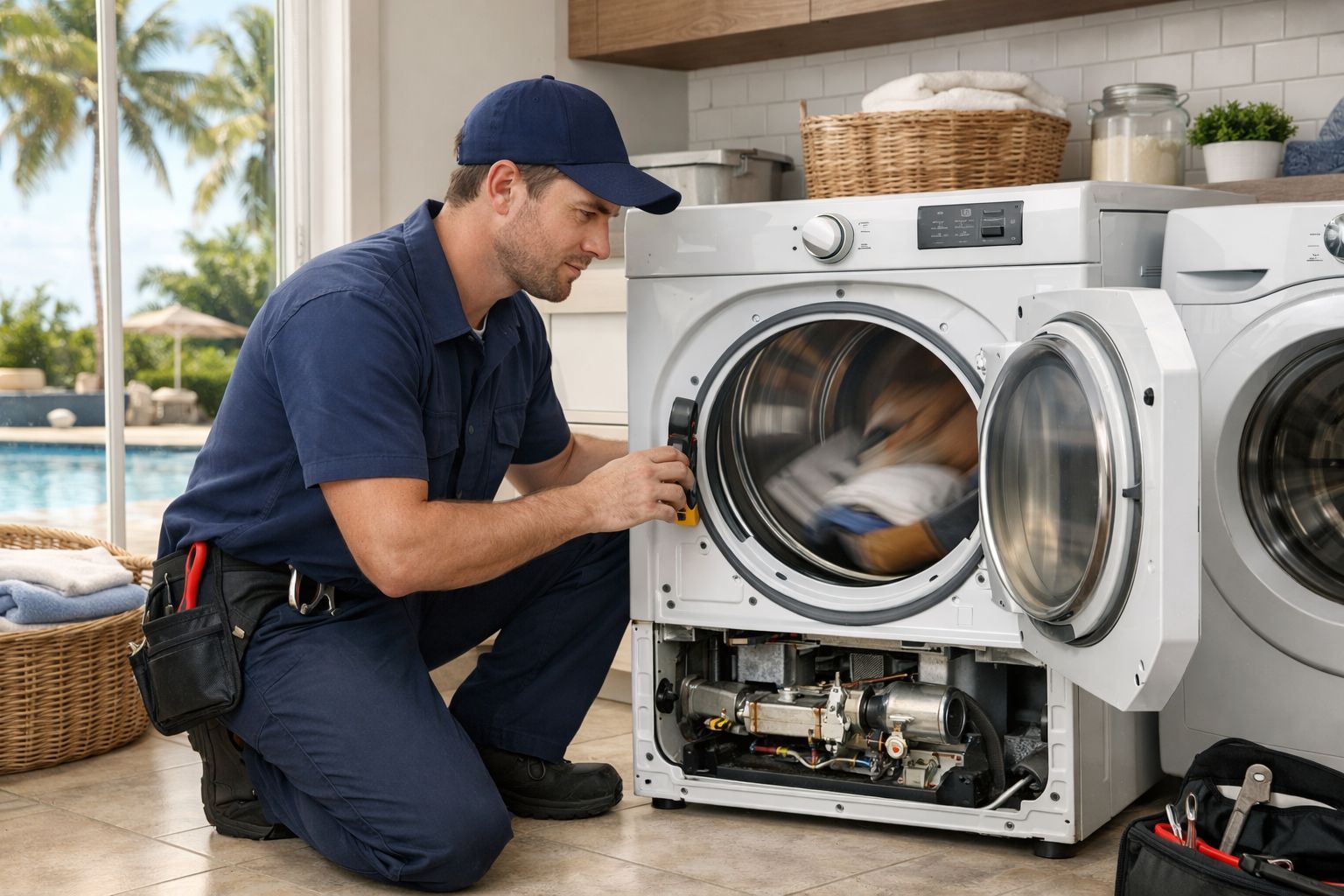
Illustrative appliance diagnostic inspection
AI-generated illustration of an appliance inspection.

A Manual Defrost May Only Be Temporary

A complete manual defrost can temporarily restore normal freezing when frost is restricting airflow. However, improvement after defrosting does not explain why the frost accumulated in the first place.

Door-seal problems, frequent door openings, blocked vents, and defrost-system failures can create similar frost conditions. If the freezer works normally for a short period after defrosting, then returns to soft ice cream and weak ice production, the recurring pattern needs further evaluation.

Technicians may test the defrost heater, sensors or thermistors, wiring, controls, and fan operation for the exact model. A failed control can miss defrost cycles, but inaccurate sensor readings or wiring faults may create the same symptoms. For homeowners needing freezer repair in Palm Coast, notes and photos can help avoid unnecessary parts replacement.

Long Run Times and Food Protection

A freezer normally runs longer after loading groceries, during hot weather, or after frequent door openings. However, near-constant operation while ice cream stays soft suggests the appliance cannot remove heat or distribute cold air effectively.

Restricted condenser airflow, a fan problem, a frost-covered evaporator, or incorrect sensor input can all contribute. An uneven evaporator frost pattern can also point toward more involved sealed-system or compressor concerns. Refrigerant work, compressor-area electrical testing, and panel removal should be left to a trained technician.

Move softening food to a dependable freezer or cooler with ice. Record thermometer readings, frost buildup, ice-production changes, and run times. General Appliance Service offers Palm Coast appliance repair services for problems that do not improve after basic door and vent checks.

Frequently Asked Questions About a Freezer Cold but Ice Cream Soft

Why is my freezer cold but my ice cream is soft?

It may be colder than the kitchen but still too warm for firm ice cream. Frost, airflow restrictions, fan trouble, sensing issues, or cooling-system problems can cause this.

Can a slightly open freezer door cause frost?

Yes. Humid room air enters through a small gap and freezes inside. Check for food packages, misaligned bins, and gasket contamination that prevent a complete seal.

Why does my freezer run constantly without freezing well?

Long run times mean it is trying to recover temperature unsuccessfully. Possible causes include frost blockage, poor condenser airflow, fan failure, sensor errors, or sealed-system trouble.

Will manually defrosting permanently fix the freezer?

Not always. Defrosting can restore airflow, but recurring frost means the underlying moisture, door-seal, vent, or defrost-system issue still requires diagnosis.

When should I move food and call for repair?

Move food when it softens or thaws, or when thermometer readings are unreliable. Call when frost returns, ice production drops, or the compressor runs excessively.

A freezer that feels cold is not necessarily maintaining safe, dependable freezing conditions. Address food storage first, document the symptoms, and seek service when basic airflow and door checks do not resolve the problem.

Recent Posts

By General Appliance Service • November 18, 2026
Learn why a gas dryer heats then blows cold air later in the cycle, what burner cycling is normal, and when delayed heat loss needs diagnosis.
By General Appliance Service • November 17, 2026
Is your electric oven taking too long to preheat? Learn what can cause slow heating, why the display may be misleading, and when professional diagnosis is needed.
Washer fills with water when turned off
November 16, 2026
Why does your washer fill with water when turned off? Learn how inlet-valve seepage differs from drain backflow, what to shut off safely, and when to call a technician.
By General Appliance Service • November 15, 2026
Learn why a front load washer smells musty after cleaning, what homeowners can safely check, and when drainage or residue problems need professional diagnosis.
By General Appliance Service • November 14, 2026
An electric stove burner that stays on high is a temperature-control problem. Learn what may cause it, what to check safely, and when to stop using the range.
By General Appliance Service • November 13, 2026
A refrigerator fan noise that stops when the door opens may involve normal fan timing, frost contact, or a failing motor. Learn what to check safely.
By General Appliance Service • November 12, 2026
A dishwasher knocking noise during the wash cycle may be caused by spray-arm contact or a wash-system problem. Learn what to check safely and when repair is needed.
By General Appliance Service • November 11, 2026
Gas dryer rattles only when heating? Learn what a heat-only buzz or chatter can indicate, what to check safely, and when to call for dryer repair.
By General Appliance Service • November 10, 2026
Learn why an oven display resets when heating, what homeowners can safely check, and when a heat-related power loss needs professional diagnosis.
By General Appliance Service • November 7, 2026
Washer leaving grease spots on clothes? Learn how detergent buildup, laundry contaminants, and internal washer problems can create dark marks.
Show More