Why Does My Dishwasher Fill With Dirty Water After the Disposal Runs?

General Appliance Service • October 23, 2026

Share this article

By General Appliance Service

If your dishwasher drains after a cycle but dirty water later appears in the tub, timing matters. Water left immediately after washing can indicate incomplete draining. Water that returns after the sink or disposal runs often points to backflow from the shared drain connection. The dishwasher may still be able to pump water out normally, while sink wastewater is finding its way back through the drain hose.

Why Dirty Water Returns After the Disposal Runs

Dishwashers usually connect to the sink drain or garbage disposal. When that plumbing is restricted, wastewater may not move freely downstream. Instead, water from the sink or disposal can travel toward the dishwasher connection and collect in the tub.

Drain-hose routing also matters. Depending on the installation, the hose may need a high loop beneath the countertop or an air-gap arrangement. This raised section helps prevent sink water from flowing backward. A hose that sags, is crushed behind a cabinet, or has slipped from its support can increase the chance of backflow.

This symptom differs from a dishwasher that never fully drains. If the tub empties after a cycle and refills only after sink use, the issue may be at the disposal connection, sink drain, or hose routing rather than the dishwasher pump.

What a Technician Checks

A technician first confirms whether water is actually pooled in the dishwasher tub. Some models retain a small amount of water below the removable filter or in the sump area by design. That is different from visible gray, dirty, or foul-smelling water across the bottom.

Timing helps narrow the diagnosis. Does a cancel/drain cycle empty the tub? Does water return only after the kitchen sink is used? Does operating the disposal trigger it? These details distinguish an appliance drainage problem from sink-side backflow.

The inspection may include the drain hose, high loop or air gap, disposal inlet, and sink drain for kinks, low sections, or restrictions. The dishwasher itself still needs evaluation for filter debris, pump obstructions, drain-pump performance, wiring concerns, and model-specific errors.

For help identifying the source, Palm Coast dishwasher and disposal repair can determine whether the problem is within the appliance, its drain setup, or the sink/disposal connection.

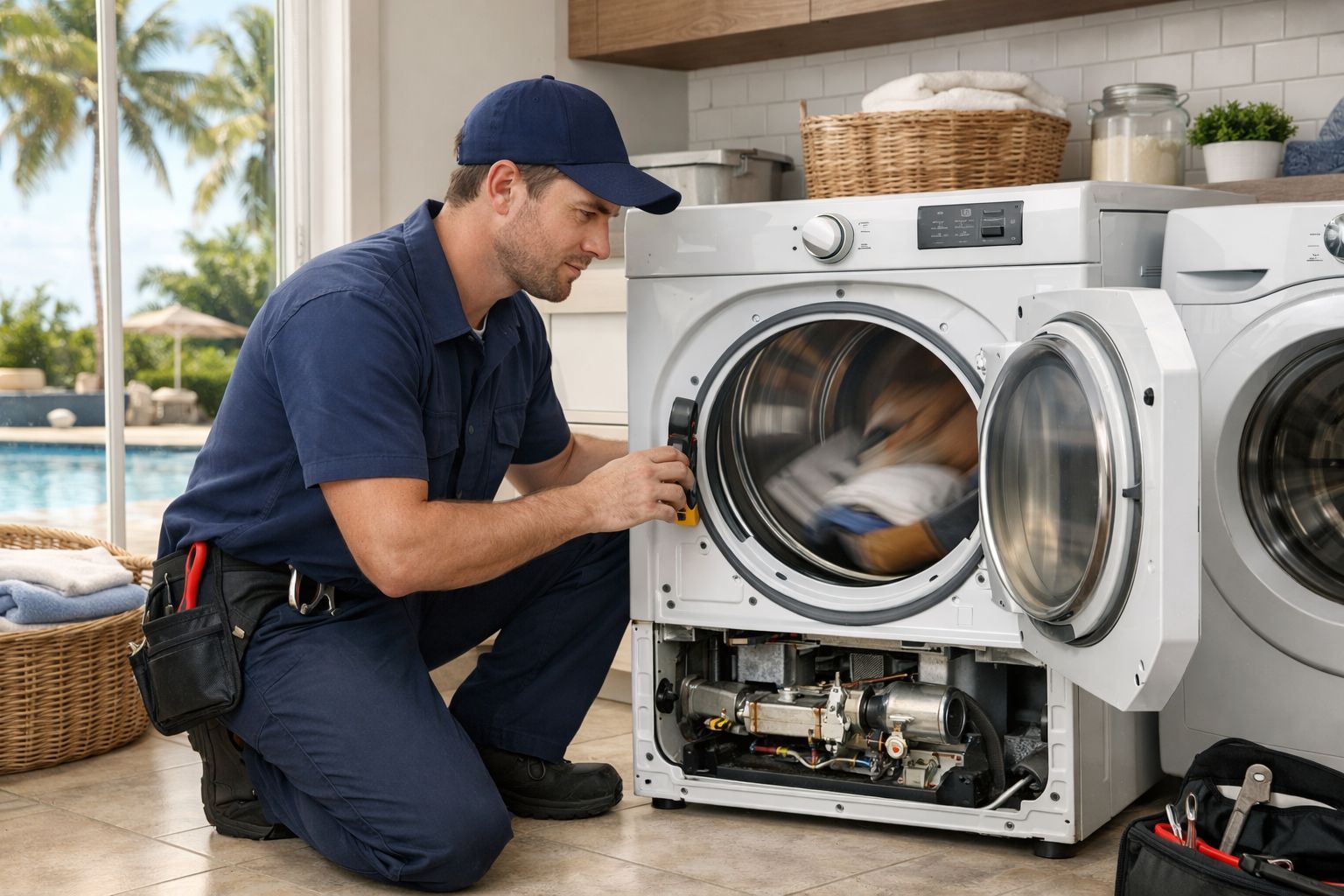
Illustrative appliance diagnostic inspection
AI-generated illustration of an appliance inspection.

Safe Checks Before You Request Repair

Check the owner’s manual before using a cancel/drain function. Run it once and observe whether the tub clears. If it does, avoid running another dishwasher cycle until you can see whether water returns after using the sink or disposal.

If your manual permits it, remove and rinse the user-serviceable filter. Food debris can slow drainage, although a clean filter does not rule out a hose-routing or sink-drain problem. Reinstall the filter correctly, since poor seating can create wash and drainage concerns.

With power off, inspect the accessible drain hose beneath the sink for obvious crushing, severe sagging, or a disconnected appearance. Do not loosen clamps, detach hoses, or use chemical drain cleaners. Opening a drain connection can cause a wastewater spill, while chemicals may damage components or create hazards during service.

Take photos of the water level, record error codes, and note what happened immediately before the water returned.

When Dirty Water Needs Prompt Service

Stop using the dishwasher if wastewater leaks onto the floor, the cabinet area becomes wet, or dirty water repeatedly backs into the tub. Backflow is unsanitary, and an ongoing restriction can develop into a larger kitchen drainage problem.

Homeowners needing dishwasher repair in Flagler Beach can have the appliance and its drain connection evaluated instead of assuming the drain pump has failed. General Appliance Service serves homeowners across St. Johns, Flagler, and Volusia counties at (386) 359-3215.

Bosch owners should not assume water in the tub means a failed pump. Filter seating, drain-path restrictions, hose condition, and the disposal connection should all be considered during Bosch dishwasher repair in Palm Coast.

Frequently Asked Questions About a Dishwasher Filling With Dirty Water

Why is dirty water in my dishwasher after a cycle?

Water left immediately after washing can mean incomplete draining. Water that returns later, especially after sink use, more strongly suggests backflow through the drain connection.

Why does the disposal make dishwasher water return?

The disposal and dishwasher often share plumbing. A restriction, improper hose routing, or slow sink drain can allow wastewater to move back toward the dishwasher.

Can the dishwasher drain hose cause backflow?

Yes. A missing high loop or air gap, severe sagging, kinks, or damage can interfere with drainage and make reverse flow more likely.

Is water below the dishwasher filter always a problem?

Not necessarily. Some water may remain in the sump below the filter. Dirty water visibly pooled in the tub, however, should be investigated.

What details should I give a technician?

Explain whether water remains after a cycle or returns after sink use. Provide the model number, error codes, photos, and cancel/drain results.

Prompt diagnosis helps prevent repeated wastewater exposure and avoids replacing the wrong dishwasher part. Note the timing of the symptom, stop using the appliance if it leaks, and arrange service when backflow continues.

Recent Posts

By General Appliance Service • November 18, 2026
Learn why a gas dryer heats then blows cold air later in the cycle, what burner cycling is normal, and when delayed heat loss needs diagnosis.

By General Appliance Service • November 17, 2026
Is your electric oven taking too long to preheat? Learn what can cause slow heating, why the display may be misleading, and when professional diagnosis is needed.
Washer fills with water when turned off
November 16, 2026
Why does your washer fill with water when turned off? Learn how inlet-valve seepage differs from drain backflow, what to shut off safely, and when to call a technician.
By General Appliance Service • November 15, 2026
Learn why a front load washer smells musty after cleaning, what homeowners can safely check, and when drainage or residue problems need professional diagnosis.

By General Appliance Service • November 14, 2026
An electric stove burner that stays on high is a temperature-control problem. Learn what may cause it, what to check safely, and when to stop using the range.
By General Appliance Service • November 13, 2026
A refrigerator fan noise that stops when the door opens may involve normal fan timing, frost contact, or a failing motor. Learn what to check safely.
By General Appliance Service • November 12, 2026
A dishwasher knocking noise during the wash cycle may be caused by spray-arm contact or a wash-system problem. Learn what to check safely and when repair is needed.
By General Appliance Service • November 11, 2026
Gas dryer rattles only when heating? Learn what a heat-only buzz or chatter can indicate, what to check safely, and when to call for dryer repair.

By General Appliance Service • November 10, 2026
Learn why an oven display resets when heating, what homeowners can safely check, and when a heat-related power loss needs professional diagnosis.
By General Appliance Service • November 7, 2026
Washer leaving grease spots on clothes? Learn how detergent buildup, laundry contaminants, and internal washer problems can create dark marks.
Show More