
Why Does a Gas Stove Burner Go Out When You Turn It Down Low?

General Appliance Service • October 19, 2026

Share this article

By General Appliance Service

A burner that lights on high but sputters or dies near simmer has a different issue than one that will not ignite. At low settings, the flame must remain stable with less gas flow. A dirty, damp, misaligned, or damaged burner component can disrupt that flame. If you smell gas, see flames lifting, hear repeated popping, or notice delayed ignition, turn the burner off. Ventilate as appropriate and follow gas-utility emergency instructions if an odor remains.

What a Technician Checks When a Burner Will Not Stay Lit

Diagnosis begins by confirming whether the problem occurs on one burner or across the cooktop. A single affected burner often points to its cap, burner head, ports, electrode, or spill damage. Several burners with the same low-flame symptom can indicate a broader concern involving fuel configuration, gas pressure, regulation, or a model-specific simmer system.

A technician checks flame behavior at high, medium, and low settings and inspects how gas travels around the burner head. They may look for blocked or damaged ports, improper cap placement, heat damage, ignition grounding concerns, or an electrode positioned incorrectly. The ignition system is not always the cause; a burner can light successfully but still distribute gas unevenly when turned down.

For reliable gas range and cooktop repair in Palm Coast, the burner assembly and supporting gas system should be evaluated before any part is replaced.

Why a Burner Works on High but Goes Out on Low

A high flame can sometimes overcome a minor restriction or uneven flame pattern because more gas is moving through the burner. When the knob is lowered, the burner must sustain a smaller, controlled flame through each port. If one section of the flame weakens, the flame may no longer travel evenly and can go out.

A burner cap that is slightly off-center is a common cause. The cap and burner head work together to direct gas and spread flame around the burner. After cleaning, a cap that rocks, sits at an angle, or is installed in the wrong position can cause sputtering, weak spots, delayed ignition, or flame loss at low.

Food residue, grease, and boil-over debris can create similar symptoms. Moisture trapped around the burner head may also interfere with ignition and flame travel until components are fully dry. However, a clean-looking burner does not rule out a valve, fuel-setup, or gas-delivery issue.

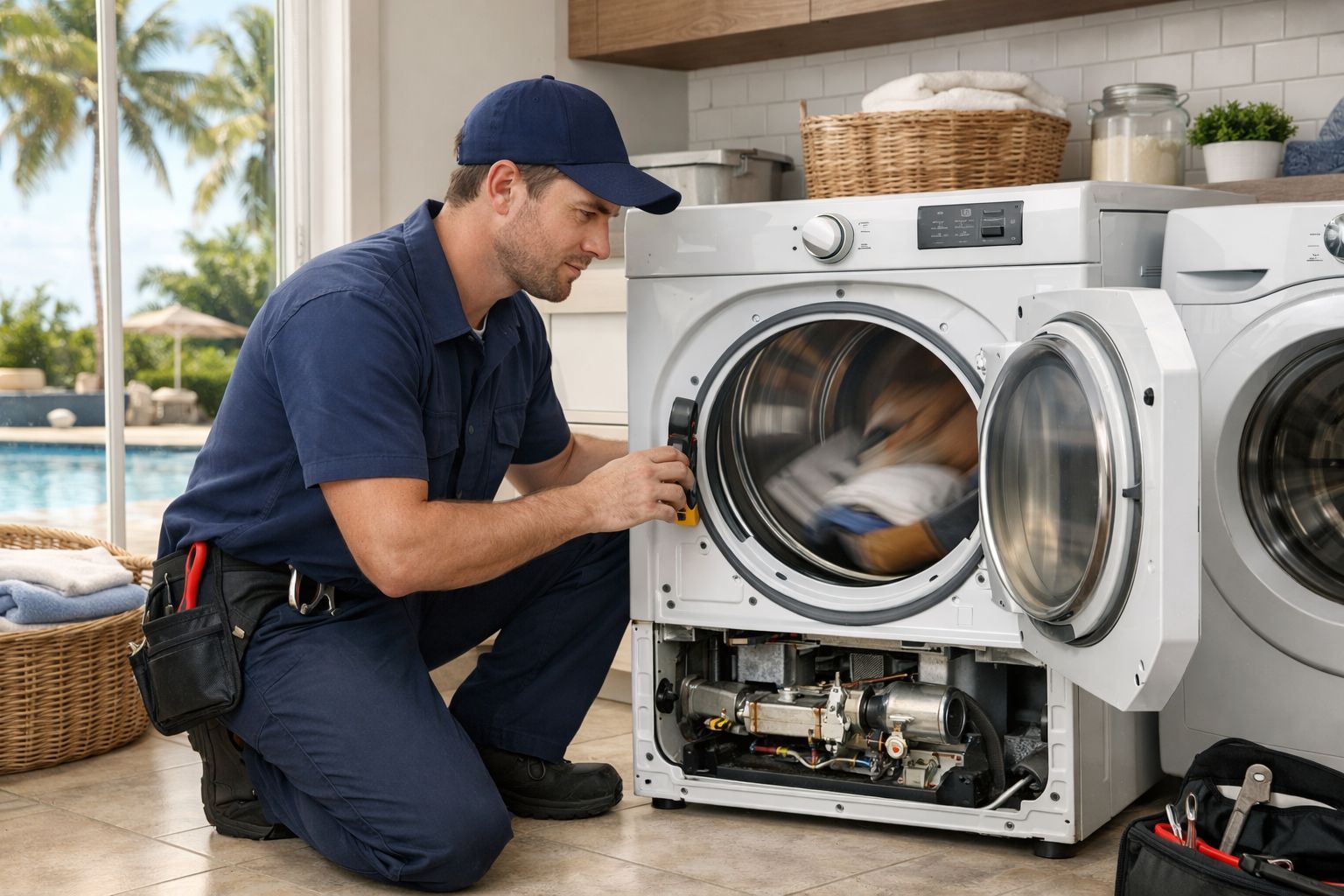
Illustrative appliance diagnostic inspection
AI-generated illustration of an appliance inspection.

Safe Checks Before Requesting Service

Wait until the cooktop is cool and confirm that every control knob is off. Consult the owner’s manual before removing burner parts. Check that the cap and burner head are installed correctly, rest flat, and match the intended burner location. Do not force components into place.

Look for visible spills, grease, or moisture around the burner assembly. Clean only as the manufacturer directs, then allow every removable part to dry completely before reassembly. Avoid using pins, drill bits, wire, or other tools to poke into or enlarge gas openings. Damaging a port can change the flame pattern and create another problem.

Note whether the issue affects one burner or all burners, whether it began after a boil-over or move, and whether it occurs only at the lowest setting. A brief video from a safe distance and the model number can help a technician identify the likely cause.

Do Not Adjust Gas Components Yourself

Some gas ranges have low-flame adjustments, but the correct procedure varies by model and fuel type. Other appliances use specialty simmer valves or settings. Adjusting an orifice, regulator, internal valve, or adjustment screw without proper service information can create unsafe flames or worsen performance.

Do not continue relighting a burner that repeatedly goes out. Repeated attempts can lead to delayed ignition and brief gas accumulation around the burner. Shut the control off if the flame becomes yellow, lifts away from the burner, flares outside its normal area, or produces repeated popping.

General Appliance Service assists homeowners throughout St. Johns, Flagler, and Volusia counties. Homeowners needing appliance repair in Ormond-by-the-Sea should arrange diagnosis when an unstable low flame affects one or more burners. Call (386) 359-3215 for service.

Frequently Asked Questions About a Gas Stove Burner Going Out on Low

Why does my burner light on high but die on low?

High flow can mask a restriction or uneven flame pattern. At low flow, gas must travel evenly through the burner ports to maintain a stable flame.

Can a misplaced burner cap cause this problem?

Yes. An improperly seated cap can disrupt gas distribution and flame travel. Once cool, reinstall it according to the owner’s manual and make sure it sits level.

Why do all my gas burners go out when reduced?

Several burners failing similarly may indicate gas supply, regulator, fuel-configuration, or installation concerns rather than one dirty burner. Professional testing is the safer option.

Should I keep relighting a burner that goes out?

No. Turn the control off instead. Repeated relighting may cause delayed ignition or allow unburned gas to collect briefly near the burner.

When is an unstable burner a safety concern?

Treat gas odor, delayed ignition, lifting flames, flame rollout, yellow flames, or repeated popping as urgent. Stop using the burner and follow utility emergency guidance if odor persists.

A burner that will not hold a low flame deserves attention, even when it works on high. Proper diagnosis protects cooking performance and helps avoid unsafe adjustments or repeated ignition attempts.

Recent Posts

By General Appliance Service • November 18, 2026
Learn why a gas dryer heats then blows cold air later in the cycle, what burner cycling is normal, and when delayed heat loss needs diagnosis.
By General Appliance Service • November 17, 2026
Is your electric oven taking too long to preheat? Learn what can cause slow heating, why the display may be misleading, and when professional diagnosis is needed.
Washer fills with water when turned off
November 16, 2026
Why does your washer fill with water when turned off? Learn how inlet-valve seepage differs from drain backflow, what to shut off safely, and when to call a technician.
By General Appliance Service • November 15, 2026
Learn why a front load washer smells musty after cleaning, what homeowners can safely check, and when drainage or residue problems need professional diagnosis.
By General Appliance Service • November 14, 2026
An electric stove burner that stays on high is a temperature-control problem. Learn what may cause it, what to check safely, and when to stop using the range.
By General Appliance Service • November 13, 2026
A refrigerator fan noise that stops when the door opens may involve normal fan timing, frost contact, or a failing motor. Learn what to check safely.
By General Appliance Service • November 12, 2026
A dishwasher knocking noise during the wash cycle may be caused by spray-arm contact or a wash-system problem. Learn what to check safely and when repair is needed.
By General Appliance Service • November 11, 2026
Gas dryer rattles only when heating? Learn what a heat-only buzz or chatter can indicate, what to check safely, and when to call for dryer repair.
By General Appliance Service • November 10, 2026
Learn why an oven display resets when heating, what homeowners can safely check, and when a heat-related power loss needs professional diagnosis.
By General Appliance Service • November 7, 2026
Washer leaving grease spots on clothes? Learn how detergent buildup, laundry contaminants, and internal washer problems can create dark marks.
Show More