
Range Hood Fan Running but Not Ventilating? Why Smoke and Steam Stay in the Kitchen

General Appliance Service • October 29, 2026

Share this article

By General Appliance Service

A range hood can make plenty of noise while doing little to clear the air. If smoke, steam, odors, or grease linger after the fan starts, the motor may not be the only issue. A spinning blower confirms that the hood has power, but it does not confirm that air is moving through the complete ventilation path.

A range hood fan running but not ventilating may involve filters, a stuck damper, damaged ductwork, installation limits, or a fan-speed control problem.

What a Technician Checks When a Range Hood Has Weak Airflow

First, a technician determines whether the hood exhausts outdoors or recirculates air into the kitchen. A ducted hood pulls air through grease filters and sends it through ductwork to an exterior wall or roof termination. A recirculating hood filters grease and some odors before releasing air back into the room.

That distinction is important. Recirculating models cannot remove moisture, heat, or combustion byproducts as effectively as properly operating ducted units. They also will not create airflow at an outside vent.

For ducted hoods, the technician checks the model number and installation requirements for approved duct diameter, material, routing, and maximum equivalent length. Long runs, excessive elbows, crushed flexible duct, or incorrect transitions can restrict airflow even when the blower sounds normal.

Start With Filters and the Visible Air Path

Grease filters are a practical first check. Heavy grease buildup reduces the air entering the hood and can make the fan seem weak. Clean metal filters only as the manufacturer allows. Charcoal filters used in recirculating hoods usually need replacement rather than washing.

With the hood switched off and cool, inspect the intake area for visible debris. Do not reach into the fan housing or remove electrical panels. Blower wheels can be sharp, and wiring may remain energized.

For an outdoor-venting hood, observe the exterior termination from a safe location while the fan runs. The damper should open with airflow. A damper that is stuck, painted shut, clogged with debris, or blocked by a pest screen can greatly reduce ventilation. Avoid roof access or disconnecting ductwork yourself.

Note when the problem began, especially after remodeling, pest work, storm damage, filter service, or a power interruption.

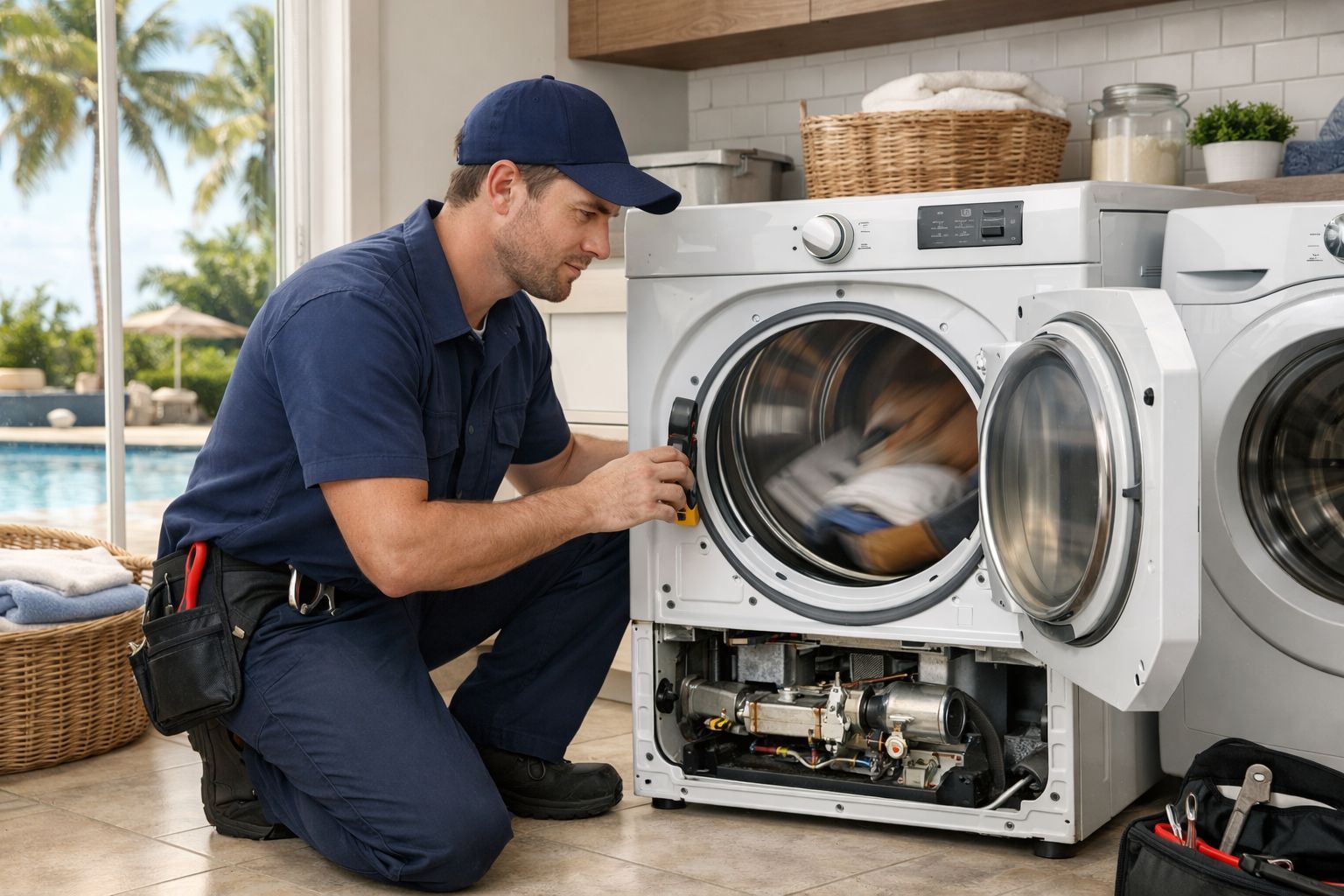
Illustrative appliance diagnostic inspection
AI-generated illustration of an appliance inspection.

Why Every Fan Speed Can Run but Smoke Still Lingers

If every speed operates but airflow remains weak, the duct path is often the main concern. Air must travel through the hood, transitions, bends, and exterior termination. Small restrictions can add up quickly.

Technicians may find crushed duct sections, loose connections, excessive bends, unsuitable duct material, or a duct that was never properly connected. An exterior damper may open only partly, allowing some air movement without providing enough flow to clear cooking smoke.

The hood may also be working normally but have limited capture ability. Large cookware, front burners, high-heat cooking, an undersized hood, or an improper mounting height can allow smoke to escape around the canopy. Recirculating configurations have additional limits.

A proper diagnosis separates a failed component from an installation issue before unnecessary parts are replaced. General Appliance Service provides range hood repair and appliance services in Palm Coast.

When Only One Fan Speed Does Not Work

A hood that works on high but not low, or operates on only one setting, follows a different diagnostic path. The motor may still be functional. Multi-speed systems can use separate circuits, speed-switch contacts, wiring connections, or electronic controls.

Before replacing a motor, a technician checks whether the missing speed circuit is sending the correct output. A failed control board can cause this symptom, but so can a worn selector switch, overheated connector, or damaged wire. Heat damage near terminals deserves prompt attention because a poor connection can create more heat during operation.

Stop using the hood and arrange service if you notice sparking, a burning smell, hot switches, grinding, smoke from the hood, or repeated breaker trips. These signs indicate more than a basic airflow issue.

Homeowners needing appliance repair in Ormond-by-the-Sea should provide the model number, working fan speeds, and when the problem began.

Frequently Asked Questions About a Range Hood Fan Running but Not Ventilating

Why does my range hood make noise but not remove smoke?

The blower may be pushing against a clogged filter, closed damper, restricted duct, or blocked exterior vent. It may also be a recirculating model.

Can a greasy filter make a range hood lose suction?

Yes. Grease-loaded filters restrict incoming air. Clean or replace only user-serviceable filters identified in the manual. Continued weak airflow may indicate a duct restriction.

Why does my hood work on high but not low?

This can point to a low-speed circuit, selector switch, control board, wiring, or connector problem. Testing is needed before replacing the motor.

How do I know whether my hood vents outside or recirculates?

Check the manual and installation documents. Ducted hoods connect to an exterior termination; recirculating models use charcoal filters and return air through hood vents.

Should I use my range if the hood smells like it is burning?

Turn the hood off and arrange prompt service. Burning odors, sparks, hot controls, or breaker trips can indicate unsafe wiring, motor, or control damage.

Cleaning filters may restore performance, but persistent weak ventilation needs a professional inspection of the blower, damper, duct route, and electrical controls. Address burning odors or breaker trips without delay.

Recent Posts

By General Appliance Service • November 18, 2026
Learn why a gas dryer heats then blows cold air later in the cycle, what burner cycling is normal, and when delayed heat loss needs diagnosis.
By General Appliance Service • November 17, 2026
Is your electric oven taking too long to preheat? Learn what can cause slow heating, why the display may be misleading, and when professional diagnosis is needed.
Washer fills with water when turned off
November 16, 2026
Why does your washer fill with water when turned off? Learn how inlet-valve seepage differs from drain backflow, what to shut off safely, and when to call a technician.
By General Appliance Service • November 15, 2026
Learn why a front load washer smells musty after cleaning, what homeowners can safely check, and when drainage or residue problems need professional diagnosis.
By General Appliance Service • November 14, 2026
An electric stove burner that stays on high is a temperature-control problem. Learn what may cause it, what to check safely, and when to stop using the range.
By General Appliance Service • November 13, 2026
A refrigerator fan noise that stops when the door opens may involve normal fan timing, frost contact, or a failing motor. Learn what to check safely.
By General Appliance Service • November 12, 2026
A dishwasher knocking noise during the wash cycle may be caused by spray-arm contact or a wash-system problem. Learn what to check safely and when repair is needed.
By General Appliance Service • November 11, 2026
Gas dryer rattles only when heating? Learn what a heat-only buzz or chatter can indicate, what to check safely, and when to call for dryer repair.
By General Appliance Service • November 10, 2026
Learn why an oven display resets when heating, what homeowners can safely check, and when a heat-related power loss needs professional diagnosis.
By General Appliance Service • November 7, 2026
Washer leaving grease spots on clothes? Learn how detergent buildup, laundry contaminants, and internal washer problems can create dark marks.
Show More