
Dryer Timer Not Advancing on Auto Dry but Timed Dry Works: What the Difference Can Mean
By General Appliance Service
A dryer timer that will not advance on Auto Dry can be frustrating when Timed Dry works normally. The difference is an important diagnostic clue, not automatic proof that the timer has failed. Timed Dry usually follows the time selected by the user, while Auto Dry relies on the dryer receiving information about moisture, temperature, or heat cycling before it advances or shuts off.
What a Technician Checks When Auto Dry Will Not Advance
The first question is whether the dryer is actually drying clothing. A dryer that tumbles without usable heat has a different issue from one that dries a load but keeps running after the clothes are dry.
A technician also confirms whether the problem is limited to Auto Dry. Timed Dry may count down and stop normally while the automatic setting never reaches cooldown. On a mechanical dryer, the dial may remain in one position. On an electronic model, the display may appear frozen or keep adding time.
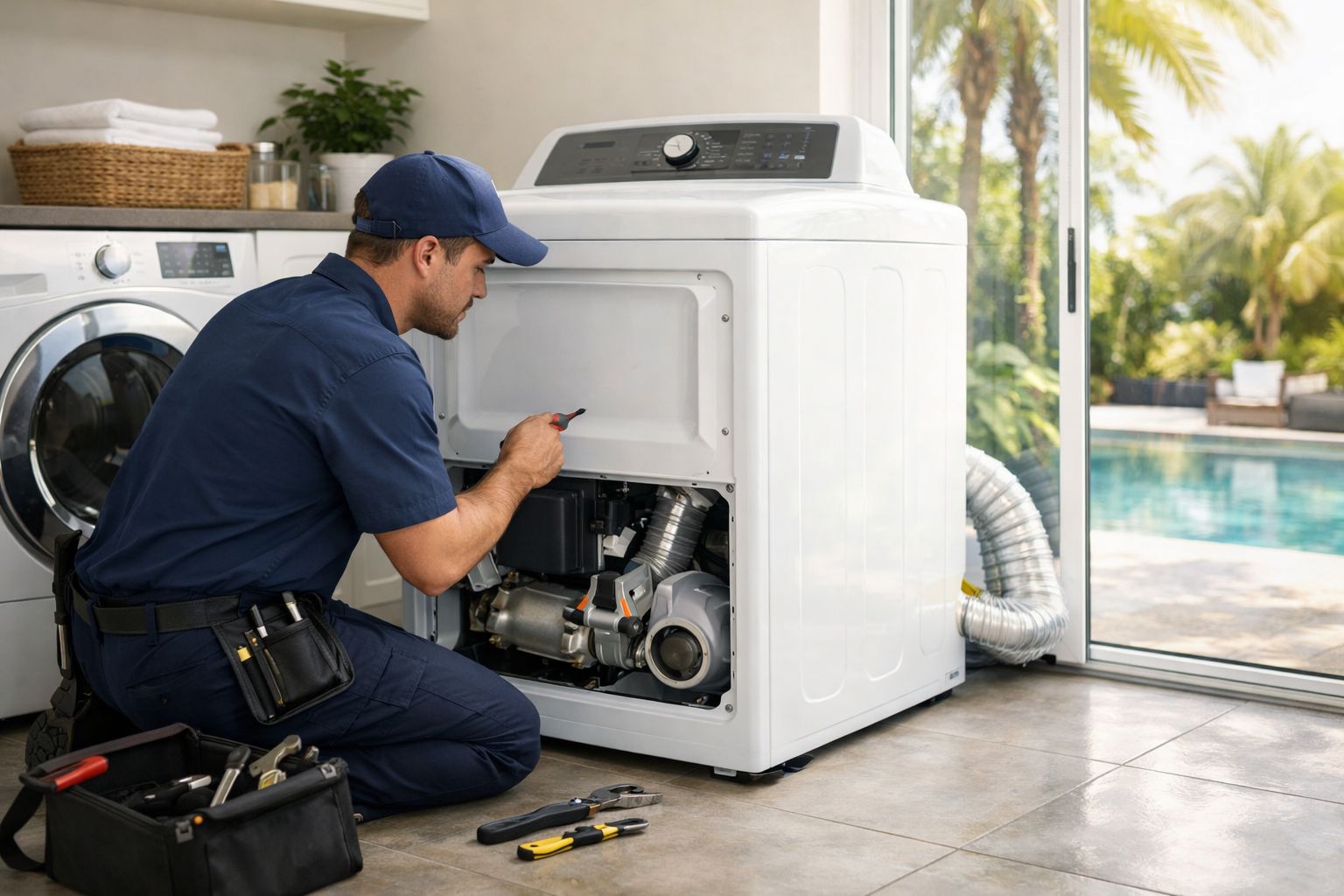
The model number matters because automatic cycles vary by design. Some dryers depend on a cycling thermostat and heater operation to advance the timer. Others use moisture sensor bars and an electronic control. The technician checks the model-specific wiring information before deciding whether the timer, sensor system, thermostat, wiring, or control is responsible.
Why Timed Dry Can Work When Auto Dry Does Not
Timed Dry and Auto Dry do not always use the same electrical path. Timed Dry may simply operate the motor and heater for the selected period. An automatic cycle must decide when the load is dry enough to advance, cool down, or stop.
Moisture sensor bars can become coated with dryer-sheet or fabric-softener residue. A cycling thermostat may not respond correctly, and a loose harness connection can interrupt sensor signals. On a mechanical design, the timer may not receive the conditions required for its automatic-cycle advance circuit.
A failed timer can cause this symptom, but so can incorrect information reaching the timer or electronic control. Replacing parts without testing can leave the original problem unresolved. Homeowners with brand-specific concerns can arrange Whirlpool dryer repair in Palm Coast rather than assuming all dryer controls operate the same way.
Airflow Can Change Automatic Drying Behavior
A restricted exhaust vent does not explain every timer complaint, but it can affect automatic cycles. Poor airflow traps humid air in the drum, slows drying, and may cause temperatures to rise or cycle abnormally. The dryer can run longer because the load remains damp.
Clean the lint screen before every load. During a normal-sized load, look at the exterior vent hood from ground level. Its flap should open, with noticeable exhaust discharge while the dryer runs.
Do not disconnect ductwork, climb to a roof termination, or reach inside an exterior hood where pests may be present. If the dryer needs multiple cycles to dry, airflow deserves attention. If Timed Dry dries normally but Auto Dry never ends, airflow is worth checking but should not be treated as the final diagnosis.
Safe Checks Before Scheduling Dryer Repair
Use the owner’s manual to confirm the chosen cycle and dryness setting. Very small loads, bulky comforters, and mixed fabrics can behave differently on automatic settings. Test one ordinary load rather than repeatedly operating the dryer empty, since an empty drum does not provide a meaningful sensor-dry test.
Record the model number, setting, approximate runtime, and any error code. Note whether the drum turns, heat is present, clothes become dry, and the dryer reaches cooldown. Mention whether the problem began after a power interruption, vent cleaning, or moving the appliance.
Stop using the dryer if you notice smoke, sparking, a burning smell, scorched clothing, repeated breaker trips, overheating, or a unit that will not shut off. For persistent cycle problems, Palm Coast dryer repair can include airflow, temperature, wiring, thermostat, sensor, and control testing.
Frequently Asked Questions About a Dryer Timer Not Advancing on Auto Dry
Why does my timer move on Timed Dry but not Auto Dry?
Timed Dry advances by elapsed time. Auto Dry may depend on moisture sensing, thermostat cycling, heat operation, or a separate control path before it advances.
Does this symptom always mean the timer is bad?
No. A thermostat, moisture sensor, wiring connection, heating issue, or electronic control can create the same symptom. Testing should happen before replacing parts.
Can a clogged vent keep Auto Dry from ending?
It can contribute by trapping moist air and extending drying time. However, restricted airflow is not the only cause of an automatic cycle that runs too long.
Why are my clothes dry but the dryer keeps running?
The dryer may not recognize that the load is dry or may not transition into cooldown correctly. Sensor contamination and control faults are possible.
Should I keep using a dryer that will not shut off?
Do not leave it unattended. Stop using it if it overheats, smells burnt, trips breakers, sparks, or will not shut off, and arrange prompt service.
Accurate diagnosis protects against unnecessary timer replacement and helps identify heat, sensor, airflow, or control problems. Residents needing appliance repair in Flagler Beach can request a full dryer evaluation.