
Why Is There Water or Ice Under My Refrigerator Crisper Drawers?
By General Appliance Service
Finding water beneath produce drawers is frustrating, especially when the refrigerator still seems to cool normally. The puddle’s location matters: water inside the fresh-food compartment often has a different cause than water on the kitchen floor. It may return after a defrost cycle, collect gradually over days, or freeze into a thin sheet. Those details help identify the moisture source.
What a Technician Checks
A common cause is defrost water that cannot follow its normal drain route. Many refrigerators periodically melt frost around the evaporator area, then send that water through a drain passage. If the route is restricted, frozen, or affected by surrounding ice, water can overflow into the fresh-food section and settle below the drawers.
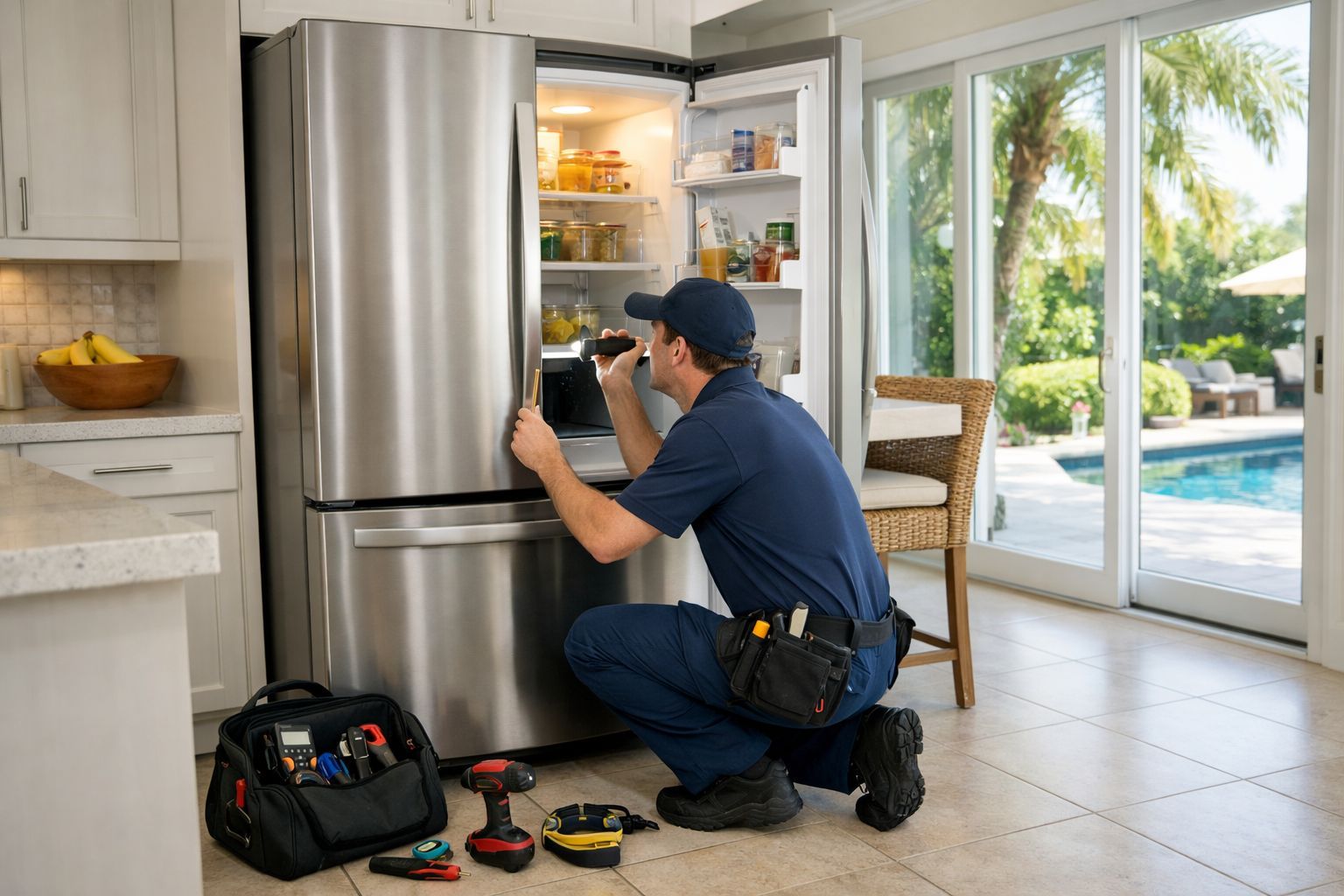
Technicians do not assume every puddle is a clogged drain. They check whether the water is clear or dirty, how quickly it returns, and whether frost is present on interior panels. The inspection may include the evaporator, drain passage, drain tube, airflow, fan operation, door alignment, and gasket contact.
For refrigerators with an ice maker or dispenser, water-delivery components also need attention. A filter housing, inlet valve, reservoir, fill tube, or water line can leak, but those leaks often leave evidence different from a defrost-water overflow.
Why Water May Turn Into Ice
A sheet of ice beneath the crisper drawers usually means water has remained in a cold area long enough to freeze. It does not automatically mean the refrigerator is too cold overall. Small amounts of water can trickle into the low area, freeze, thaw slightly during cycling, and refreeze until the layer becomes thick enough to interfere with drawer movement.
Frost elsewhere can provide an important clue. Heavy frost on an interior rear panel, unusual fan noise, or changing temperatures may indicate an airflow or defrost problem in addition to the water. A control board can contribute to these symptoms, but a sensor problem or airflow restriction can look similar. Replacing parts before testing the system can create unnecessary expense.
Safe Checks Before Calling for Service
Remove food and removable drawers, absorb standing water, and take a photo before cleaning the area completely. The pattern and exact location may help identify the source later. Note whether the water is clear, icy, or both, and whether it returns within hours or after several days.
Check that drawers are seated correctly and that containers are not preventing the door from closing. The gasket should make even contact around the cabinet opening to limit humid air entering the compartment. Look for visible dripping, unusual frost, or fan noise.
Do not remove interior panels, chip ice with sharp tools, or use uncontrolled heat inside the refrigerator. These shortcuts can damage liners, wiring, or concealed components. Record the model number, recent filter changes, power interruptions, plumbing work, and error codes. For recurring problems, refrigerator repair in Palm Coast can identify the source before parts are replaced unnecessarily.
Interior Pooling Versus a Floor Leak
Water on the floor deserves prompt attention, but it may point to a different issue. External supply connections, dispenser tubing, filter housings, drain pans, or leaks traveling along the cabinet can create a puddle outside the refrigerator. Water contained beneath the crisper drawers is more often related to internal drainage, frost, or moisture entering the compartment.
Still, an ice-maker refrigerator can have more than one issue at once. Diagnosis should include both the interior drain route and relevant water-delivery components rather than relying on the first puddle alone. Residents needing appliance repair in Flagler Beach can have refrigerator leaks and frost concerns evaluated locally.
If water reaches flooring near an outlet or electrical area, avoid using the appliance until the area is dry and arrange service promptly. Repeated pooling, ice buildup, cooling changes, heavy frost, or fan noise all warrant professional diagnosis.
Frequently Asked Questions About Water Under Refrigerator Crisper Drawers
Why is water collecting under my refrigerator crisper drawers?
Defrost water may not be draining properly, excess moisture may be entering through a door seal, or an internal water component may be leaking.
Why does the water under the drawers turn into ice?
The lower fresh-food compartment can freeze water left between cycles. Repeated small amounts may gradually build into a thicker ice sheet.
Is it always a clogged defrost drain?
No. A restricted or frozen drain is common, but airflow issues, excess frost, gasket problems, and water-system leaks can cause similar symptoms.
Could my ice maker or water filter cause interior water?
Yes. Depending on the model, a leaking filter housing, valve, fill tube, reservoir, or tubing can release water inside the refrigerator.
When should I schedule refrigerator service?
Schedule service when pooling returns, becomes ice, affects cooling, creates fan noise, produces heavy frost, or reaches the floor near electrical areas.
Persistent water beneath the drawers should be diagnosed rather than repeatedly cleaned up. Palm Coast fridge service for water pooling can determine whether drainage, defrost performance, airflow, or water delivery is responsible.