

Why Does My Washer Drain Pump Keep Running After the Tub Is Empty?

General Appliance Service • November 3, 2026

Share this article

By General Appliance Service

A washer drain pump that keeps running after the tub looks empty is not automatically a failed pump. The washer may be responding to a false water-level reading, an electrical fault, or a drain-hose setup that lets water leave silently. Listening matters: a humming or whirring pump is different from water flowing out without motor noise.

That distinction helps avoid replacing the wrong part. A washer that cannot retain water during filling has a different issue from one whose drain pump runs after the tub is empty.

What a Technician Checks

The first step is identifying when the symptom begins. Does the pump start as soon as the washer is plugged in? Does it continue after Cancel is pressed? Does it begin before water enters, or only after the washer fills? Those details help narrow the possible cause.

Many modern washers use a pressure sensor or water-level system to tell the control how much water is in the tub. If that signal indicates water is still present, the control may run the drain pump as a protective response. The tub can appear empty while the control is receiving incorrect information.

A technician may check fault history, model-specific water-level logic, and the pressure-sensing path. Depending on the washer, that includes a small hose and air chamber connected to the tub. Restrictions, damage, loose connections, or contamination can affect the reading.

The pump circuit also needs testing. Damaged wiring, connector problems, or a control output that remains energized can keep a good pump running. The key is confirming why the pump has power before replacing it.

Silent Draining and Drain-Hose Siphoning

Not every washer that “keeps draining” has a powered-pump problem. If water leaves silently while the washer fills, the drain hose may be siphoning water out.

Siphoning can occur when the hose is routed too low, inserted too far into the standpipe, or sealed tightly around the opening. The washer may fill and immediately lose water without the pump operating. This can make it seem as though the machine will not fill or cannot begin washing.

With the washer unplugged and empty, inspect only the visible hose routing and compare it with the owner’s manual. Do not tape or seal the hose into the standpipe. The drain needs an air gap to prevent siphoning.

If the pump motor can be heard running continuously, however, hose routing alone does not explain the sound. The washer’s water-level sensing and electrical systems require closer diagnosis.

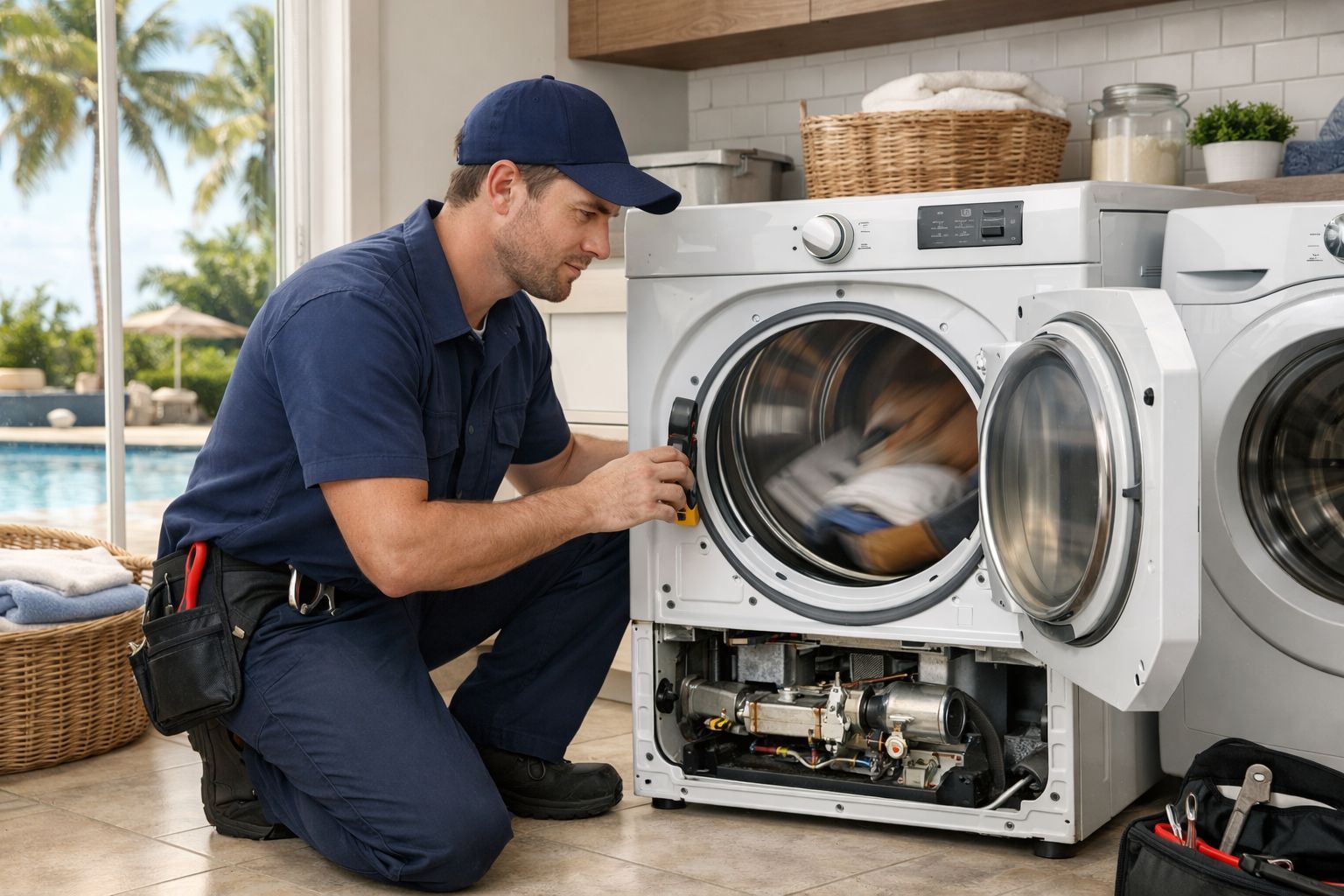
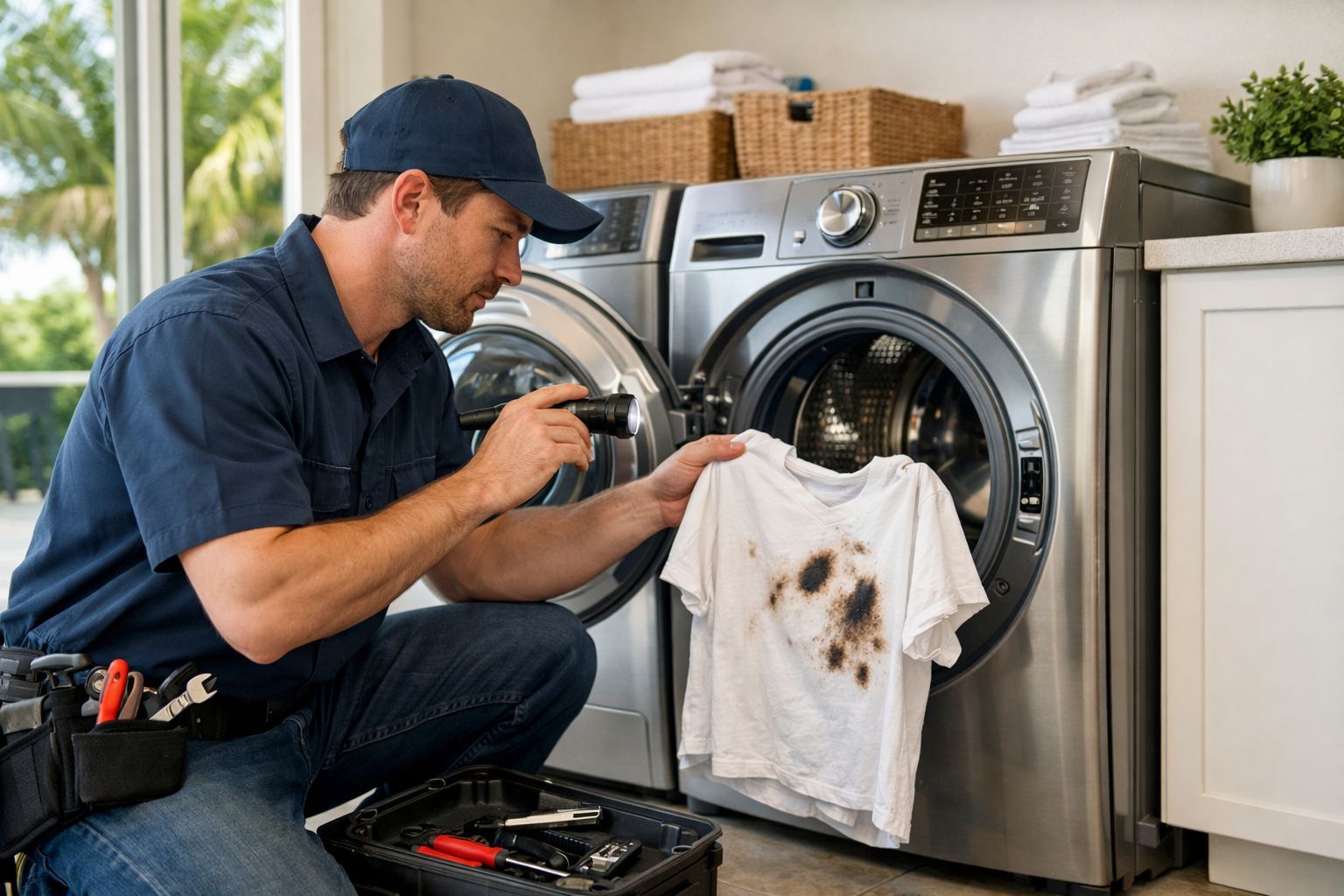
Illustrative appliance diagnostic inspection
AI-generated illustration of an appliance inspection.

Safe Checks Before Scheduling Service

Pause or cancel the cycle and note what happens next. Does the pump stop immediately, restart after several seconds, or never stop? Record any error code, and take a short video showing the display, sound, filling, or draining sequence if possible.

Check the owner’s manual for an approved reset procedure. A reset may clear a temporary interruption, but repeated resets will not correct a recurring drain command. Stop using the washer if it smells burnt, trips a breaker, overheats, leaks, or cannot stop draining.

Do not remove panels, probe wiring, blow through pressure hoses, or attempt to clear internal pressure ports. These procedures vary by model, and an incorrect step can create a shock hazard, cause a leak, or damage another component.

For a persistent symptom, Palm Coast washer repair can determine whether the problem involves the pump, water-level signal, wiring, or control system.

Why a New Drain Pump May Not Solve It

The drain pump is the part making the noise, so it is easy to blame. However, a working pump runs whenever it is commanded to run. If the control believes the tub is overfilled, or an electrical fault keeps the circuit active, a replacement pump may produce the same result.

Technicians commonly find incorrect water-level signals caused by a restricted or damaged pressure path. Harness damage, especially where wiring moves or rubs against nearby components, can also keep the circuit active. A failed control can cause continuous pumping, but incorrect sensor information can create the same symptom.

For brand-specific diagnosis, Whirlpool appliance repair in Palm Coast can evaluate the washer using model-appropriate procedures. After repair, the machine should complete a full fill, wash, drain, and spin sequence—not simply stop pumping briefly.

If the washer runs the pump nonstop or cannot retain water, unplug it and arrange service. Homeowners nearby can also seek appliance repair in St. Augustine with the model number, error code, and symptom details.

Frequently Asked Questions About a Washer Drain Pump That Keeps Running

Why does my washer keep draining when there is no water?

If the pump is audible, the washer may have an incorrect water-level signal, wiring issue, or control fault. An empty-looking tub may not register as empty.

Can an incorrect drain hose setup empty my washer?

Yes. A poorly positioned or tightly sealed drain hose can siphon water out during filling. This is usually silent draining rather than an audible pump.

Why does my washer fill and then pump water out?

It may be siphoning through the drain hose or responding to an incorrect water-level condition. Pump noise and timing help distinguish the two causes.

Does nonstop pumping mean the drain pump is bad?

No. The pump may be operating normally while receiving continuous power. Sensor faults, damaged wiring, and control problems can all cause nonstop pumping.

When should I stop using a washer that keeps draining?

Stop using it if it leaks, overheats, smells burnt, trips a breaker, cannot stop pumping, or will not retain water. Unplug it until diagnosed.

A clear description of when the pump starts, whether it is audible, and whether water drains silently helps a technician identify the cause without guessing at parts.

Recent Posts

By General Appliance Service • November 18, 2026
Learn why a gas dryer heats then blows cold air later in the cycle, what burner cycling is normal, and when delayed heat loss needs diagnosis.
By General Appliance Service • November 17, 2026
Is your electric oven taking too long to preheat? Learn what can cause slow heating, why the display may be misleading, and when professional diagnosis is needed.
Washer fills with water when turned off
November 16, 2026
Why does your washer fill with water when turned off? Learn how inlet-valve seepage differs from drain backflow, what to shut off safely, and when to call a technician.
By General Appliance Service • November 15, 2026
Learn why a front load washer smells musty after cleaning, what homeowners can safely check, and when drainage or residue problems need professional diagnosis.

By General Appliance Service • November 14, 2026
An electric stove burner that stays on high is a temperature-control problem. Learn what may cause it, what to check safely, and when to stop using the range.
By General Appliance Service • November 13, 2026
A refrigerator fan noise that stops when the door opens may involve normal fan timing, frost contact, or a failing motor. Learn what to check safely.
By General Appliance Service • November 12, 2026
A dishwasher knocking noise during the wash cycle may be caused by spray-arm contact or a wash-system problem. Learn what to check safely and when repair is needed.
By General Appliance Service • November 11, 2026
Gas dryer rattles only when heating? Learn what a heat-only buzz or chatter can indicate, what to check safely, and when to call for dryer repair.
By General Appliance Service • November 10, 2026
Learn why an oven display resets when heating, what homeowners can safely check, and when a heat-related power loss needs professional diagnosis.
By General Appliance Service • November 7, 2026
Washer leaving grease spots on clothes? Learn how detergent buildup, laundry contaminants, and internal washer problems can create dark marks.
Show More