

Washer Bangs During Spin Cycle With Heavy Loads? What the Symptom Can Mean
By General Appliance Service
A washer that bangs during the spin cycle can be alarming, especially with towels, jeans, blankets, or other heavy items. One uneven load can cause rough spinning. However, repeated thumping, rocking, or walking with ordinary loads can mean the machine is struggling to control the basket’s weight. The pattern matters: one bulky comforter needs a different diagnosis than banging during every high-speed spin.
What a Technician Checks When a Washer Bangs During Spin Cycle
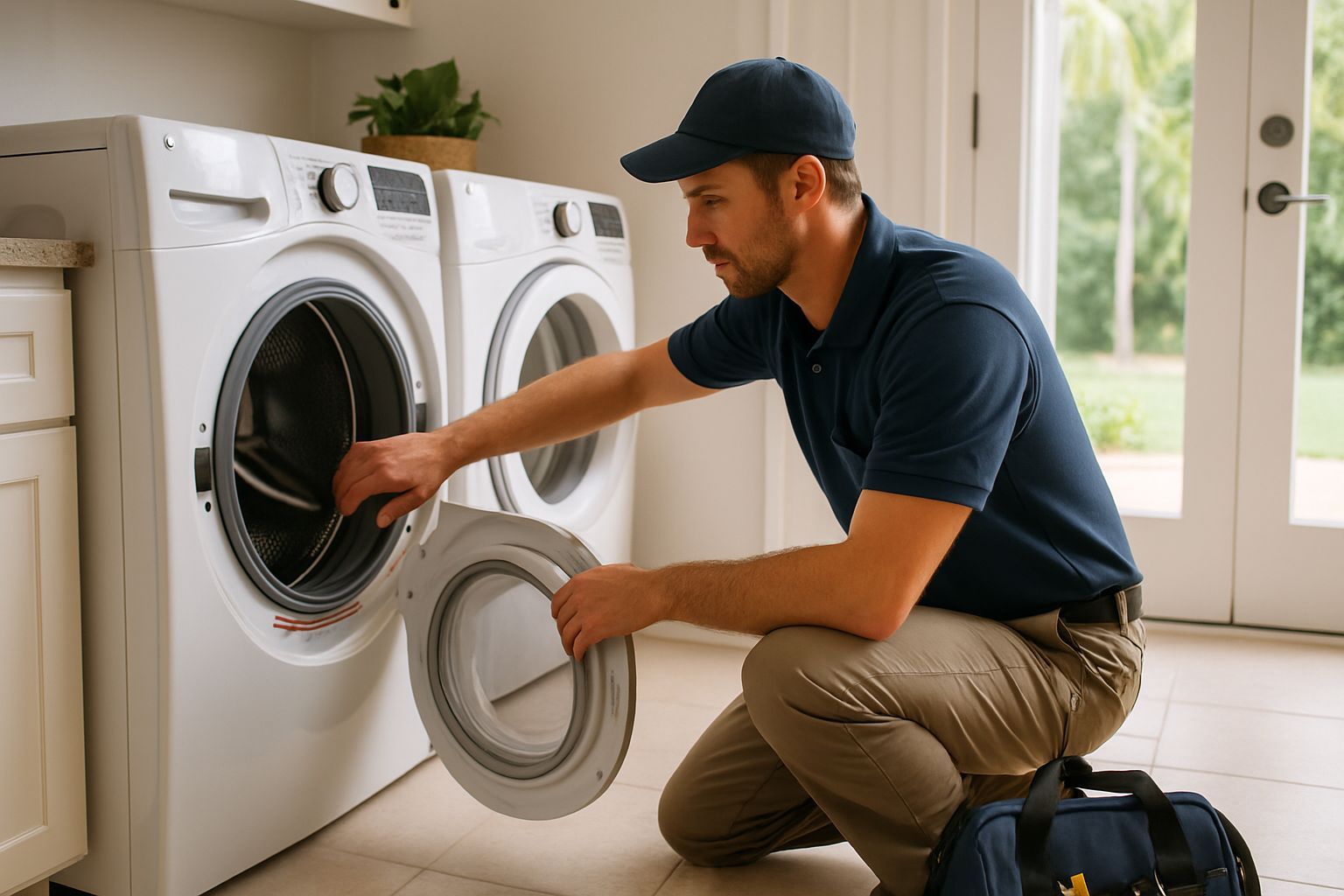
A technician begins by identifying the load type and when the noise starts. Banging as the basket accelerates may involve uneven laundry distribution, worn suspension parts, or an unstable cabinet. Grinding, rubbing, or scraping that continues at speed can suggest basket contact, bearing wear, or a drive-related problem.
Top-load washers may use suspension rods, springs, or supports to steady the tub. Front-load models commonly use dampers, springs, and heavy counterweights. If these parts are worn, loose, or damaged, a wet load can shift farther than the washer can correct.
Diagnosis also includes checking for cabinet movement, rub marks, loose mounting points, and hoses or other external items striking the appliance. The goal is to confirm what is moving before replacing parts.
Bulky Loads Can Create a Real Imbalance
Wet laundry weighs far more than dry laundry. A blanket, bath mat, or tightly packed bundle of towels can hold water and bunch on one side of the basket. As the washer tries to reach spin speed, it may slow down, redistribute the load, or repeatedly attempt to accelerate.
That does not automatically mean the washer is broken. Try an ordinary load containing a mix of items rather than one oversized piece or a dense bundle of jeans and towels. If the washer completes a balanced load quietly, the issue may be related to load distribution.
Still, a heavy load can expose a weakness that is not obvious with a small load. Worn suspension components, for example, may allow excessive tub movement only when the basket is carrying a heavy, shifting load.
Check Installation, Hoses, and the Floor First
Stop the washer if it is striking a wall, walking across the floor, leaking, smoking, producing a burning smell, or making a harsh scraping sound. Unplug the appliance before checking anything around it.
Press gently on opposite top corners of the cabinet. The washer should sit firmly without rocking. An uneven floor or improperly adjusted leveling feet can exaggerate normal spin vibration and make it sound like an internal failure.
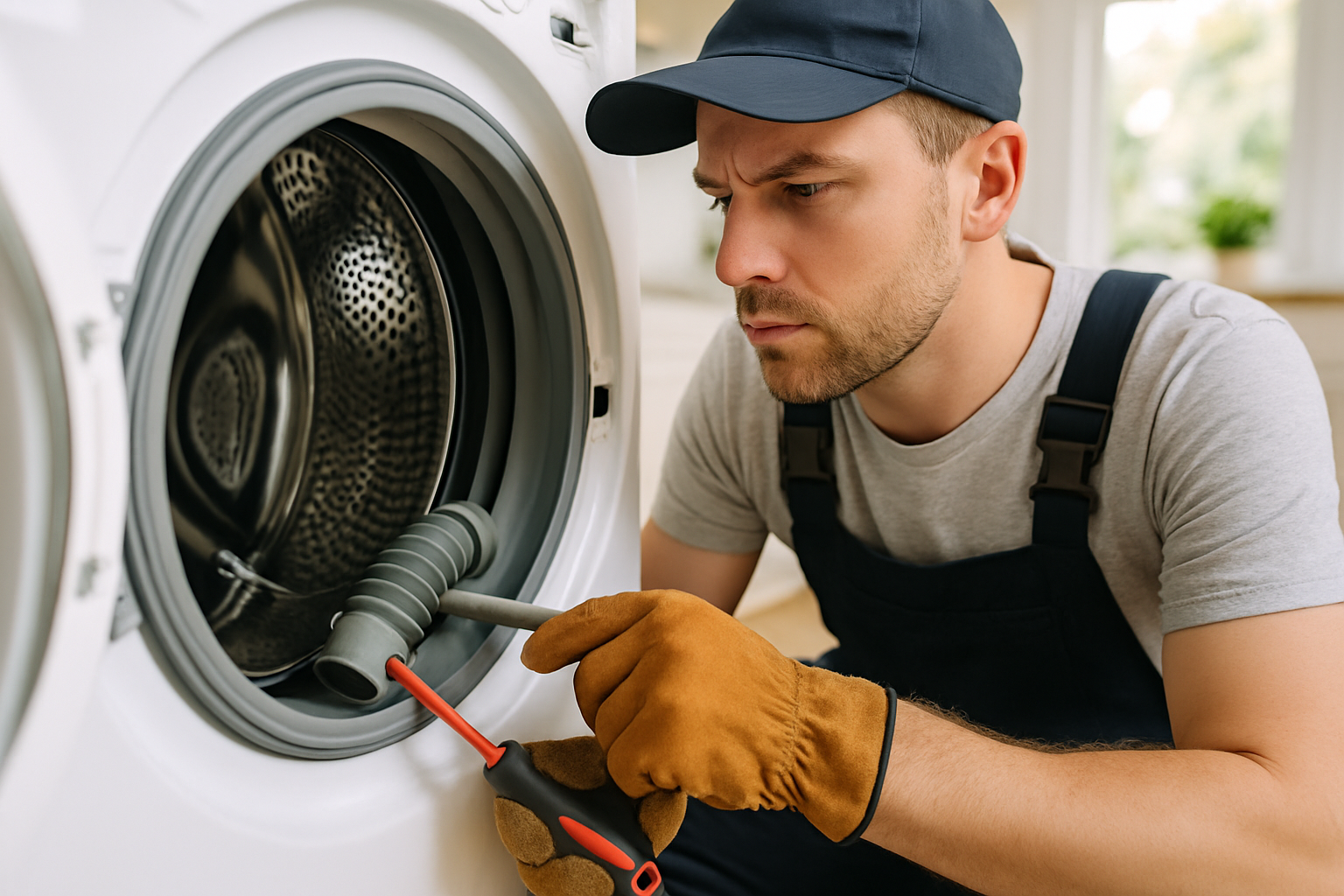
Check visible fill hoses and the drain hose as well. A hose that repeatedly hits the cabinet or wall can create a sharp thumping sound that seems internal. Look for kinks, pinching, or excess slack that allows a hose to slap during spin.
Do not remove panels or reach into internal components to balance the basket. Heavy moving parts and safety systems should never be bypassed.
Drainage and Mechanical Problems Can Affect Spin
A washer may appear to drain but still struggle when a wet load is involved. Slow drainage leaves extra water in the laundry, increasing the weight the machine must control. Longer cycles, unusually wet clothes, drain-related error codes, and repeated spin attempts can point to a restricted drain path or pump issue.
Control, sensor, wiring, or motor-feedback problems can also cause similar behavior. The machine may react to a perceived imbalance even when the load appears properly distributed.
Proper Palm Coast washer repair considers drainage, suspension, basket movement, bearings, drive components, and spin control as one system. If banging occurs with several ordinary loads, continued use can damage hoses, tub supports, flooring, or nearby walls.
Residents needing appliance repair in St. Augustine Beach should note the load type, cycle stage, and whether the washer reaches full spin before scheduling service.
Frequently Asked Questions About a Washer That Bangs During Spin Cycle
Why does my washer bang with towels or blankets?
These items hold water and can clump on one side of the basket. Redistribute the load or add compatible items. Repeated banging with balanced loads needs inspection.
Can an unbalanced load sound like a broken washer?
Yes. A severe imbalance can cause loud thumps and cabinet movement. One isolated bulky-load event is common; frequent noise with everyday loads suggests another problem.
Why is my washer quiet when empty?
An empty basket does not test components under real weight. Wet laundry shifts during spin and can reveal worn supports, loose counterweights, or drainage problems.
Should I keep using a washer that bangs?
Stop using it if it walks, leaks, scrapes, smells hot, or strikes surrounding surfaces. Repeated heavy banging should be diagnosed before additional damage occurs.
What should I tell a repair technician?
Describe the load type, cycle stage, error codes, drainage speed, and whether high spin is reached. Mention rubbing, grinding, or unusually wet clothes after the cycle.
For repeatable spin noise, Palm Coast appliance repair services can evaluate the washer safely and identify the actual cause. Call Palm Coast service at (386) 359-3215 to arrange an assessment.