

Dishwasher Leaving Dishes Wet? Normal Drying vs. a Repair Problem

General Appliance Service • October 13, 2026

Share this article

By General Appliance Service

A dishwasher leaving dishes wet is frustrating, especially when the dishes are clean and the cycle appears complete. Before assuming the heating element has failed, remember that dishwashers use different drying methods. Some rely on rinse aid and condensation drying, while others use a heater, fan, vent, or automatic door-opening feature. Plastic items are naturally harder to dry than glass or ceramic.

The important distinction is between normal leftover moisture and a sudden drying decline affecting nearly every item in the load.

What a Technician Checks When a Dishwasher Is Leaving Dishes Wet

A technician first identifies how the specific model is designed to dry. Condensation-drying dishwashers can leave droplets on plastic even when operating normally. Hot dishes cool differently than the stainless-steel tub, causing moisture to condense on the tub walls instead of evaporating from lightweight plastic.

A broad drying failure looks different. If glassware, plates, silverware, cups, and the door are much wetter than usual, the dishwasher may not be reaching proper wash or final-rinse temperatures.

Diagnosis may include checking error history and running the manufacturer’s test procedure. Depending on the model, a technician may test heating performance under load, the heater circuit, safety protection, wiring, temperature sensor, and control output. A resistance reading alone does not prove a heater operates properly during a cycle. The rinse-aid dispenser, vent, fan, and door-opening mechanism may also require inspection.

Start With Settings, Rinse Aid, and Loading

Check the selected cycle and options before arranging service. Energy-saving or quick cycles may use lower temperatures or shorter drying periods. Compare similar loads using Heated Dry, Extended Dry, Sanitize, or the owner’s manual recommendation when those options are available.

Rinse aid helps water sheet off dishes rather than cling as droplets. Confirm that the dispenser contains rinse aid and that its setting follows manufacturer guidance. Do not use detergent, vinegar, or other household liquids in the dispenser.

Loading also affects results. Cups and bowls placed too flat can hold water, while nested plastic lids may collect water and spill it onto lower dishes during unloading. Keep spray arms clear and angle concave items so water can drain.

If the manufacturer permits it, run the kitchen hot-water tap until it is hot before starting a cycle. A long cold-water fill can reduce wash and final-rinse temperatures enough to resemble a drying problem.

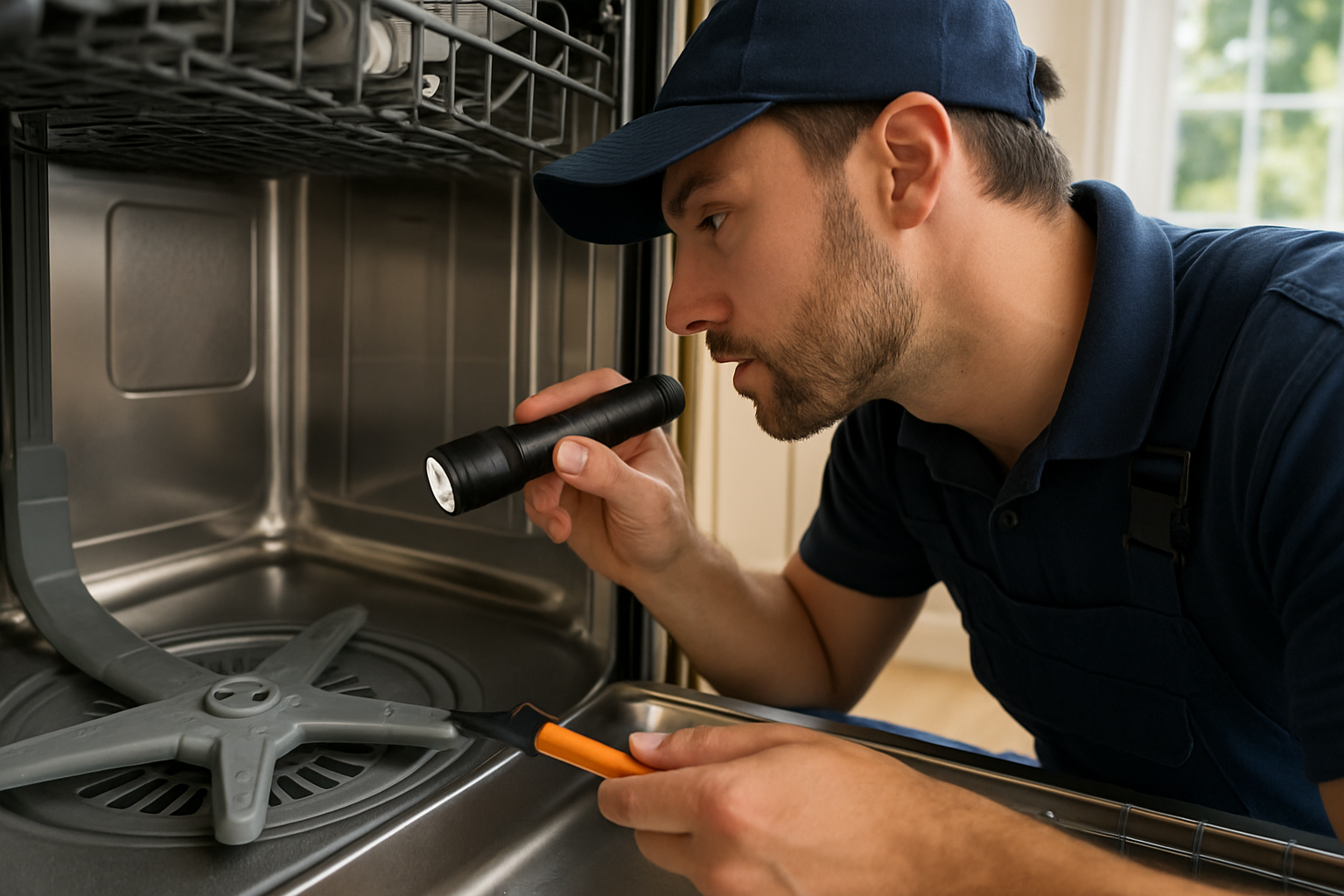
Illustrative appliance diagnostic inspection
AI-generated illustration of an appliance inspection.

Normal Plastic Moisture vs. a Repair Warning

Plastic does not retain heat like ceramic, glass, or metal. Since retained heat helps water evaporate after the final rinse, plastic food containers may come out clean but still hold droplets. That result alone does not automatically mean the dishwasher needs repair.

If your dishwasher instructions allow it, open the door after the cycle finishes to release steam before unloading. Pull racks out carefully because water pooled on an upper-rack cup can spill onto dishes below.

A dishwasher that previously dried reasonably well but now leaves every item dripping deserves closer attention. Reduced or missing heat can allow the machine to circulate water and clean dishes while drying performance falls sharply. Other clues include unusually long cycles, lukewarm dishes at the end of a normal cycle, or a rinse-aid dispenser that never seems to empty.

Stop using the dishwasher and arrange service promptly if you notice smoke, a burning smell, melted plastic near the heating area, repeated breaker trips, or a water leak.

When Professional Dishwasher Diagnosis Is Worth It

A sudden drying change can involve a heating circuit component, sensor, vent, fan, dispenser, wiring connection, or control issue. It can also follow an accidental settings change or an empty rinse-aid reservoir, so basic checks are worthwhile first.

For homeowners needing Palm Coast dishwasher repair, accurate diagnosis can prevent replacing a heater, control board, or dispenser based only on a wet-load symptom. Have the model number ready, and note the cycle selected, drying option, error codes, and whether cleaning performance changed.

Homeowners in St. Johns County can use St. Augustine appliance repair for a dishwasher that cleans normally but no longer dries as expected. For Bosch models with persistent drying complaints, Bosch appliance repair in Palm Coast can help identify whether the issue is normal design behavior or a failed component.

Frequently Asked Questions About a Dishwasher Leaving Dishes Wet

Is it normal for plastic containers to be wet after a dishwasher cycle?

Yes. Plastic retains less heat than glass or ceramic, so droplets often remain. Widespread wetness on all dish types is less typical.

Why are my dishes clean but still wet after the cycle ends?

Cleaning and drying use different parts of the cycle. Reduced heat, a vent issue, low rinse aid, or unsuitable settings can affect drying.

Does rinse aid really make a difference?

Yes. It helps water drain from surfaces instead of clinging as droplets. It cannot repair a failed heater, fan, vent, or control component.

Why did my dishwasher suddenly stop drying as well?

A sudden change may indicate a heater, sensor, vent, fan, dispenser, wiring, or control problem. Check settings and rinse aid first.

When does a dishwasher drying problem need professional repair?

Schedule service after confirming settings, rinse aid, loading, and hot-water conditions. Seek prompt help for leaks, burning odors, smoke, or breaker trips.

When safe checks do not restore normal drying, professional testing can identify the actual fault without guessing at parts. Call (386) 359-3215 for Palm Coast dishwasher service.

Recent Posts

By General Appliance Service • October 14, 2026
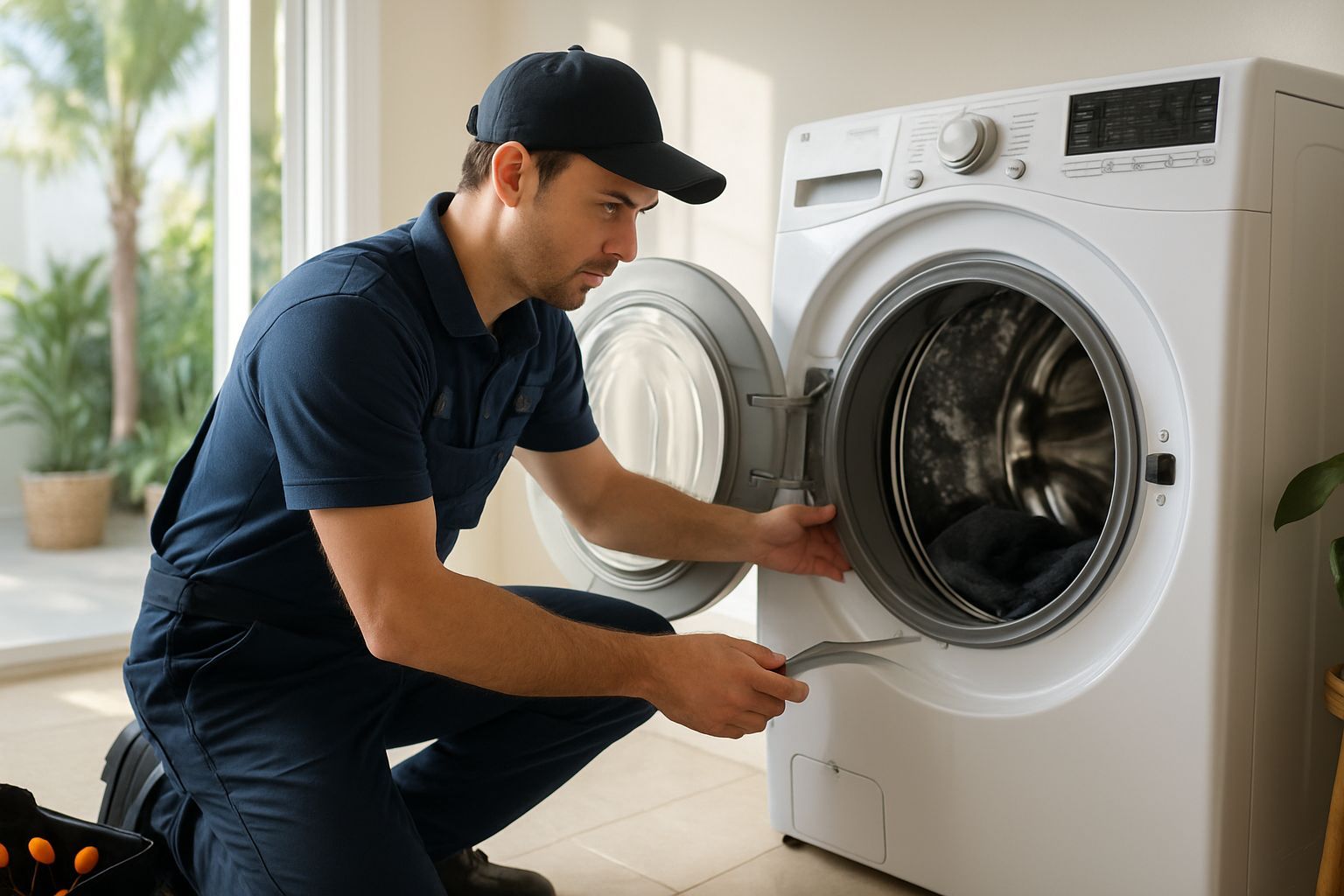
A washer that bangs during the spin cycle with towels or blankets may have an uneven load, installation issue, or developing mechanical problem. Learn what to check safely.
By General Appliance Service • October 12, 2026
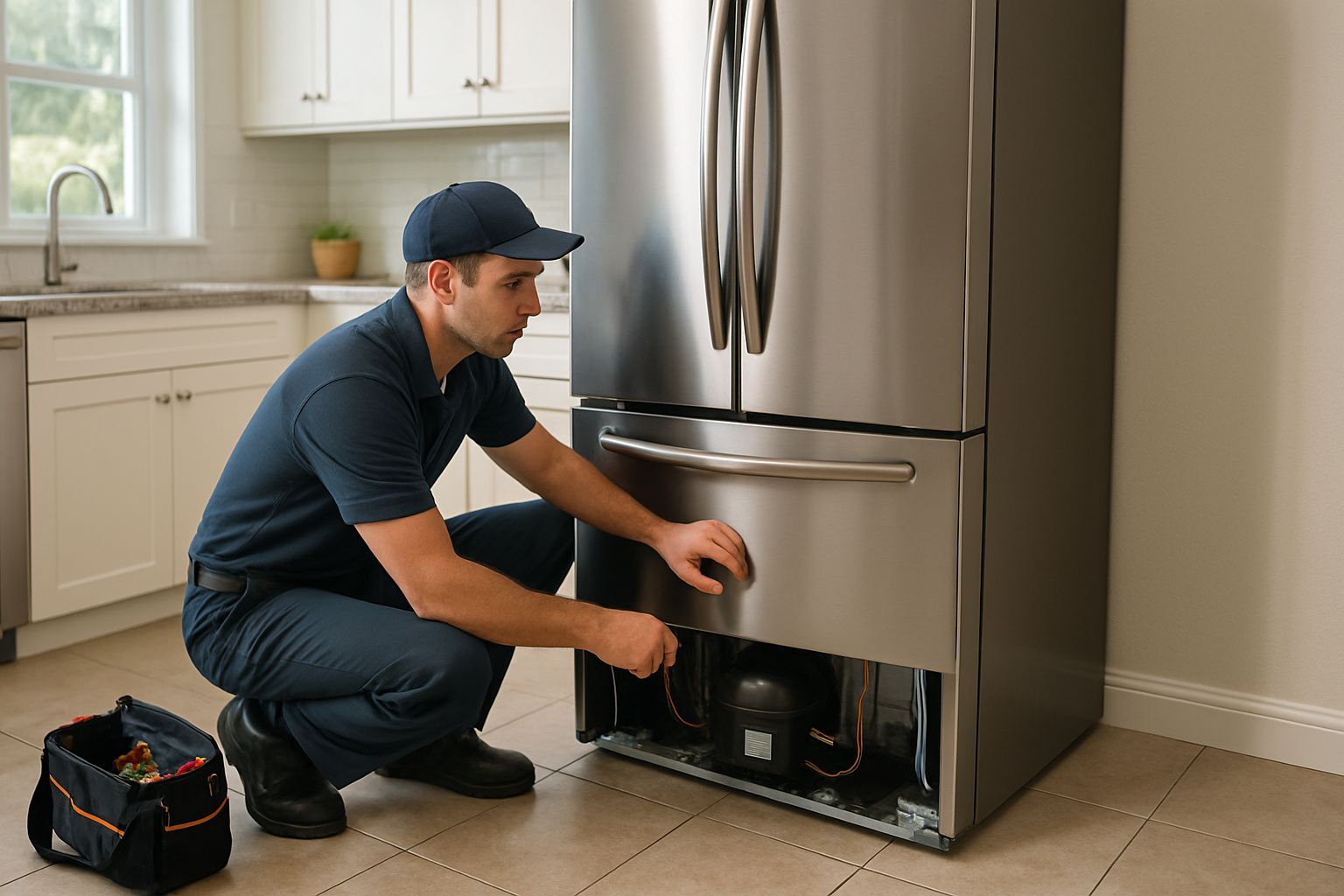
Refrigerator clicking but not cooling? Learn what repeated clicking can mean, what to check safely, and when professional diagnosis is needed.
By General Appliance Service • October 11, 2026
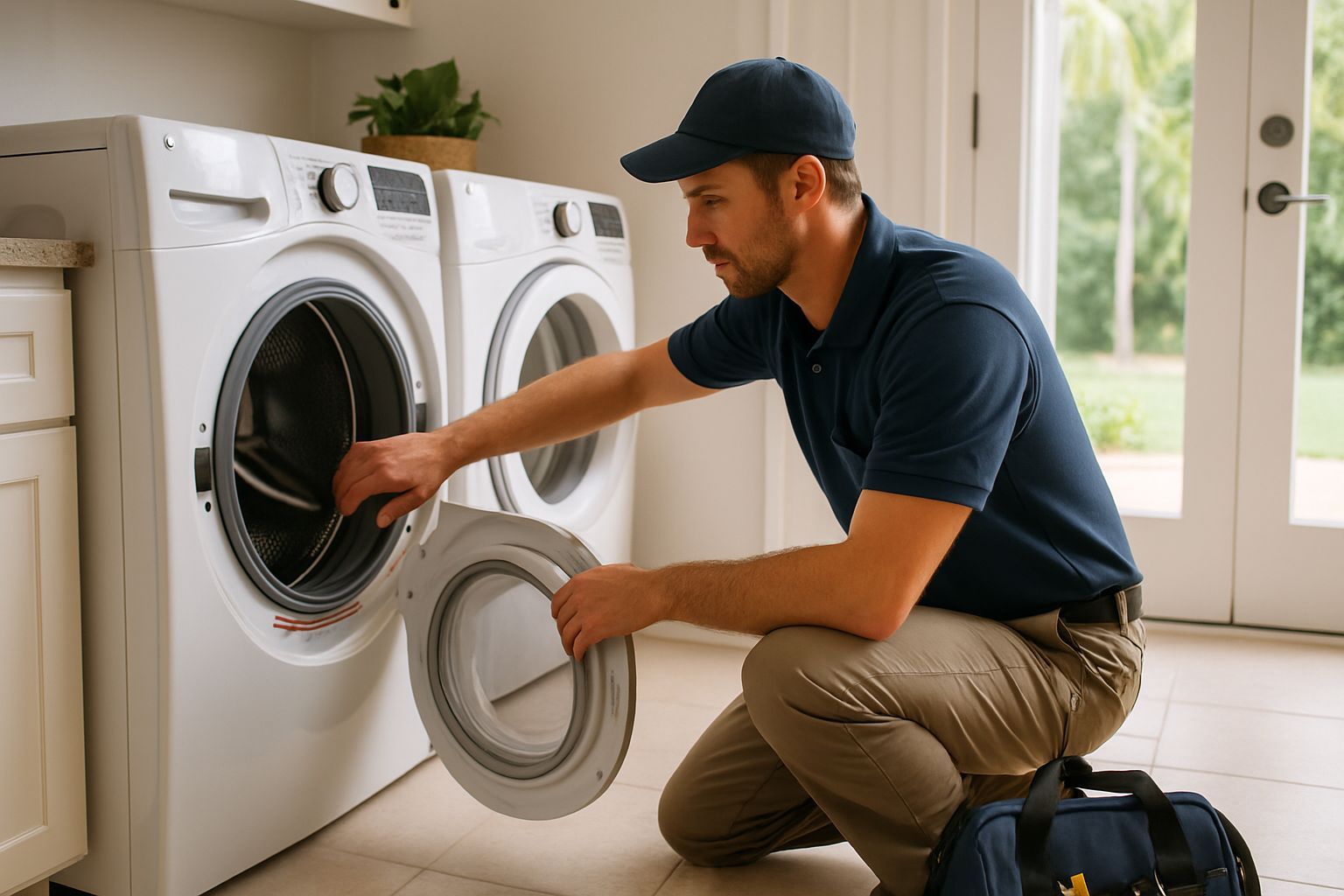
If your dryer shuts off mid-cycle but restarts after cooling down, learn what airflow, motor, door switch, power, and control problems a technician may check.

By General Appliance Service • October 10, 2026
Wine cooler icing up and running constantly? Learn what frost, long run times, door seals, ventilation, sensors, and cooling-system problems can mean.
By General Appliance Service • October 9, 2026
An ice maker overflowing can freeze the bin, create leaks, and point to a valve, fill-tube, or control problem. Learn what to check safely.
By General Appliance Service • October 8, 2026
Freezer frosting near the door often points to humid air entering the cabinet, but airflow and defrost problems can look similar. Learn what to check safely.